

More
technology
November 1, 2022
Supply Chain Now and Dial P for Procurement Recognized
Thinkers 360 recently searched its entire content library to select the best business, technology, and sustainability podcasts from their Thinkers360 member thought leaders, and some bonus picks from around the web. We’re proud to announce the Supply Chain Now and Dial P for Procurement were chosen as two of their featured selections! Congratulations to Scott, Greg, and Kelly, and the entire Supply Chain Now and Dial P teams! Check out the entire list here.
supply chain planning
January 16, 2026
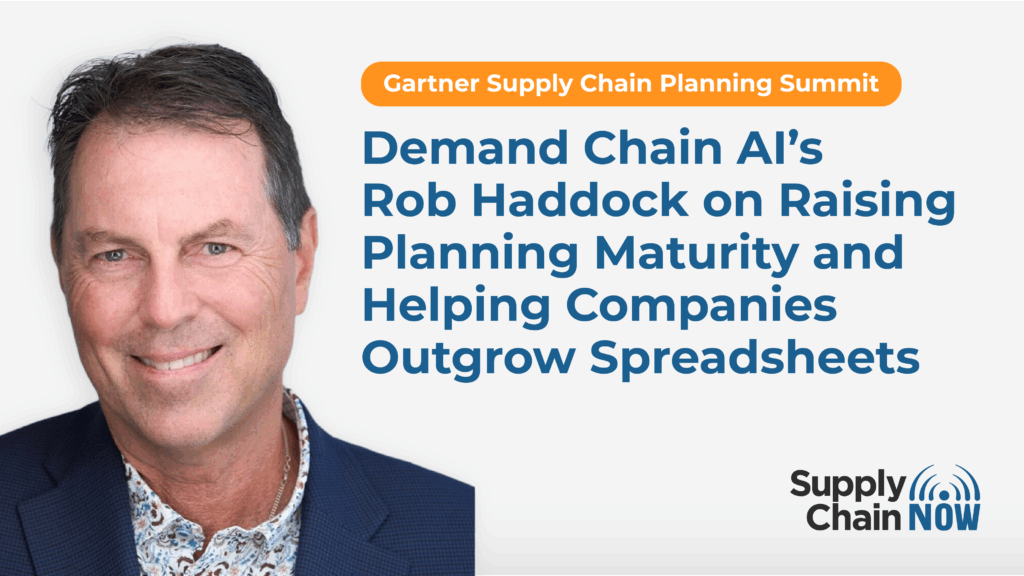
Demand Chain AI’s Rob Haddock on Raising Planning Maturity and Helping Companies Outgrow Spreadsheets
At the Gartner Supply Chain Planning Summit in Denver, Scott Luton caught up with Rob Haddock, a seasoned supply chain practitioner and advisor with Demand Chain AI, to discuss the persistent planning challenges organizations face—and why maturity, discipline, and optimization still matter more than buzzwords. Demand Chain AI blends consulting services with advanced supply chain technologies, focusing on optimization across trade promotion management, demand sensing, supply planning, and detailed production scheduling. Haddock’s role centers on helping organizations strengthen business processes—particularly sales and operations planning (S&OP), performance reporting, and the practical application of technology to improve execution on both the demand and supply sides. A Practitioner’s Perspective on Planning Gaps Haddock’s perspective is shaped by decades spent inside large, sophisticated supply chain organizations. Early in his career, he worked within an iconic, global beverage company where advanced planning environments were already in place—though, in hindsight, he admits those tools were sometimes underutilized. Today, Haddock spends much of his time working with small and mid-sized organizations that haven’t been as fortunate. In many of these environments, planning maturity is still low, foundational practices are missing, and—unsurprisingly—Excel remains the primary planning tool. “Basic business practices that have been around since the 1990s…