

More

automated warehouse systems
November 21, 2024
The Future Is Now: Four Businesses Transforming Modern Warehousing
Warehousing historically hasn’t been a particularly exciting topic. But times have changed. Thanks to technological innovations, warehouse automation has made the receiving, housing, and distributing of goods truly fascinating stuff. At Supply Chain Now, we spotlight companies doing exciting things throughout the industry. In modern warehousing, the innovations garnering attention include systems integrations involving robotics, automation, and artificial intelligence (AI); the use of optical character recognition (OCR) technology in yard management; an “elegant” automated storage and retrieval system (AS/RS); and a solution called Chuck. Warehousing at a Crossroads: Innovation for Efficiency “The warehousing industry is experiencing a technological revolution, with advancements in automation, robotics, IoT, AI, and data analytics transforming operations and driving efficiency. These innovations are not just enhancing operational capabilities but are also paving the way for smarter, more connected, and efficient warehouse environments,” an October report by Taiwan-based logistics property developer ALP said. ALP said AS/RSs, automated guided vehicles (AGVs), and robotics “are at the forefront of the smart warehousing revolution. These systems enhance efficiency, reduce labor costs, and improve accuracy.” AI and Robotics: A New Frontier for Modern Warehousing A Forbes Council post in November said that “one of the most visible impacts of AI and…
July 30, 2021
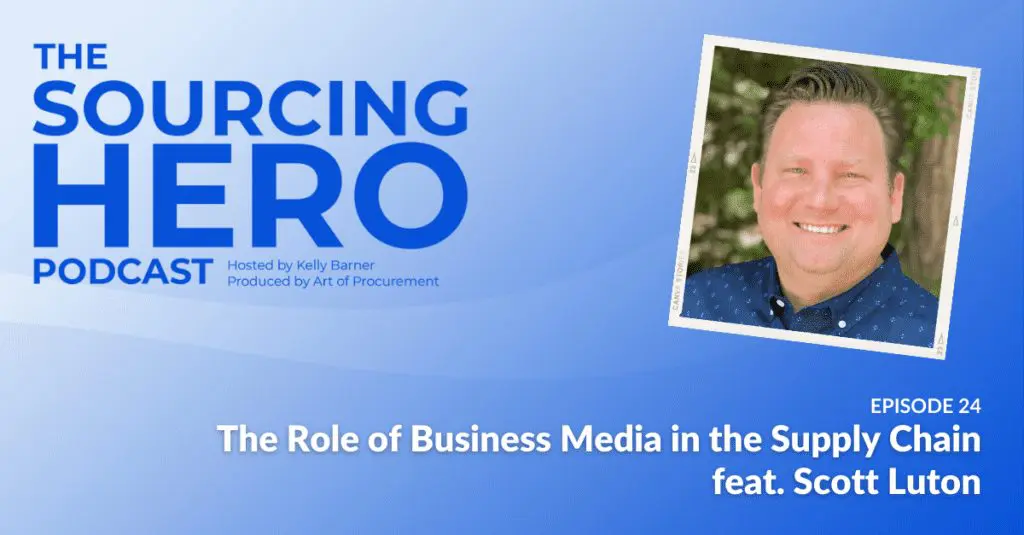
Supply Chain Now CEO, Scott Luton, Featured on The Sourcing Hero Podcast
As Kelly Barner, host of Dial P for Procurement here on Supply Chain Now and host of The Sourcing Hero, says, “The volume of business content being created, shared and discussed every day can feel overwhelming, especially if you are trying to stay on top of best practices and make the most of your professional network. How we choose to spend our scarce listening and watching time is an important decision, and with many (many!) options, each content creator has to find a way to bring unique perspectives and value to their community.” Our CEO, Scott Luton, was recently invited to be Kelly’s guest on The Sourcing Hero podcast, and shares why it is just as important to understand a professional’s journey as it is to listen to their point of view on their area of expertise, the role of business media in helping individuals and teams deal with the challenges they face on a daily basis, and why we all need to look for and celebrate good news as often as we can. Listen to the Podcast Episode Here.