

More
supply chain
May 7, 2025
Something to Talk About: Topics Shaping Supply Chain
Tariffs have the entire world on edge, and the Supply Chain Now hosts are staying abreast of the very latest developments on the tariffs front to share them with listeners. But believe it or not, there’s a lot more going on in the world that affects the supply chain industry than tariffs, and Supply Chain Now is keeping listeners informed about all the topics important to them. Tariffs, Of Course, and Government Regulations The Trump administration has cranked up trade tensions with its 145% tariff on most imports from China and the end of the de minimis exemption that allowed packages worth less than $800 to enter the United States duty-free. The Port of Los Angeles, the United States’ largest maritime gateway, is one of the American powerhouses that has been bracing for the impact. Port Executive Director Gene Seroka said on April 24 that he expected within the next two weeks container ship arrivals would “drop by 35% as essentially all shipments out of China for major retailers and manufacturers have ceased, and cargo coming out of Southeast Asia locations is much softer than normal.” At Supply Chain Now, we’re constantly monitoring what’s happening in LA and Washington —…
leadership
October 28, 2025
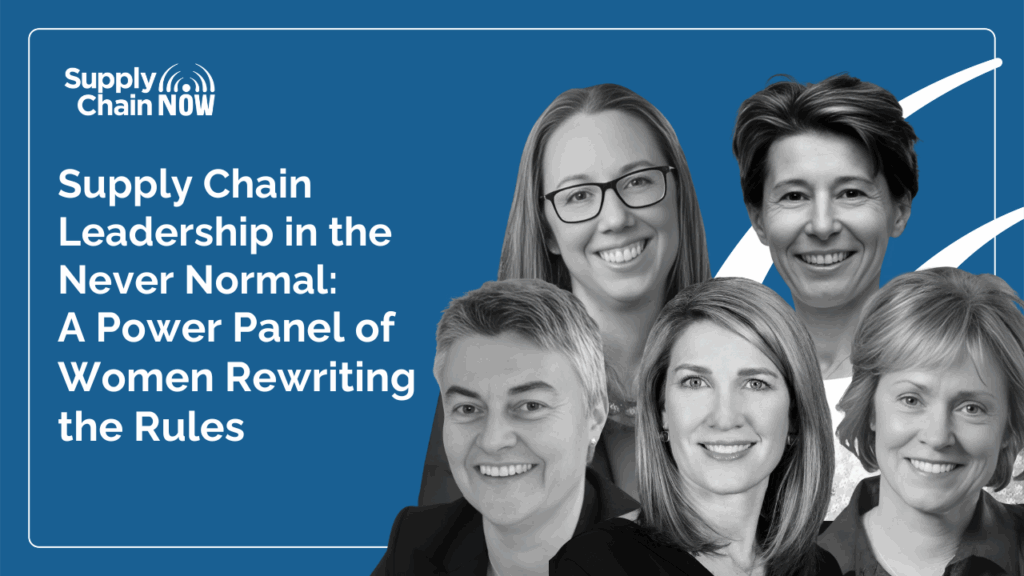
Thriving in the Never Normal – Lessons Learned from 5 Women Supply Chain Leaders
Written by Karin Bursa, Founder and CEO of NIRAKIO and Supply Chain Now Host If you know me, you know I’m a supply chain nerd. I love talking about it, thinking about what’s next, and sharing success stories to inspire others who may feel overwhelmed or unsure where to start. So, when I stepped into the moderator’s chair for our recent Supply Chain Now livestream, I knew we were in for a powerful conversation. Five extraordinary women — each leading global supply chains at some of the world’s most iconic brands — came together to share how they are navigating disruption, embracing innovation, and shaping the future of supply chain leadership. As a fellow Woman in Supply Chain for over 30 years, I had to resist acting like a true ‘Fan Girl’ — I could have talked with them for hours. The world we live in is the “Never Normal.” Volatility is constant. Technology is advancing faster than our operating models. Yet, what struck me most during our panel was the optimism and resilience each leader displayed. These women are proof that even in the face of complexity, supply chains can be transformed into engines of business growth, agility, and…