

More
October 29, 2020
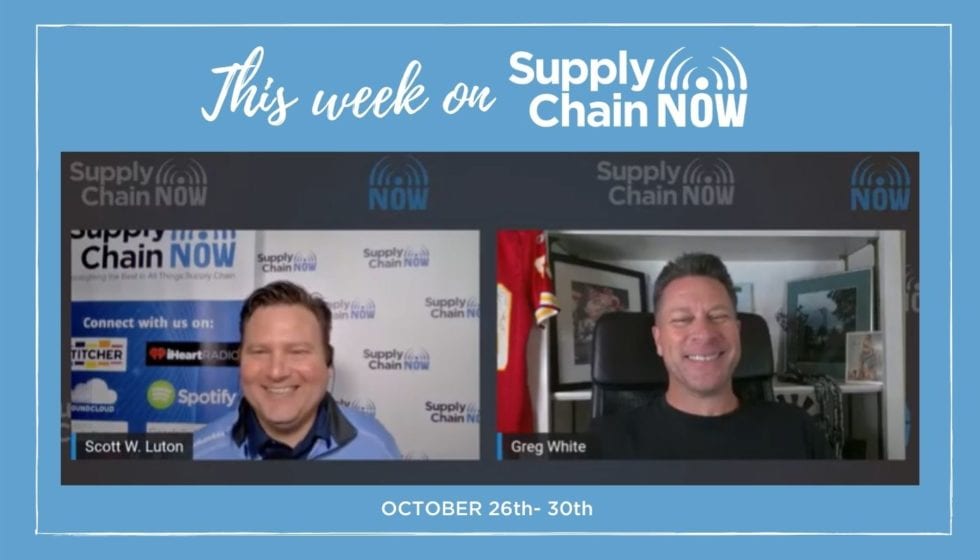
This Week on Supply Chain Now: October 26th – 30th
It’s been a great week on Supply Chain Now! Make sure you’re up to date on all the latest episodes, interviews, conversations, and livestreams right here. On Saturday, Kelly Barner with Buyers Meeting Point joined Scott and Greg on the podcast to share her thoughts on the priorities & challenges within procurement as well as key takeaways involving GPO & Mastermind Live 2020. On Monday, Scott and Greg welcome Diego Martinez with Coca-Cola and Mike Lackey with SAP to dive into the critical role supply chain plays in Atlanta, full of key takeaways that relate back to business regardless of where you live. On Tuesday, Phil Rich, SVP & CSCO with Sweetwater, shares his perspective with Supply Chain Now Co-hosts Greg White and Scott Luton on how to guarantee quality customer experiences. On Wednesday, Scott and Greg hosted the Supply Chain Buzz where they welcomed HR Expert & Consultant John Holly, who shared everything you need to know when it comes to supply chain talent right now. On TECHquila Sunrise this Thursday, Greg White reflected on the best moments from the podcast since August with featured technology founders, investors, and visionaries. We ended the week…
reverse logistics
January 28, 2026
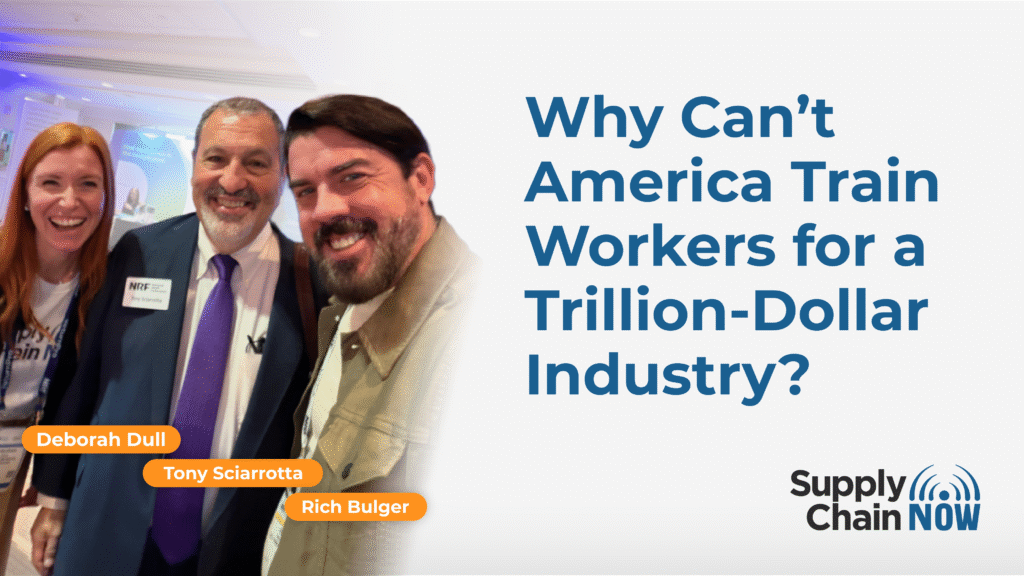
Why Can’t America Train Workers for a Trillion-Dollar Industry?
Inside the reverse logistics education gap and the economic blind spot keeping it invisible Special Guest Blog Post written by Deborah Dull Tony Sciarrotta has been asking the same question at industry conferences for years. As the Senior Director of Circularity and Reverse Logistics at the National Retail Federation, he knows what answer he’s going to get. But he keeps asking anyway. “Anybody in here go to school for returns management, reverse logistics, circularity? Any degrees in those fields the room?” It’s rare that anyone raises their hand. “That’s what’s wrong with our industry,” Sciarrotta told me at NRF Rev this January, the first conference under NRF’s new reverse logistics banner. “We still need to fix it.” The Numbers That Should Make Headlines Here’s what makes reverse logistics so fascinating: the scale is staggering, but the infrastructure to support it needs to be stronger. According to the National Retail Federation, American retailers processed approximately $890 billion in returns in 2024 which is roughly 17% of all retail sales – and it’s higher for ecommerce. But that number almost certainly understates reality. “We have a fragmented industry,” Sciarrotta explained. “Where are all those returns going? It has to be…