

More
supply chain thought leadership
February 19, 2026
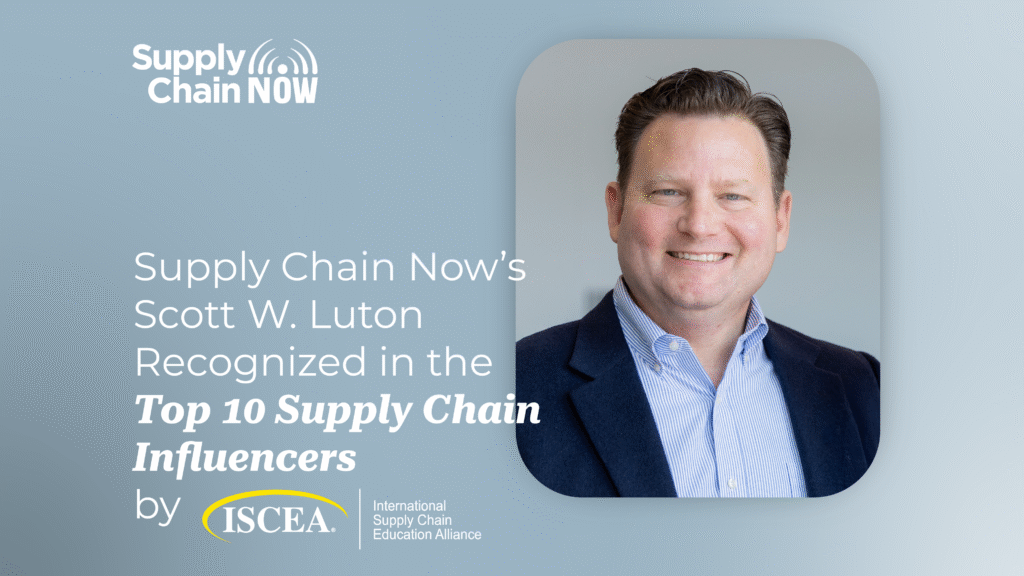
Supply Chain Now’s Scott Luton Recognized in the Top 10 Supply Chain Influencers by ISCEA
We’re proud to celebrate another industry recognition for Supply Chain Now Founder, CEO, and Host Scott Luton – he has been named one of the ISCEA Top 10 Supply Chain Influencers of 2026. The International Supply Chain Education Alliance (ISCEA) highlights leaders who actively shape the profession by sharing research, perspectives, and practical insights that help advance the global supply chain conversation. (ISCEA) Scott’s inclusion reflects the spirit of the Supply Chain Now community: real conversations, practical takeaways, and a commitment to connecting practitioners across industries and roles. Through interviews, events, and ongoing dialogue with leaders around the world, his goal has always been to amplify voices and help move the industry forward together. We’re grateful to our listeners, partners, and guests; this recognition belongs to the entire community that shows up and shares knowledge every day. Check out the entire list and learn more about ISCEA here.
August 28, 2020
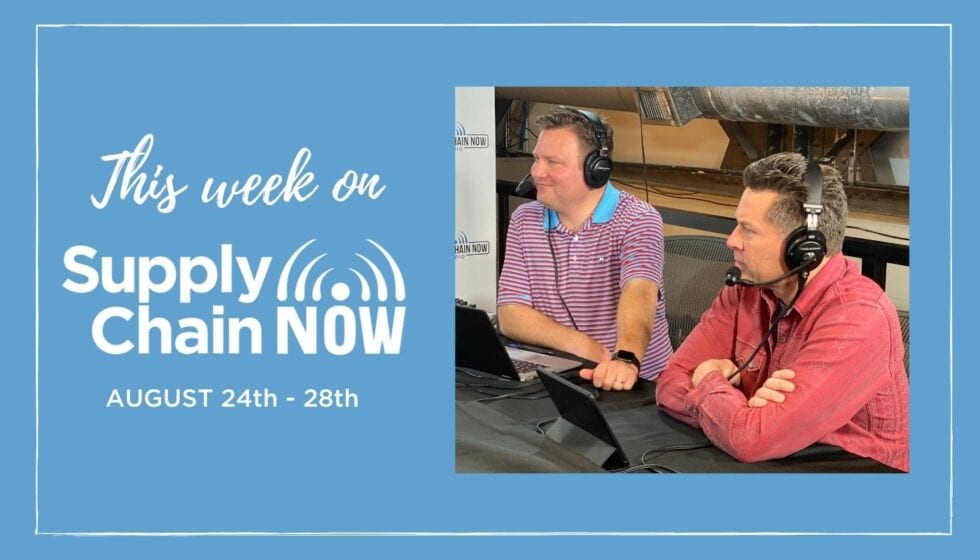
This Week on Supply Chain Now: August 24th – 28th
What a week at Supply Chain Now! If you missed an episode, get a quick summary and listen here. On Monday, we published an excellent episode with Jon Gold, the VP of supply chain and customs policy at the National Retail Federation. Supply Chain Now · “The Voice of Retail: Jon Gold with the National Retail Federation” On Tuesday, Scott & Greg welcomed two APICS legends to the podcast, Anthony “Z” Zampello & Fred Tolbert, for a lesson in S&OP fundamentals and best practices. Supply Chain Now · “S&OP Fundamentals & Best Practices: Anthony “Z” Zampello & Fred Tolbert” On Wednesday, we published this week’s Supply Chain Buzz, with an update on Hurricane Laura from Riskpulse Chief Meteorologist Jon Davis, and then covered the top news in supply chain with Kara Brown and Will Haraway with Lead Coverage. Supply Chain Now · “The Supply Chain Buzz for August 24th Featuring Jon Davis, Kara Brown, & Will Haraway” On Thursday, Greg welcomed Flourish CEO Colton Griffin to the TECHquila Sunrise podcast for a great conversation on the ins and outs of founding a tech company, the start-up life, and the cannabis industry. Supply Chain Now…