
More
book club
February 2, 2026
First Edition: Between the Lines by Supply Chain Now
At Supply Chain Now, we talk a lot about innovation, resilience, and what’s next for our industry. But behind every great conversation, great idea, and great community is something even more fundamental: curiosity. We read because we’re curious. We read to learn. We read to grow. And sometimes, we read simply because it’s fun! That’s why we created Between the Lines by Supply Chain Now, a space for our community to share what we’re reading, what’s making us think, and what we’re excited to recommend to others. This isn’t a traditional book club where everyone follows the same reading list. Instead, it’s a shared shelf, built by the Supply Chain Now team and our broader community. You’ll find business books and personal development reads alongside novels, memoirs, histories, and unexpected favorites. No required genres. No assigned chapters. Just real people sharing real recommendations. Because great books shape us in different ways. Some help us sharpen our skills. Some challenge how we see the world. Some help us slow down, escape, or recharge. And often, the most meaningful growth comes from reading something we never would have picked up on our own. With Between the Lines, our goal is to create…
January 29, 2021
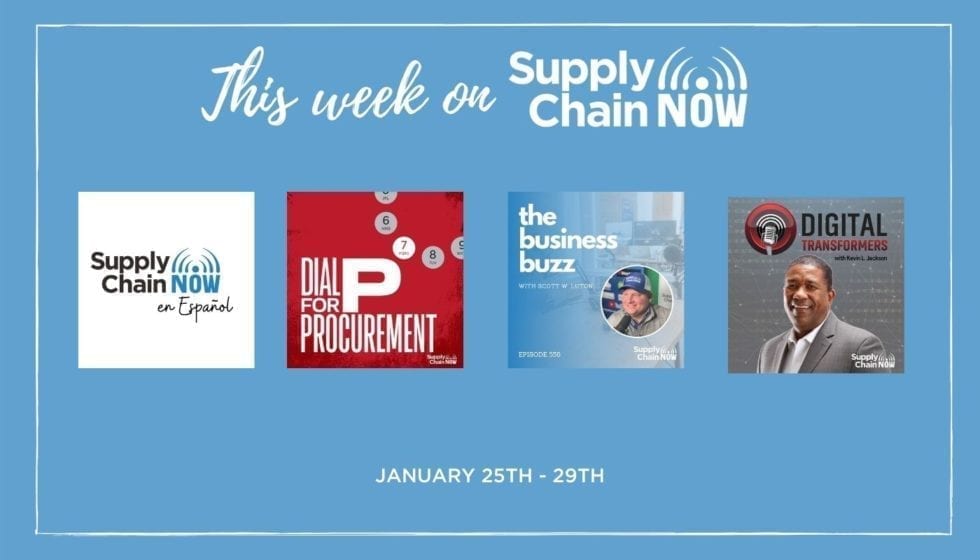
This Week on Supply Chain Now: January 25th – 29th
It’s been an exciting week here at Supply Chain Now! Catch up on all the latest episodes, interviews, conversations, and livestreams right here for all the hottest supply chain news! On Monday, we launched Dial P for Procurement with program co-hosts Kelly Barner & Scott Luton who welcomed two professionals who have put their procurement and supply chain experience to work in the service of others: Anna McGovern, Chief Supply Chain Officer at the Food Bank for New York City, and Kathy Fulton, Executive Director of the American Logistics Aid Network. On Tuesday, Laura Cyrus with Truckers Against Trafficking joined host Enrique Alvarez to share how supply chain & trucking workers are uniquely positioned to combat human trafficking. On Wednesday, we launched our new Digital Transformers series in partnership with Total Network Service. Check out our first episode as Scott Luton, Kevin L. Jackson, and special host Thomas Carter welcome Dave Stehlin and Chris Poli to the show. On Thursday, we released The Supply Chain Buzz with Kevin L. Jackson, Greg White, & Scott Luton who discuss leading stories from global supply chain and global business, including the skyrocketing costs of medical supplies, the impact of IoT…