

More
July 3, 2020
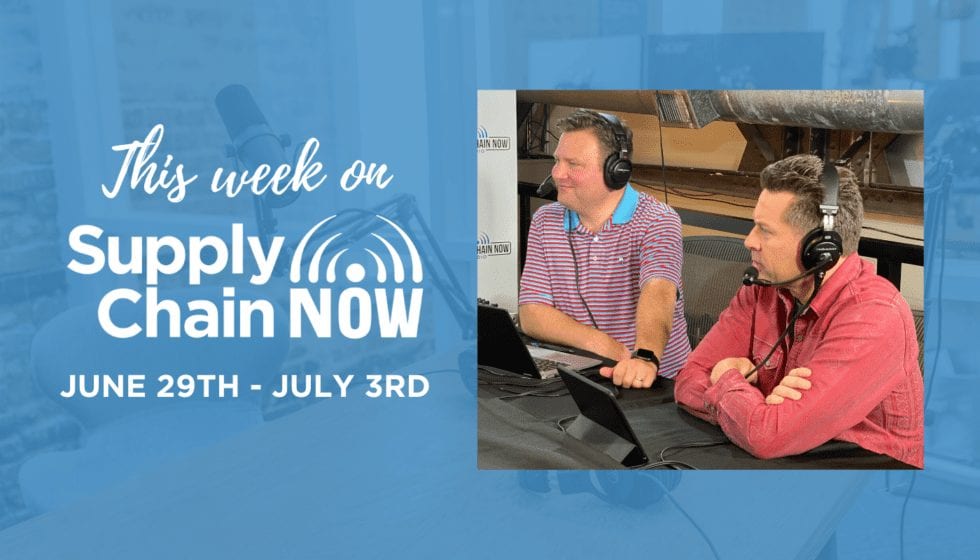
This Week on Supply Chain Now- June 29th – July 3rd
Another great week here at Supply Chain Now! Did you catch all the episodes? If not, you can check them all out here: We kicked off the week with This Week in Business History, where Scott looks back at some of the biggest historical events in business history for the week ahead. Supply Chain Now · “This Week in Business History for June 29th: The U.S. Interstate Highway System” Then on Tuesday, Scott and Greg welcomed Cynthia Curry with the Metro Atlanta Chamber and Jasmine Crowe with Goodr to the podcast for a conversation about redirecting excess prepared food and so much more. Supply Chain Now · “Feed More & Waste Less: Jasmine Crowe with Goodr” On Wednesday, we continued our new series, TECHquila Sunrise with Greg White, where Greg shares the latest investments, acquisitions, innovations, and glorious implosions in Supply Chain Tech every week. Supply Chain Now · “Top 25 Startup Ecosystems, Inclusive Investing, & Big Deals: TECHquila Sunrise with Greg White” On Thursday we published the Supply Chain Buzz, where Greg and Scott discussed the top supply chain news of the week. Supply Chain Now · “Supply Chain Buzz for June 29th:…
data
December 17, 2025
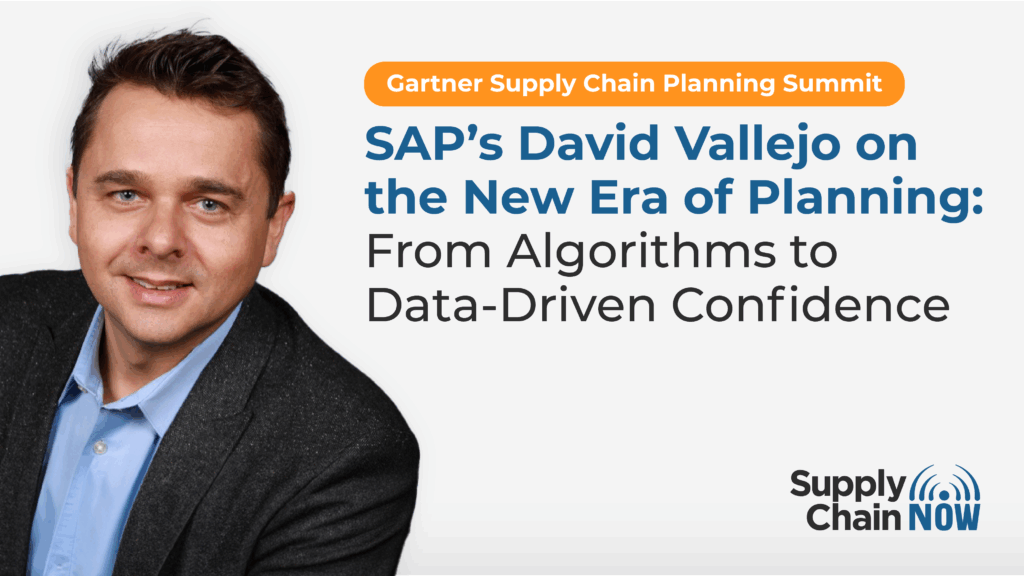
SAP’s David Vallejo on the New Era of Planning: From Algorithms to Data-Driven Confidence
In a rapidly evolving global supply chain landscape, SAP’s David Vallejo believes the most exciting innovations are happening in planning—and that the industry is entering a fundamentally new era. At the Gartner Supply Chain Planning Summit 2025 in Denver, Vallejo, who leads global product marketing for SAP’s supply chain portfolio, joined Scott Luton to discuss how planning is transforming, why data now sits at the center of competitiveness, and what SAP is doing to help organizations make faster, more confident decisions. A Shift From ERP-Centric to Data-Centric Vallejo described his team’s role as one that constantly scans the market—identifying trends, customer expectations, and the problems companies will need to solve next. Those insights help shape new innovations across the SAP ecosystem. He noted that SAP has moved decisively from an ERP-centric worldview to a data-centric one. This shift is essential, he argued, because the biggest advantage in modern planning lies in having the right data—clean, connected, contextualized, and ready to drive decisions. As Vallejo put it, “It’s all about the data that I need to make better planning decisions.” Planning Models Are No Longer Static Reflecting on how planning has evolved since he entered the field two decades…