

More

sustainable supply chain
August 29, 2024
Eco-Friendly Innovations: How Sustainable Practices Are Reshaping Supply Chains
Scope 3 emissions reportedly account for more than 70% of businesses’ carbon footprints. That huge percentage gives an indication of just how critical supply chain sustainability efforts are to the planet. Thankfully, a growing number of eco-friendly innovations are helping reshape global supply chains. Supply Chain Sustainability: An Industry Imperative in a Changing World It is becoming increasingly important for companies to accurately calculate their supply chain emissions and create an information-sharing ecosystem, according to Matthew Gardner, co-founder and managing partner of Sustainserv, a consulting firm that helps businesses implement sustainability strategies. Gardner said accounting for supply chain-related greenhouse gas emissions includes such challenges as: Data gathering of “materials, manufacturing processes, activities of second- and third-tier suppliers, and overall data governance and quality.” Calculation methodology that “reflects the realities of raw material sourcing, product manufacturing, transportation and distribution, and other life-cycle impacts that may affect reported greenhouse gas totals.” Supplier relationships, which can be strained as a result of emissions assessments. Businesses also need to keep in mind their relationships with consumers. PDI Technologies said 80% of U.S. consumers it surveyed were willing to pay more for sustainable products. “Between these statistics and the regulatory conversations that are happening in…
April 17, 2020
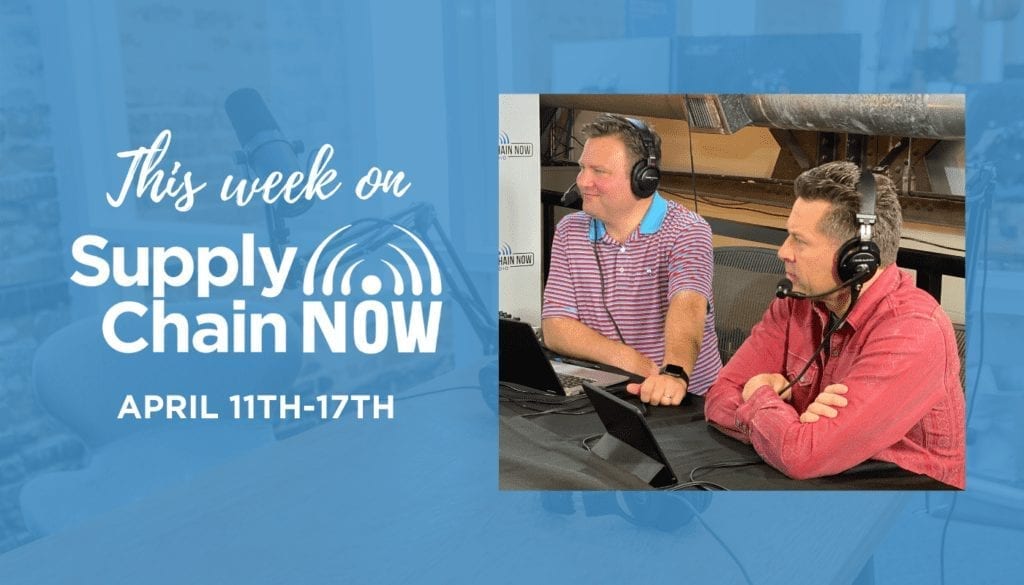
This Week on Supply Chain Now: April 11-17
It has been a big week (as usual) for Supply Chain Now! Did you miss an episode? Check them all out here: Listen as Daniel Studdard with the Atlanta Regional Commission, talks with Greg and Scott from MODEX 2020 about keeping freight moving: Rodney Apple with SCM Talent Group joins Greg and Scott from MODEX 2020 to chat about securing top supply chain talent: On Tuesday, Scott and Greg were joined remotely by Jan van Niekerk with SpotSee, to talk about leveraging technology to protect your shipments during transit: Scott and Greg were joined by Bob Bova with Accuspeech Mobile from MODEX 2020 and discussed voice automating workflows: On Thursday we published the new and improved Supply Chain Buzz, with Scott and Greg sharing and discussing the latest news and events in Supply Chain and beyond: And to finish out the week, Mark Messina and Rick DeFiesta with Geek+ joined Scott and Greg for a discussion about COVID-19’s impact on consumer behaviors, warehouse operations, automation initiatives, and more: Make sure you subscribe to Supply Chain Now so you never miss an episode and we will see you next week with all new livestreams and…