

More
supply chain
October 30, 2025
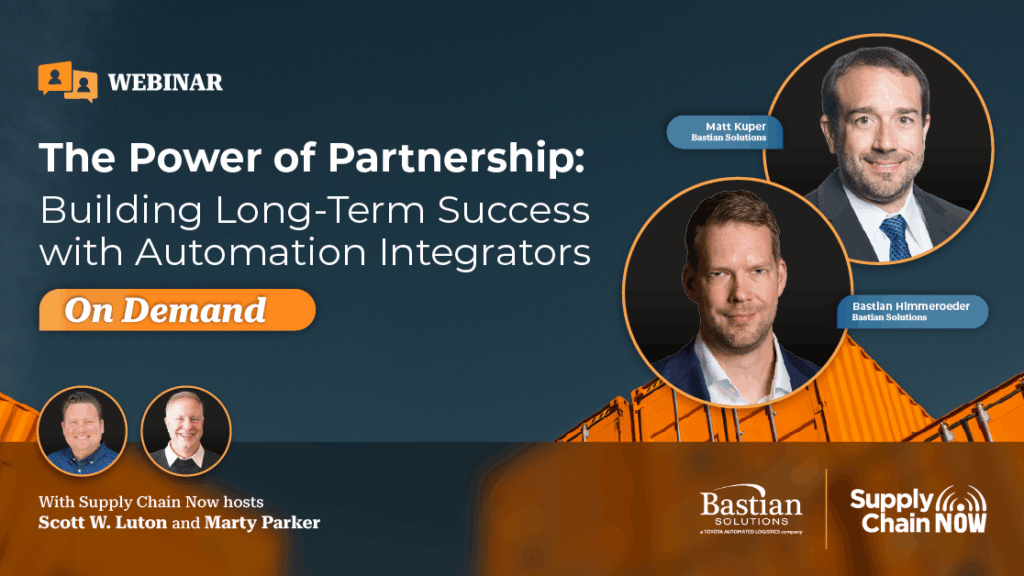
The Power of Partnership in Supply Chain Automation
Key Takeaways from the Supply Chain Now Webinar with Bastian Solutions In today’s fast-changing world of logistics and manufacturing, one truth is clear: there’s no hiding from automation. Whether you’re a global enterprise or a growing regional player, success depends on choosing the right technology—and, just as importantly, the right partner. In a recent Supply Chain Now webinar, The Power of Supply Chain Partnerships, hosts Scott Luton and Marty Parker sat down with Matt Kuper and Bastian Himmeroeder from Bastian Solutions, a Toyota Automated Logistics company, for an in-depth conversation about how to unlock the true potential of automation through strong integrator relationships. Here are a few key takeaways that stood out: 1. Strategic Partnerships Trump One-Off Projects According to Bastian, the age of “one-and-done” automation projects is over. Today’s complexity demands long-term, strategic relationships between companies and their integrators—ones built on transparency, shared values, and a deep understanding of each other’s goals. 2. Culture Fit Matters as Much as Technology Matt emphasized that cultural alignment is the first critical element in selecting an integrator. Shared values, open communication, and mutual respect ensure that the partnership thrives well beyond implementation. 3. Experience and Support Drive Success Choosing a partner with…

planning
December 2, 2025
Top 10 Ways a Data Gateway Improves Time to Value Across End-to-End Supply Chains
Special Guest Blog Post written by Mark Holmes with InterSystems Top 10 Ways a Data Gateway Improves Time to Value Across End-to-End Supply Chains Supply chain practitioners seeking the best way to speed decision intelligence, unify supply chain data, increase operational efficiency, and improve supply chain resilience can benefit from a supply chain data gateway. A data gateway provides unified access to supply chain data from various sources, including enterprise systems, supply chain applications, data feeds, data warehouses, data lakes, data marts, and business entities. Here are the top 10 ways a supply chain data gateway can improve your supply chain performance. Enables You to Identify Inefficiencies and Make Better and Informed Decisions A unified view of your data accelerates informed decision making and provides you with a comprehensive understanding of your supply chain. For example, a supply planner gains accelerated access to customer orders, inventory levels, and transportation schedules, all in one place, to identify inefficiencies and make better informed decisions. Reduces Implementation Times Enterprises and supply chain software providers strive to reduce application implementation times. A data gateway can serve as a front-end for a range of supply chain software applications, speeding and simplifying data ingestion, integration,…