

More
supply chain thought leadership
February 19, 2026
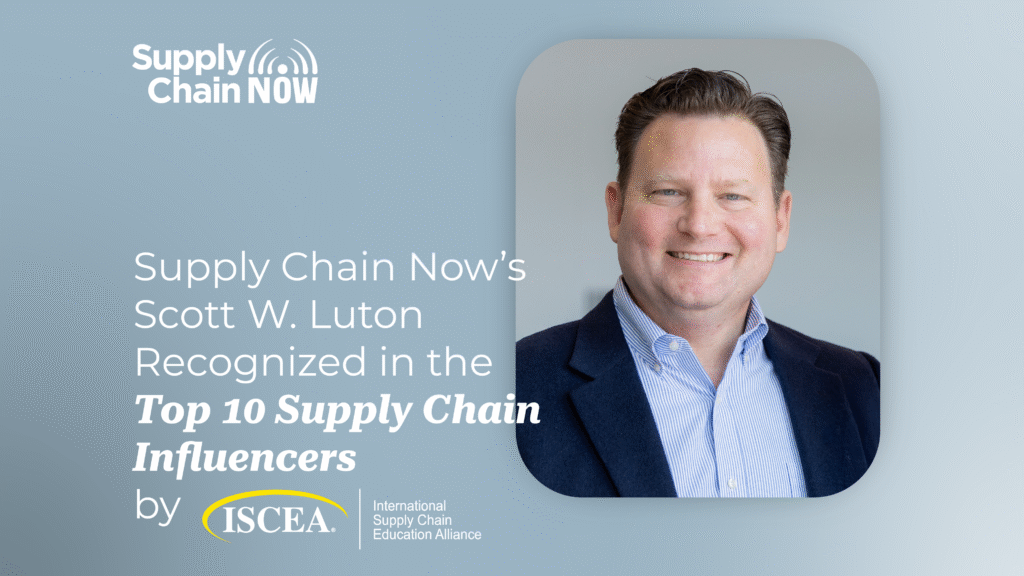
Supply Chain Now’s Scott Luton Recognized in the Top 10 Supply Chain Influencers by ISCEA
We’re proud to celebrate another industry recognition for Supply Chain Now Founder, CEO, and Host Scott Luton – he has been named one of the ISCEA Top 10 Supply Chain Influencers of 2026. The International Supply Chain Education Alliance (ISCEA) highlights leaders who actively shape the profession by sharing research, perspectives, and practical insights that help advance the global supply chain conversation. (ISCEA) Scott’s inclusion reflects the spirit of the Supply Chain Now community: real conversations, practical takeaways, and a commitment to connecting practitioners across industries and roles. Through interviews, events, and ongoing dialogue with leaders around the world, his goal has always been to amplify voices and help move the industry forward together. We’re grateful to our listeners, partners, and guests; this recognition belongs to the entire community that shows up and shares knowledge every day. Check out the entire list and learn more about ISCEA here.

news
January 5, 2026
Supply Chain Now Announces Leadership Advancement and Showcases Industry-Leading Advisory Board to Fuel Growth in 2026
ATLANTA, GA — January 6, 2026 — Supply Chain Now, the award-winning global digital media platform recognized as the #1 Voice of Supply Chain, today announced the promotion of Mary Kate Love to President, effective January 1, 2026, alongside the continued engagement of a distinguished Advisory Board composed of proven leaders across supply chain, technology, strategy, and media. Together, these leadership updates signal Supply Chain Now’s next chapter of growth as the company prepares for significant expansion in 2026: scaling programming, partnerships, and demand-generation capabilities while staying rooted in authentic, practitioner-led content serving a global audience of more than 1 million listeners. In her new role, Love will lead Supply Chain Now’s strategic growth across programming, partnerships, operations, and long-term platform strategy, further strengthening its mission to inform, connect, and elevate the global supply chain industry. “Mary Kate is a trusted, decisive leader with a rare combination of delivering both strategic vision and operational excellence,” said Scott W. Luton, Founder and CEO of Supply Chain Now. “In 2025, she played a pivotal role in accelerating our revenue growth, expanding our audience to more than one million supply chain professionals, and sharpening our focus on delivering measurable value for both practitioners…