

More
October 22, 2021
This Week In Supply Chain Now: October 18th – 22nd
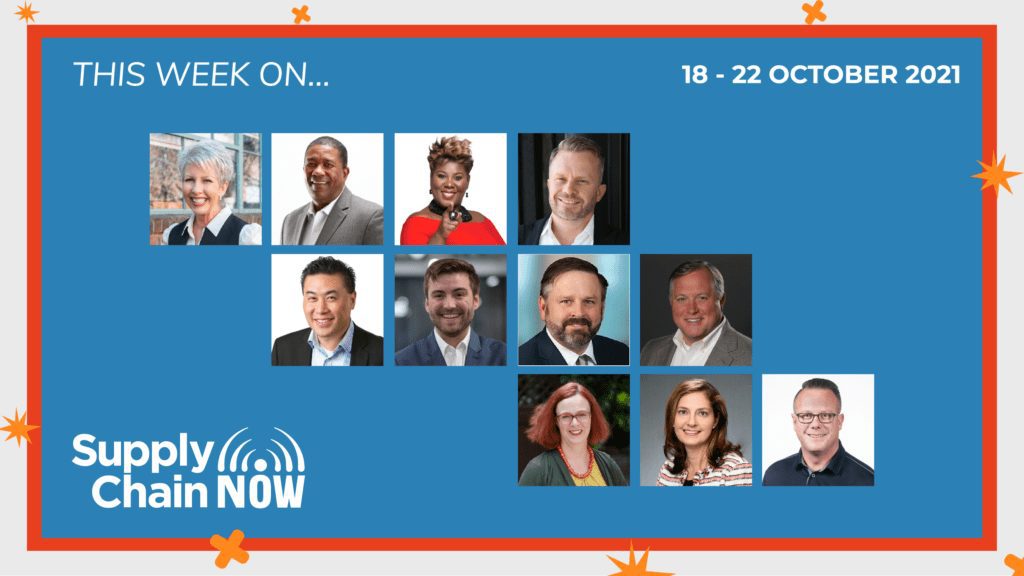
Stay up to date on all the latest conversations, interviews, and episodes we released this week here at Supply Chain Now! We kicked this week off with a new episode in our Supply Chain Real Estate Series produced in partnership with Prologis. Scott Luton and special host Ward Richmond welcomed Managing Partner Will O’Donnell and Vice President Todd Lewis from Prologis Ventures. For Monday’s This Week In Business History episode, Scott tells an interesting story of one of the most captivating and influential movie rental businesses in American history. On Tuesday, we released a new episode of TEKTOK, with host Karin Bursa. In this episode, Karin talks with Ben Cubitt, SVP of Consulting and Network Services for Transplace. They discuss the future of supply chain logistics into next year, from continued network disruptions to taking smart steps today to regain a proactive footing. On Wednesday’s Supply Chain Now episode, Scott and special guest host Crystal Davis welcomed the Vice President of Transportation for Home Depot, Sarah Galica, to the show. She gives insight on some of the improvements that resulted in $34 billion dollars in growth for The Home Depot. For Thursday’s Supply Chain Now episode, Scott and guest host…
November 25, 2024
Visibility Guide- Ensuring high data quality to maximize ROI of real-time transportation visibility solutions
Maximize the ROI of your transportation solutions now. Real-time transportation visibility is now more accessible thanks to advancements in connectivity, IoT devices, and modern systems. Supply chain priorities have shifted from simply tracking shipments to accurately predicting ETAs and identifying potential delays. This guide dives into the methodologies for ensuring high-quality visibility data, empowering you with actionable insights to optimize shipment flows and overall supply chain performance. Download the Visibility Guide Here