Share:

“The field used to be dominated by males. At USF, 55% of our supply chain students are female. 100% of our students get internships. Even better, once they get jobs, the average number of promotions is 2-3 within the three years of being hired by the company. Starting salaries average $55,000 plus bonuses which can get you to $65,000 or $70,000.”

-Dr. Jim Stock

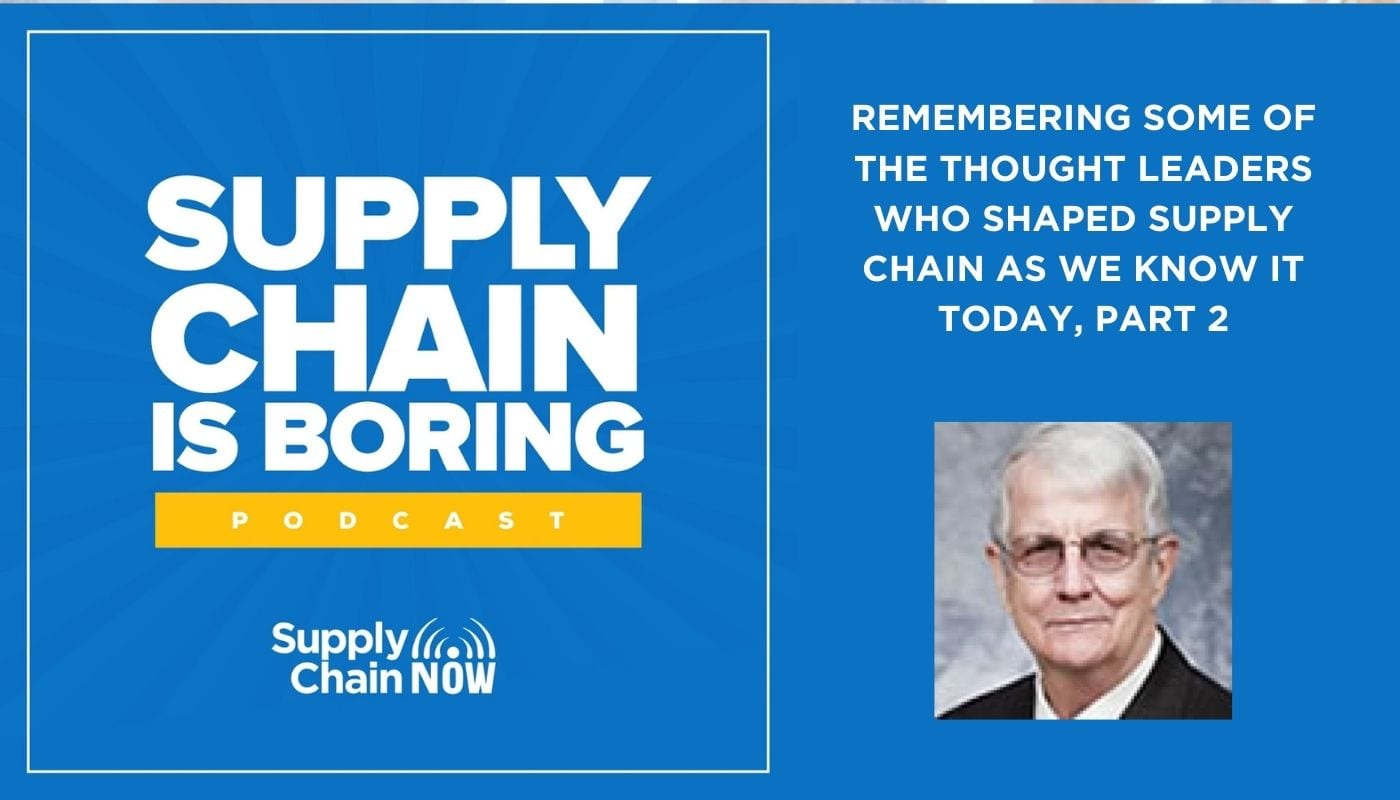
In this episode of Supply Chain is Boring, Chris continues his conversation with Dr. James Stock.  Dr. Stock has been honored internationally three separate times for his achievements in supply chain and logistics management by the industry’s leading professional organizations. This year, he will receive the Supply Chain Management Professionals’ Distinguished Service Award – the highest honor that an individual can receive for their achievements in supply chain and logistics management. In addition, he will also be honored with the Special Lifetime Logistics Service Award by Yasar University in Izmir, Turkey and the 9th International Logistics and Supply Chain Congress for his outstanding achievement and continuous contributions to the field.

Over the (recent) years, Dr. Jim Stock has been interviewing some of the business and academia thought leaders who have shaped the way we think about supply chain management. Guest list includes:

Dr. Daniel Wren, University of Oklahoma
Dr. Thom Speh, Miami University
Dr. John T. Mentzer, University of Tennessee
Dr. C. John Langley, Jr., Pennsylvania State University
Kenneth Ackerman
Dr. Donald J. Bowersox, University of South Florida
Dr. James L. Heskett, Harvard University
Dr. Bernard J. La Londe, Ohio State University

Following is a link to the video recordings and transcripts.

https://usfondemand.hosted.panopto.com/Panopto/Pages/Sessions/List.aspx?folderID=ef49a2cd-9fd6-4b1b-b9dc-ac0c01437c1e

More Podcast Episodes

ecommerce
play-button-podcast
podcast-blue-microphone
Podcast
October 1, 2025

Breaking News Now: E-Commerce Shake-Ups with Max Garland

Join Supply Chain Now host Scott Luton for a timely conversation with Max Garland, Senior Reporter at Supply Chain Dive. In this episode, they break down the biggest stories shaping logistics and e-commerce right now—from Target’s next-day delivery expansion and FedEx’s 2026 rate hikes to the rise of regional carriers like OnTrac and Veho. They’ll also unpack how the end of the de minimis exemption is reshaping international e-commerce and what it means for businesses adapting to new rules. Packed with insights on technology, customer experience, and the future of supply chain operations, this discussion is a can’t miss for anyone navigating today’s rapidly evolving logistics landscape.   This episode is hosted by Scott Luton, and produced by Trisha Cordes, Joshua Miranda, and Amanda Luton.   Additional Links & Resources Check out all the great resources and information mentioned during the show: Connect with Max on LinkedIn Learn more about our hosts Want more Supply Chain Now? We know you can’t get enough Supply Chain Now! Don’t miss a single episode, livestream, or webinar: Watch and listen to more Supply Chain Now episodes here Subscribe to Supply Chain Now on your favorite platform Connect with the Supply Chain Now community…
industrial real estate
play-button-podcast
podcast-blue-microphone
Podcast
November 12, 2025

The Portfolio Behind 5% of U.S. GDP: Link Logistics on What’s Driving Demand

In this episode of Supply Chain Now, Scott Luton teams up with special guest host Ward Richmond (Vice Chairman, Colliers) to dig into the state of industrial real estate with Brandon Page. EVP, Head of Leasing & Customer Solutions and Glenn Wylie (Senior Managing Director, East Region at Link Logistics. The conversation frames what a “balanced market” looks like in 2025 (tight small-bay infill vs. more options at bulk) while unpacking the demand stack from e-commerce and nearshoring to data center spillovers and the renewed importance of 3PL flexibility. The group gets practical on bonded warehouses and FTZs (where and why they fit), market dynamics across the Southeast, Texas, and Phoenix, and how power availability and automation readiness are influencing site decisions. You’ll also hear how Link Logistics uses data and AI, from rent-modeling insights to faster decision support across an infill-centric portfolio (with most assets within an hour of dense populations). The throughline: customers want flexibility, optimization, and speed, and the teams that blend relationships with good data will find the next wave of opportunity first. This episode is hosted by Scott Luton, and produced by Trisha Cordes, Joshua Miranda, and Amanda Luton.   Additional Links & Resources Check…

Supply Chain is Boring – Episode-16

Share:

Coming soon.