Share:

“The field used to be dominated by males. At USF, 55% of our supply chain students are female. 100% of our students get internships. Even better, once they get jobs, the average number of promotions is 2-3 within the three years of being hired by the company. Starting salaries average $55,000 plus bonuses which can get you to $65,000 or $70,000.”

-Dr. Jim Stock

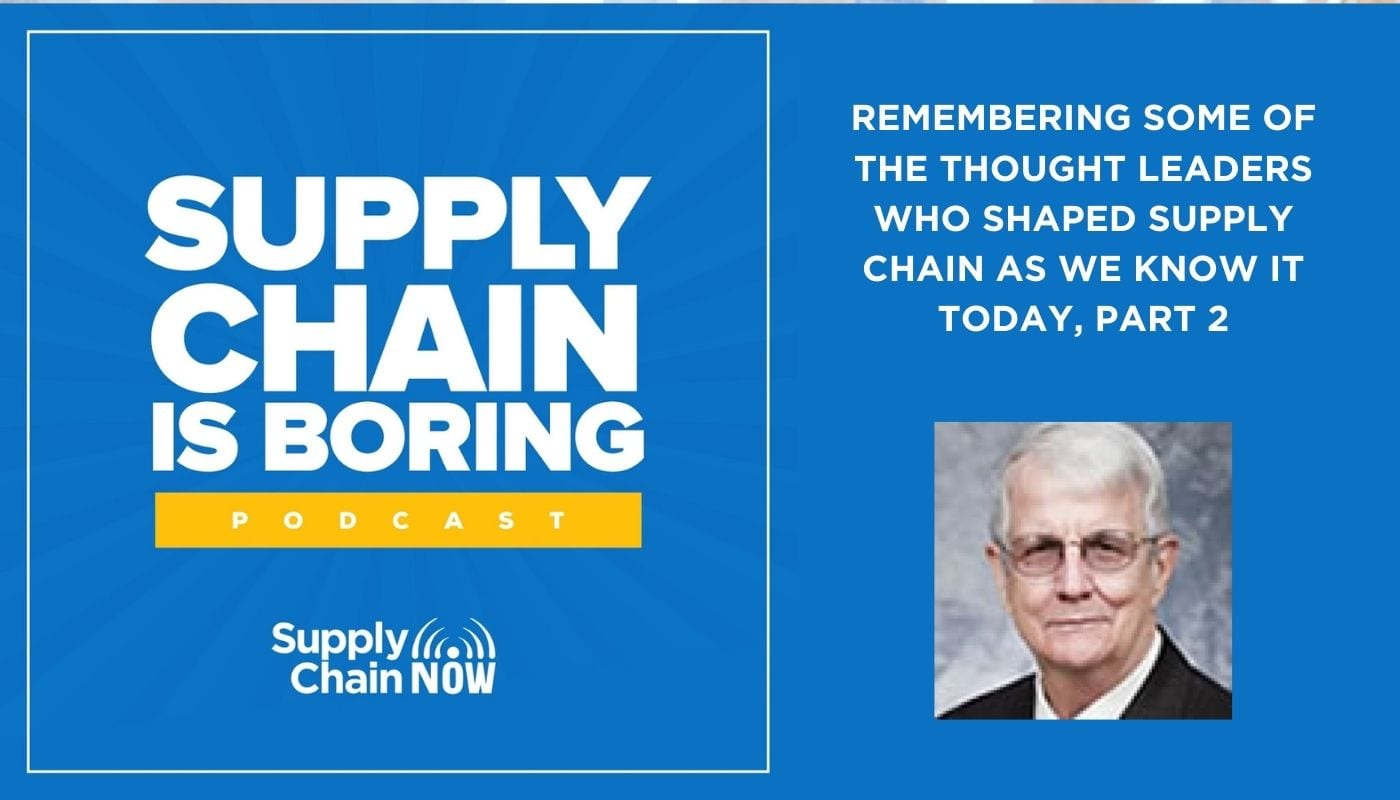
In this episode of Supply Chain is Boring, Chris continues his conversation with Dr. James Stock.  Dr. Stock has been honored internationally three separate times for his achievements in supply chain and logistics management by the industry’s leading professional organizations. This year, he will receive the Supply Chain Management Professionals’ Distinguished Service Award – the highest honor that an individual can receive for their achievements in supply chain and logistics management. In addition, he will also be honored with the Special Lifetime Logistics Service Award by Yasar University in Izmir, Turkey and the 9th International Logistics and Supply Chain Congress for his outstanding achievement and continuous contributions to the field.

Over the (recent) years, Dr. Jim Stock has been interviewing some of the business and academia thought leaders who have shaped the way we think about supply chain management. Guest list includes:

Dr. Daniel Wren, University of Oklahoma
Dr. Thom Speh, Miami University
Dr. John T. Mentzer, University of Tennessee
Dr. C. John Langley, Jr., Pennsylvania State University
Kenneth Ackerman
Dr. Donald J. Bowersox, University of South Florida
Dr. James L. Heskett, Harvard University
Dr. Bernard J. La Londe, Ohio State University

Following is a link to the video recordings and transcripts.

https://usfondemand.hosted.panopto.com/Panopto/Pages/Sessions/List.aspx?folderID=ef49a2cd-9fd6-4b1b-b9dc-ac0c01437c1e

More Podcast Episodes
optimization
play-button-podcast
podcast-blue-microphone
Podcast
October 2, 2024

Three Ways to Optimize Your Supply Chain Risk Management

In this new episode of Whiteboard Wisdom on Supply Chain Now, host Scott Luton and special guest Patrick Van Hull dive into the critical topic of supply chain risk management. They explore three essential capabilities to optimize risk management strategies: due diligence, continuous monitoring, and executive reporting. Summary: Listen in as Patrick emphasizes the importance of understanding and preparing for various risks, including geopolitical, cyber, and environmental factors, and shares insights from industry surveys highlighting the significant financial impacts of supply chain disruptions. The discussion also covers the necessity of building risk intelligence and operational resilience to ensure business continuity in the face of adverse events. This episode is a must-watch for supply chain professionals looking to enhance their risk management practices and drive competitive advantage.
Ratelinx
play-button-podcast
podcast-blue-microphone
Podcast
June 1, 2026

How to Reduce Freight Spend Without a Full RFP

Freight costs are rising – but most shippers aren’t capturing the savings hiding in their own data. In this episode of Supply Chain Now, Scott Luton and Kimberly Reuter talk with Shannon Vaillancourt, President of RateLinx, about how companies can uncover 5–15% in transportation savings in weeks, not months, without running a full RFP. They discuss common overspending traps, the power of clean, unified data, optimizing carrier mix, and making smarter, data-driven decisions to reduce costs while improving operational efficiency. The episode unpacks key strategies for optimizing transportation spend without launching a full RFP, including identifying hidden costs across carriers, modes, and accessories, optimizing carrier mix with clean, unified data, and realizing anywhere from 5 to 15% in transportation savings in weeks rather than months. Listeners also get insights on managing LTL versus parcel shipments, evaluating carrier performance beyond on-time delivery, and understanding how poor master data can quietly inflate costs across networks. Together, they explore why real-time, integrated freight data is critical for decision-making, how companies can quickly act on actionable insights, and why relying solely on contracts or historical assumptions can leave money on the table. They share real-world examples where minor operational adjustments yielded millions in savings,…

Supply Chain is Boring – Episode-16

Share:

Coming soon.