
Share:

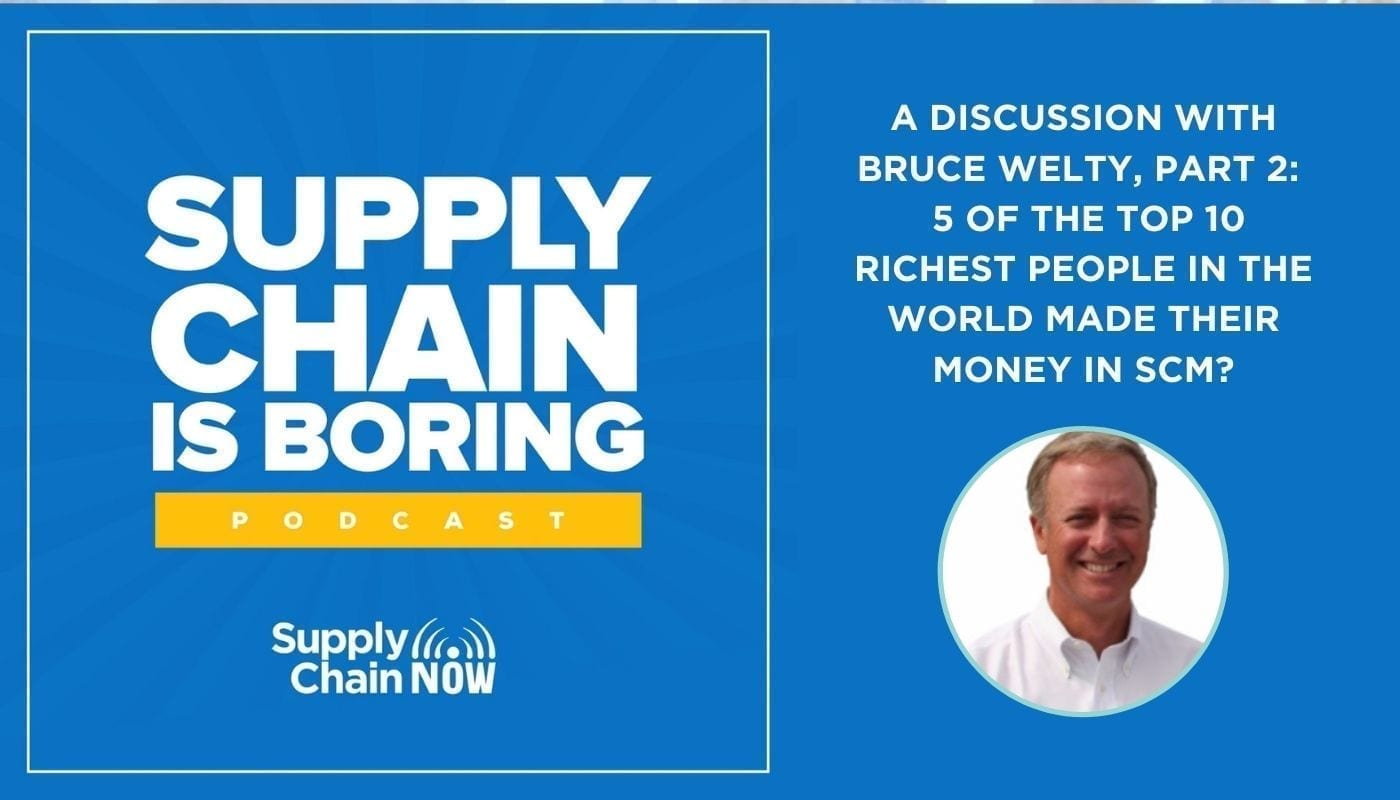
“Sure – Supply Chain is boring – except for the fact that 5 of the top 10 richest people in the world made their money in it.”

-Bruce Welty


Bruce Welty has been a pioneer and visionary in automating warehouses since before the Internet. He has built, bought and sold some of the industry’s most innovative companies. He’s automated warehouses for Fortune 500s, e-Commerce startups, and even built a fulfillment company that ships more than $1 billion worth of e-Commerce orders each year. It was his direct experience with warehouses, fulfillment, and robotics that inspired him to build an entirely new solution.

Bruce Welty never wanted to build robots; Amazon.com made him do it. Starting in the 1970s, Welty, specialized in software for managing warehouses. In 2009, he shifted gears and founded Quiet Logistics, a company that used robots from Kiva Systems of North Reading to dramatically reduce warehouse operating costs. But three years later, retailing titan Amazon.com acquired Kiva, cutting off Welty’s robot supply. He saw only one hope — build his own robots.


In part 2 of this 2 part series, we sat down with warehouse technology industry veteran Bruce Welty to learn about his vision of warehouse automation, autonomous mobile robots, and Moravec’s paradox.

More Podcast Episodes
tech
play-button-podcast
podcast-blue-microphone
Podcast
February 23, 2026

The Now Generation: Teaching Supply Chain with Simulations, Stories, and Systems

As supply chain technology accelerates, the ability to translate operational knowledge into scalable systems is becoming a defining advantage for both companies and early-career talent. In this episode of Supply Chain Now’s Now Generation series, Scott W. Luton sits down with Ryan Goodwin, Sr. Director of Supply Chain Technology & Innovation at Trinity Industries and an adjunct professor at Texas Christian University, alongside Titus Fagan, TCU Student Body Vice President and a third-year accounting major with a minor in energy business. Ryan shares how his team is integrating planning, MRP, and financial data into platforms that enable faster automation and application-building, often with the help of AI and “vibe coding,” where non-traditional builders can create real tools without a formal software background. Titus brings the student lens, explaining why practitioner-led teaching changes the classroom experience, how simulation-based learning builds cross-functional thinking, and why early responsibility and collaboration are top priorities when evaluating future employers. Together, they explore how AI can lower barriers to entry, accelerate skill development, and reduce manual work while also raising bigger questions about infrastructure, power demand, and the bottlenecks that can slow even the most innovative systems. From freight reporting automation to energy transmission constraints, this…
play-button-podcast
podcast-blue-microphone
Podcast
November 12, 2024

Perritos a bordo: logística de mascotas

Cuando pensamos en mover carga de un punto a otro, normalmente nos imaginamos el movimiento de productos en grandes contenedores o tarimas por medio de aviones, camiones y barcos, pero muy pocas veces consideramos que también existe el movimiento de carga muy valiosa como lo son los animales. En este episodio hablamos de la logística de mascotas y todo lo que toma en cuenta en su planeación y ejecución. Para las personas que buscan salir de vacaciones o incluso reubicarse a otro país, viajar con sus fieles compañeros puede ser algo muy complicado, pero gracias VIPet esto ahora es mucho más sencillo. Jeannine Rivas decidió juntar sus dos grandes pasiones; cadena de suministro y estudios veterinarios, y fue así como creó su empresa de VIPet International para importar y exportar mascotas por el mundo. Descubre más sobre este sector que involucra el manejo de carga especial, delicada y viva; nuestras mascotas.  

Supply Chain is Boring – Episode-18

Share:

Coming soon.