Share:

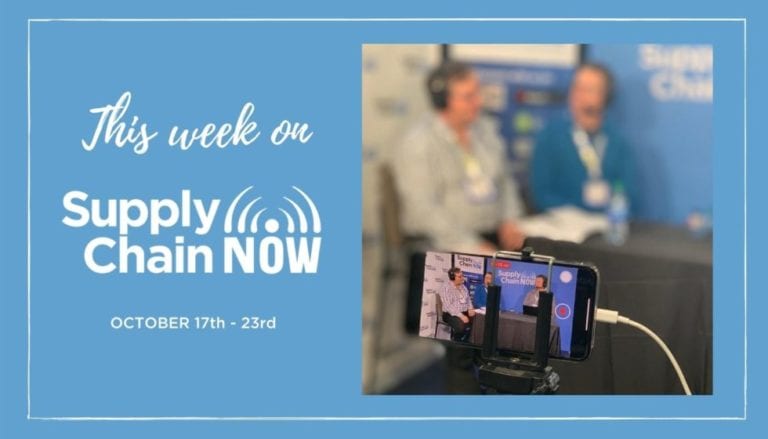
This Week on Supply Chain Now: October 17th – 23rd

This week at Supply Chain Now has been full of great conversations and key takewaways you don’t want to miss. Check out all the latest episodes, interviews, conversations, and livestreams right here!

On Saturday, Scott & Greg Chat Automotive & Leadership with Jim Liegghio & Elba Pareja-Gallagher


On Monday, Scott and Greg welcome SAP business leaders that are fueling industry 4.0, Mike Lackey and Robert Merlo, who share key takeaways from a wide variety of initiatives right here.


On Tuesday,  Scott and featured guest Jonathon Karelse, CEO of Northfind Management, lead the conversation surrounding the next big idea for decision making and planning in most companies: Behavioral Economics.


On Wednesday, Scott and Greg hosted welcomed Kara Brown and Will Haraway from LeadCoverage to Supply Chain Buzz where they discussed recent developments in supply chain, key takeaways surrounding customer experience, democratization in the TMS space and technology trends.


On Thursday, Scott and Greg welcomed two business leaders from OMNIA Partners, Lisa Wittmer and Dan Grant, for a discussion on how modern GPO is future-proofing the global supply chain.


And we ended the week with an episode of TECHquila Sunrise. Featured guest Jason Perez, CEO of YARDZ, continues to share his journey to his chosen profession in supply chain tech with host Greg White.


Which was your favorite episode this week? Never miss an episode by subscribing to Supply Chain Now! Make sure you tune in next week for more great conversation, timely topics, and exceptional guests.

More Articles

supply chain podcast
Articles
April 8, 2025

Meet the Supply Chain Now Host: Jake Barr

Supply Chain Now is the voice of the supply chain industry, and our hosts are experts in the field. Podcast listeners and webinar viewers tune in to hear the sage advice of host Jake Barr, heralded as an architect of global supply chain strategy and creator of “profit powerhouses.” Earning His Spot on Stage Barr today is the CEO of BlueWorld Supply Chain Consulting, which provides support to such Fortune 500 companies as Cargill, Caterpillar, 3M, PepsiCo, and Pfizer and helps them bring products to market. “We place a premium on accelerating speed to market by leveraging supply chain transformation,” he says. “The result is better operating margin performance and the opportunity to drive faster growth in revenue.” During his more than 33 years with Procter & Gamble, Barr served as the global director of supply network operations and led the end-to-end planning transformation project, which created control towers that now manage the daily business globally and earned him recognition as the architect for the company’s demand-driven supply chain strategy. He served on the MIT Center for Transportation & Logistics advisory council for its Supply Chain 2020 Project, was named to the League of Leaders for retail and consumer goods…
supply chain sustainability
Articles
July 2, 2024

Guide to Sustainability in Logistics: Implementing Eco-Friendly Practices

The logistics and transport sector contributes about 24% of global CO2 emissions. Considering the push for supply chain sustainability across different sectors, the need for lower emissions has been heating up in recent years. With roughly a quarter of the world’s emissions tied to logistics, this industry will possibly be the final frontier to tackle regarding sustainability. While different strategies can be leveraged to reduce the impact of logistics operations on the environment, integrating eco-friendly practices and reducing Scope 3 emissions are some of the most pressing initiatives at hand. This article serves as a guide that will provide actionable steps for companies to embrace innovative solutions and navigate the transition toward a greener future. Scope 3: Understanding Supply Chain Emissions Modern supply chain management outsources different parts of the operation to leverage the expertise of different suppliers and stakeholders. Logistics operations are usually outsourced to third-party providers, and exercising control over their operations and monitoring their sustainability practices and emissions can be challenging. Here’s the harsh reality: no matter how well an organization manages to reduce Scope 1 and 2 emissions, the unaddressed Scope 3 emissions can bring the entire process to a screeching halt. This is especially true…