

More
inventory control
August 13, 2026
Blame Follows the Messenger
Customers blame retailers less when the delay notification comes from someone else When something goes wrong, most companies reach for the same playbook: communicate early, communicate often, and keep customers informed. It is difficult to argue with that logic. Customers hate surprises, and transparency has become a cornerstone of good service. Whether the issue is a delayed shipment, a production disruption, or a missed commitment, managers generally assume that more communication demonstrates accountability and builds trust. New research published in the Journal of Business Logistics suggests the real lesson is narrower and more useful than “communicate more.” The study shows that communication does more than transfer information. It also shapes how customers assign responsibility. The volume of communication was not what mattered. The identity of the messenger was. Researchers presented consumers with identical delivery delays following an online purchase. In the study, the same standard emails were sent to every participant: an order confirmation, a shipment notice, and a delivery confirmation. What varied was only how customers learned about the delay itself. Some received a delay notification from the retailer, some from the carrier, and others discovered the delay on their own through package tracking. The delivery outcome was…
leadership
April 29, 2026
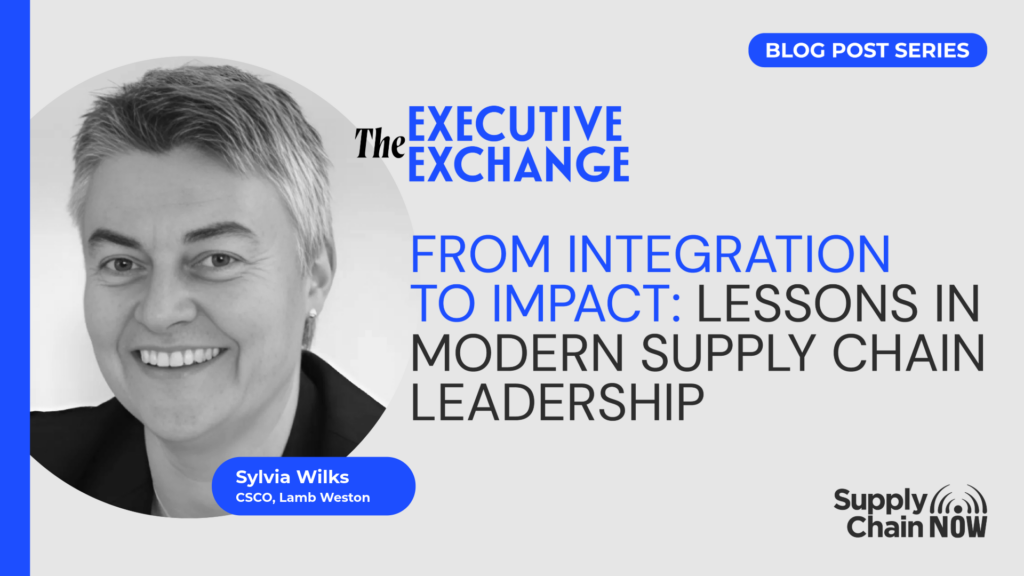
From Integration to Impact: Lessons in Modern Supply Chain Leadership
In a recent conversation, Supply Chain Now’s Scott Luton gained perspective from Sylvia Wilks, Chief Supply Chain Officer at Lamb Weston, who shared a powerful point of view on what it takes to lead in today’s increasingly complex, high-stakes supply chain environment. Her journey, from leading transformative initiatives at Starbucks to shaping global operations at Kimberly-Clark and REI, offers a consistent message: Success in supply chain isn’t just about systems or strategy. It’s about people, integration, and clarity of purpose. Wilks’ passion for supply chain was sparked during her time at Starbucks, where she led a bold initiative to insource instant coffee production. What began as a business case evolved into a transformative opportunity. “Seeing the entire chain, from strategy through operations, work seamlessly toward a common goal reinforced how much value organizations unlock when supply chain subfunctions operate collaboratively rather than in silos,” she explained. The idea of breaking down silos to create an integrated value chain has remained a central theme throughout Wilks’ leadership career. The Power of People and Integration Across organizations of all sizes, Wilks sees a common thread: The challenges may be similar, but outcomes depend on how well teams work together. “My passion…