
Share:

“If you ignore supply chain in this day and age, if you’re throwing one or two small resources at it, you are absolutely missing out and setting yourself up for some uncomfortable issues in the future.”

– Tony Spielberg, Manufacturing Ambassador for Cambridge Air Solutions


“I have a passion for learning because I think that is what creates the culture. If we learn together, then we’re going to be stronger across the board, no matter what, what environment you’re in.”

– Jan Freyburgher, CRO of OpusWorks® by The Quality Group (TQG)


“I admire the AME team for shifting all the events online – all of that effort, despite the fact that we couldn’t meet in person – allowed us to stay in touch with the AME community.”

– Errette Dunn, CEO of Rever


Most organizations in the manufacturing world have some form of continuous improvement program in place today. What we’re finding is a lot of them are now questioning whether they are getting the most out of them, if they are driving breakthrough results.”

– Lee Alves, Partner at Simpler Consulting, an IBM Company


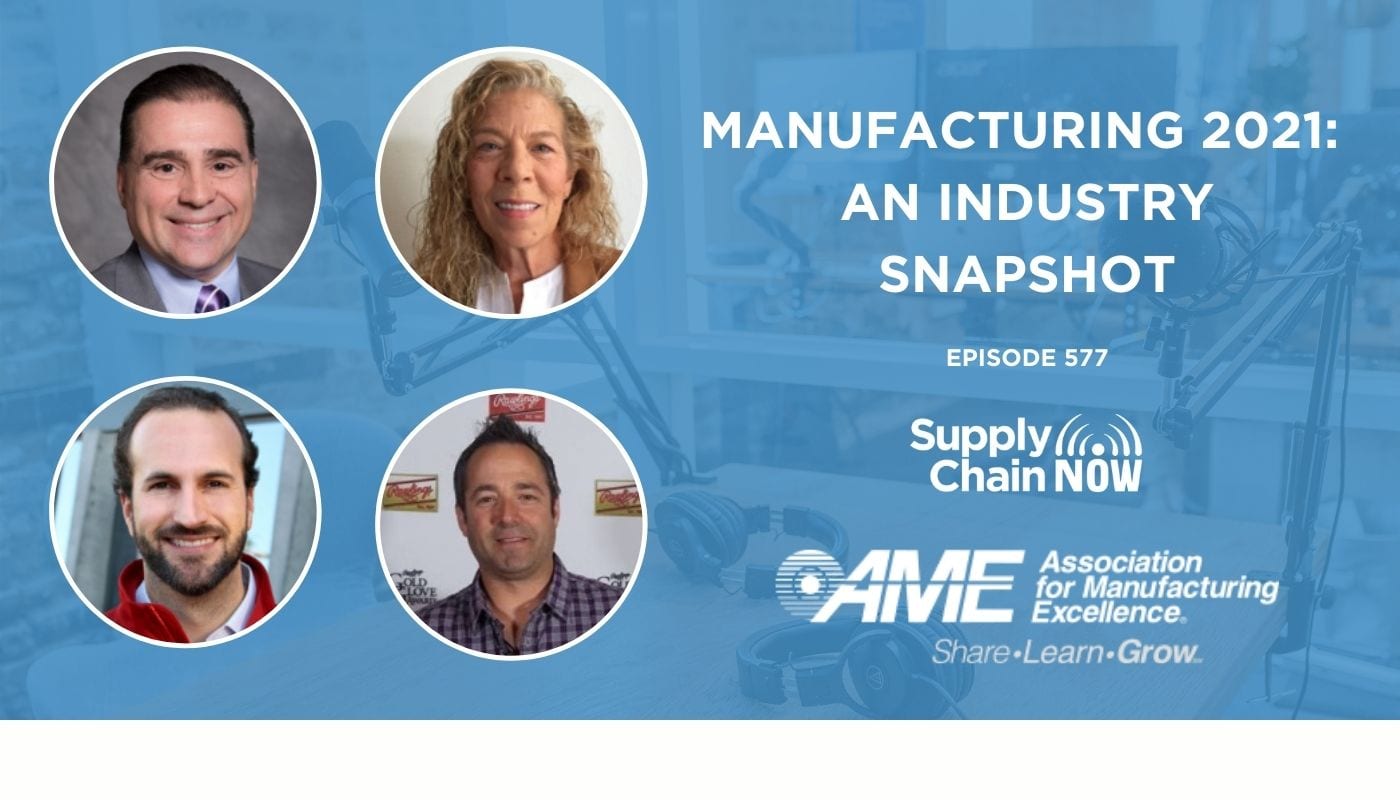
To get a broad perspective on what prevailing trends may drive manufacturing in 2021, Supply Chain Now brought together a panel of thought leaders with differing perspectives on manufacturing: Lee Alves, Partner at Simpler Consulting, an IBM Company; Jan Freyburgher, CRO of OpusWorks® by The Quality Group (TQG); Errette Dunn, CEO of Rever; and Tony Spielberg, Manufacturing Ambassador for Cambridge Air Solutions.

In this episode, Lee, Jan, Errette, and Tony share their unique points of view with Supply Chain Now Co-hosts Greg White and Scott Luton:

· The trends, issues, and big happenings each of them has observed in manufacturing, including their primary take aways from AME 2020

· How manufacturers are recovering from the disruption in 2020 and setting their sights on delivering breakthrough results

· The encouraging rise of frontline workers, whether they have officially been labeled “essential” or not

More Podcast Episodes
reverse logistics
play-button-podcast
podcast-blue-microphone
Podcast
October 13, 2025

From Afterthought to Advantage: Reverse Logistics at Enterprise Scale

In this episode of Supply Chain Now, Scott Luton sits down with two leaders shaping the future of reverse logistics from the floor to the classroom: Troy Campbell, Director of Reverse Logistics Centers at The Home Depot, and Dr. Glenn Richey, Jr., Harbert Eminent Scholar in Supply Chain Management at Auburn University. Troy opens the doors to Home Depot’s four Reverse Logistics Centers: Phoenix, Pittston (PA), McDonough (GA), and Indianapolis, showing why a people-first culture remains the operating system for returns at scale. He gets real about “automation when the box isn’t a box,” how rethinking inbound flows through 3PLs reduces touches and transportation cost, and why simple vendor conversations (like consolidating daily pallets into a single weekly load) can unlock outsized impact. His north star: make associates’ days easier, and the entire reverse network improves. Glenn zooms out to the macro shifts: the move from minimizing returns to maximizing returns within a circular economy, generative AI for scenario planning and real-time decision support, and reverse logistics as the operational backbone of sustainability. He maps the skills the next workforce will need, calls for clearer industry coding to separate reverse data from forward logistics, and outlines how universities can build…
Cultural organization
play-button-podcast
podcast-blue-microphone
Podcast
December 17, 2025

El Arte del Liderazgo multicultural

En este episodio, Sofía Rivas conversa con Carlos Barajas, VP de Operaciones en End-to-End Supply Chain para New World Brands, sobre los retos y oportunidades de liderar equipos multiculturales dentro de cadenas de suministro globales. Carlos comparte cómo su interés por el ámbito internacional comenzó desde su formación en Thunderbird, donde convivió con personas de más de 70 países, experiencia que marcó su enfoque hacia el cross-cultural management. A lo largo del episodio, Carlos explica que la clave para liderar equipos diversos es escuchar, entender y construir confianza antes de intentar implementar cambios. Destaca la importancia de adaptar el estilo de liderazgo según la cultura, pues cada país tiene ritmos, expectativas y formas de comunicar muy diferentes. Por ejemplo, menciona que en algunos países se comienza con el contexto y en otros con un resumen ejecutivo directo al punto. También comparte historias de su experiencia transformando operaciones, como el caso de una planta con riesgo de cierre que, tras tres años de trabajo conjunto, se convirtió en una de las mejores del network global de la compañía. Finalmente, Carlos aconseja a nuevos líderes desarrollar paciencia, permitir que el equipo proponga soluciones y mantenerse presentes en cada país para construir relaciones…

Supply Chain is Boring – Episode-577

Share: