

More
October 15, 2021
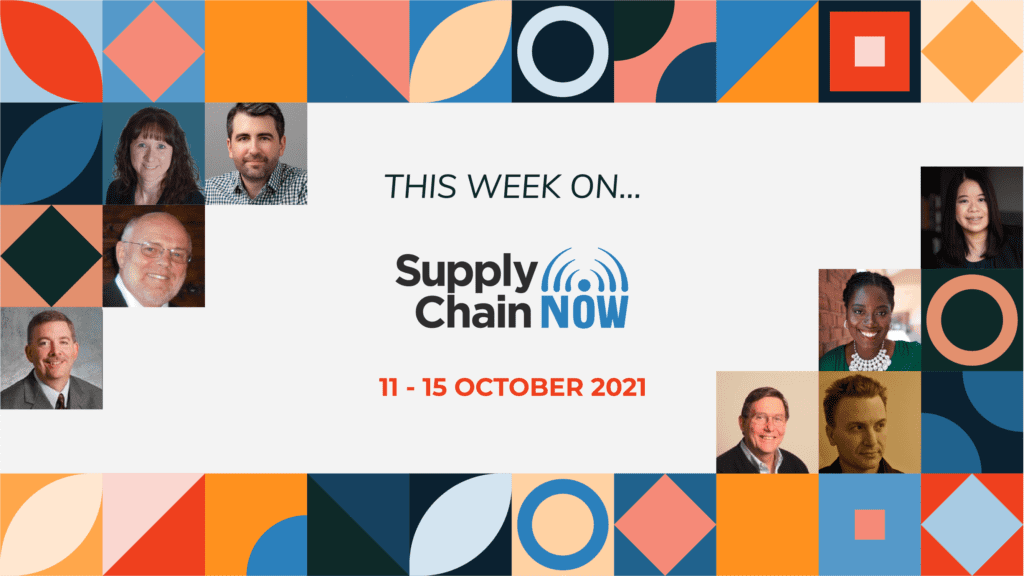
This Week In Supply Chain Now: October 11th – 15th
Stay up to date on all the latest conversations, interviews, and episodes we released this week here at Supply Chain Now! We kicked this week off with a special episode of Supply Chain Now featuring Mike Griswold. Scott, Kelly, and Mike discuss the key takeaways from the Gartner Supply Chain Symposium/Xpo 2021. For Monday’s This Week In Business History, Kelly gives insight on two notable figures who have made some amazing strides in theoretical economic science research. On Tuesday, we released an episode of Supply Chain Now with host Scott Luton. Scott had the opportunity to chat with Theodora Lau the Founder of Unconventional Ventures and Bradley Leimer the Co-Founder of Unconventional Ventures. They discuss some of the amazing points in their book titled “Beyond Good: How Technology Is Leading a Purpose-Driven Business Revolution.” We also released an episode of Logistics With Purpose this week. Host Enrique and Monica talk with Dave Schweidenback the Founder and CEO of Pedals for Progress. Dave shares the story behind the logistics of shipping 4,800 bikes across 45 different countries. For Thursday’s Supply Chain Now episode Scott interviews communications expert Monique Russell from Clear Communications, LLC. This conversation is all about effective communication and…
supply chain decision making
February 16, 2026
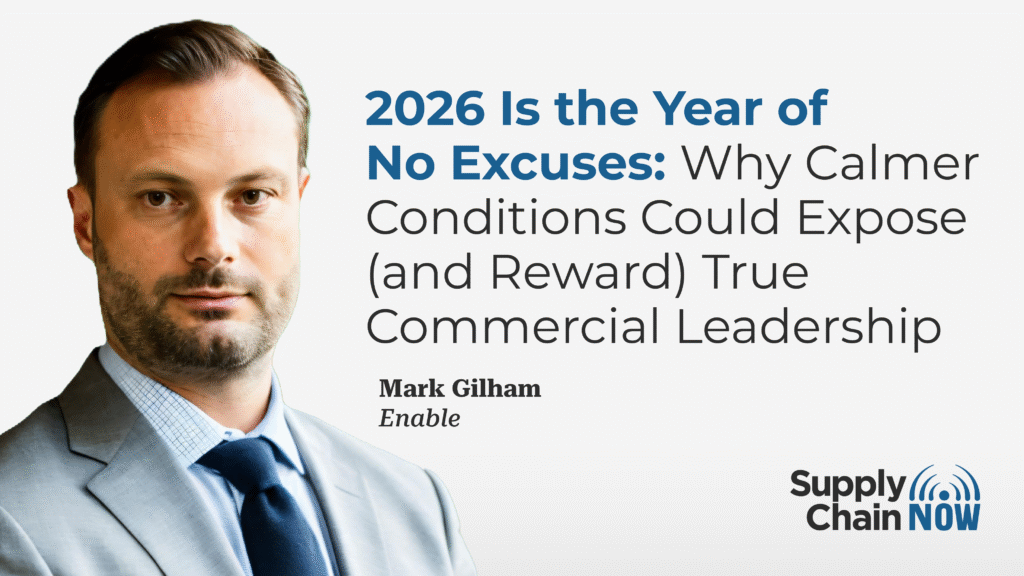
2026 Is the Year of No Excuses: Why Calmer Conditions Could Expose (and Reward) True Commercial Leadership
A Shift in the Narrative for 2026 In a recent conversation, Scott Luton spoke with Mark Gilham, Vice President & Head of Global Advisory at Enable, about what supply chain and commercial leaders should expect from the year ahead. While many annual outlooks attempt to forecast the next major disruption, Gilham offered a different lens: 2026 may become the “year of no excuses.” After years defined by a global pandemic, inflationary shocks, geopolitical instability, supply shortages, and the rapid rise of AI, organizations have already endured extraordinary volatility. Businesses not only survived, but in many cases adapted and grew. According to Gilham, that reality weakens the argument that disruption alone explains underperformance. Disruption is not disappearing, he cautioned, but leaders can only lean on it for so long. Why a Calmer Year Raises the Bar Gilham argued that if external conditions stabilize even slightly, the pressure on leadership actually increases. A less chaotic environment removes convenient explanations and shines a brighter light on internal shortcomings. Process gaps, misaligned incentives, and execution failures become harder to ignore when the world is not on fire. Rather than waiting for certainty, Gilham believes leaders should act decisively. This does not mean radical…