

More
cold storage
April 17, 2026
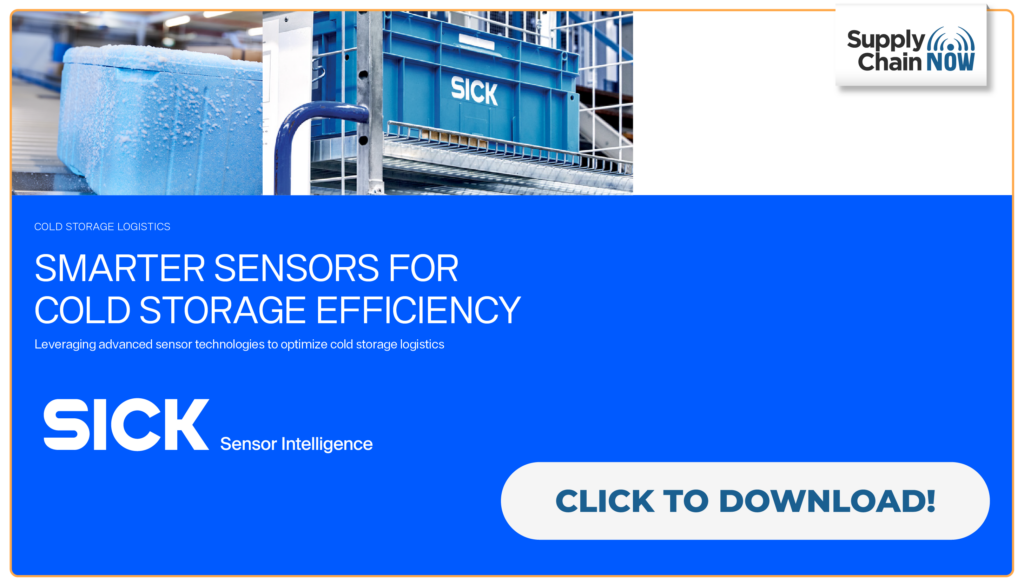
Smarter Sensors for Cold Storage Efficiency
Cold storage environments demand precision, consistency, and technology that performs under pressure. This free ebook explores how advanced sensor technologies are transforming cold storage logistics, helping teams reduce risk, improve accuracy, and keep goods moving safely through the supply chain. Inside the ebook, you’ll learn: How modern automation and sensor intelligence improve efficiency in deep-freeze and cold‑storage environments Real-world challenges cold storage facilities face—and the technologies designed to solve them The latest innovations in measuring, detecting, identifying, and quality‑control sensors built to withstand –40°C and beyond Practical ways to enhance safety, reduce energy consumption, and streamline your logistics workflow Click here to download
freight network
February 12, 2026
How Freight Visibility is Reshaping Supply Chain Resilience
Special Guest Blog Post from Amazon Freight For supply chains across the globe, goods in motion are promises in motion. When a palletised shipment is delayed or goes dark, the impact is felt not just in transport teams, but in customer service, inventory planning, and broader network performance. In a conversation, economist Dr. Rebecca Harding and Chris Roe, Managing Director of Amazon Freight, explored how technology and collaboration are changing the way freight networks operate. While their primary focus was freight, their insights map directly onto the resilience challenges supply chain leaders face every day. Old pressures, new data In a study supported by Amazon Freight, every shipper surveyed agreed that technology is crucial to the freight industry’s resilience. While this isn’t a surprise, it’s an important reminder of the role that technology plays. Roe shared a key example where Amazon Freight connected a customer’s system to its own system. Visibility on the end-to-end movement went from essentially zero to a high level of coverage. Instead of discovering problems only when a shipment failed to arrive, the customer could now see disruptions as they emerged and act earlier. For supply chain teams, that move from partial, delayed information…