

More
April 17, 2020
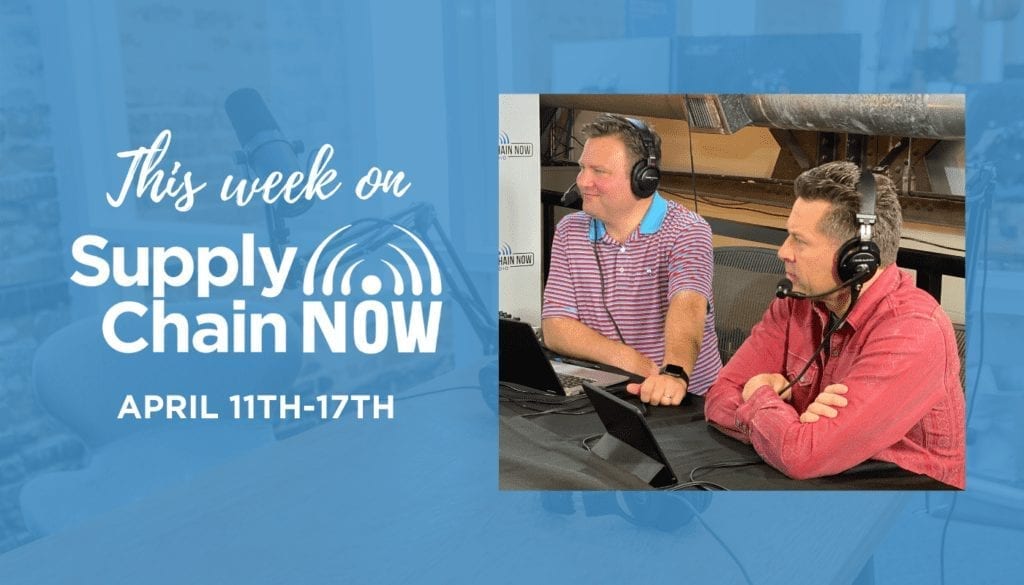
This Week on Supply Chain Now: April 11-17
It has been a big week (as usual) for Supply Chain Now! Did you miss an episode? Check them all out here: Listen as Daniel Studdard with the Atlanta Regional Commission, talks with Greg and Scott from MODEX 2020 about keeping freight moving: Rodney Apple with SCM Talent Group joins Greg and Scott from MODEX 2020 to chat about securing top supply chain talent: On Tuesday, Scott and Greg were joined remotely by Jan van Niekerk with SpotSee, to talk about leveraging technology to protect your shipments during transit: Scott and Greg were joined by Bob Bova with Accuspeech Mobile from MODEX 2020 and discussed voice automating workflows: On Thursday we published the new and improved Supply Chain Buzz, with Scott and Greg sharing and discussing the latest news and events in Supply Chain and beyond: And to finish out the week, Mark Messina and Rick DeFiesta with Geek+ joined Scott and Greg for a discussion about COVID-19’s impact on consumer behaviors, warehouse operations, automation initiatives, and more: Make sure you subscribe to Supply Chain Now so you never miss an episode and we will see you next week with all new livestreams and…
demand spikes
May 26, 2026
When Demand Spikes Overnight: A Practical Guide to Demand Signal Management
Demand can change in an instant. A flash promotion takes off faster than expected. An influencer post sends a niche SKU into the stratosphere. A heat wave flips seasonal demand on its head. And suddenly, your forecast—carefully crafted weeks ago—feels like yesterday’s weather report. This is where demand signal management earns its keep. Instead of reacting too late or overreacting too early, it helps supply chain teams interpret what’s really happening and respond with confidence. For retailers and consumer brands navigating constant demand volatility, it’s the difference between chasing noise and acting on insight. The problem: demand forecasts lag reality Traditional forecasting has a fundamental challenge: timing. Forecasts are built on historical patterns and planning cadences that move at a measured pace, but demand levels today won’t wait for the next planning cycle. Modern demand shocks often arrive without warning: a promotional discount goes viral, a competitor runs out of stock, weather drives sudden regional swings, or a trend outpaces merchandising plans. In these moments, planners face a familiar tension. React too slowly, and shelves go empty. React too aggressively, and you’re stuck with excess inventory once the spike fades. What demand signals are (and what they aren’t)…