

More
supply chain podcast
April 8, 2025
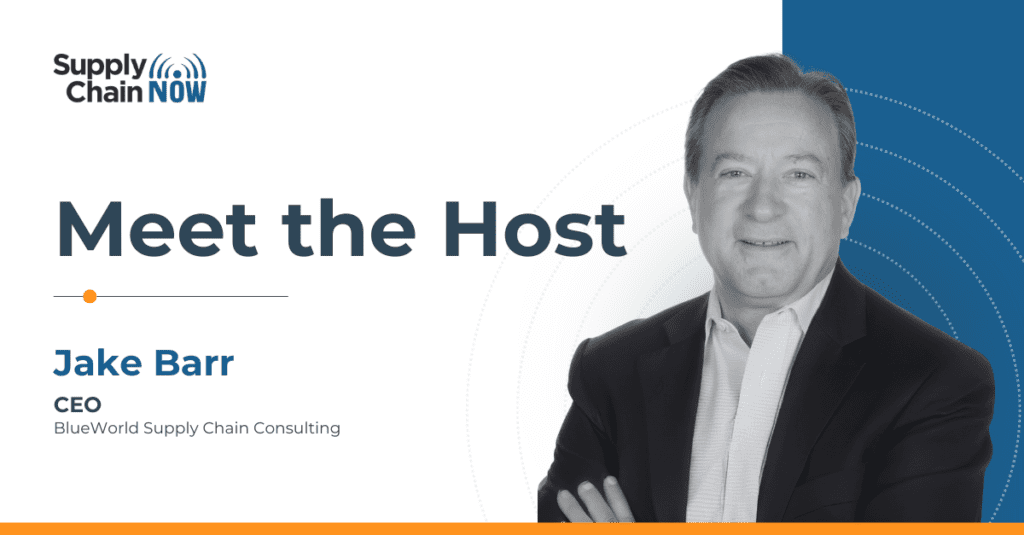
Meet the Supply Chain Now Host: Jake Barr
Supply Chain Now is the voice of the supply chain industry, and our hosts are experts in the field. Podcast listeners and webinar viewers tune in to hear the sage advice of host Jake Barr, heralded as an architect of global supply chain strategy and creator of “profit powerhouses.” Earning His Spot on Stage Barr today is the CEO of BlueWorld Supply Chain Consulting, which provides support to such Fortune 500 companies as Cargill, Caterpillar, 3M, PepsiCo, and Pfizer and helps them bring products to market. “We place a premium on accelerating speed to market by leveraging supply chain transformation,” he says. “The result is better operating margin performance and the opportunity to drive faster growth in revenue.” During his more than 33 years with Procter & Gamble, Barr served as the global director of supply network operations and led the end-to-end planning transformation project, which created control towers that now manage the daily business globally and earned him recognition as the architect for the company’s demand-driven supply chain strategy. He served on the MIT Center for Transportation & Logistics advisory council for its Supply Chain 2020 Project, was named to the League of Leaders for retail and consumer goods…
Reuters Events Supply Chain
May 21, 2026
Supply Chains That Bend, Not Break
This post is written in partnership with Reuters Events: Supply Chain. Reuters Events connects the world’s most senior supply chain leaders through conferences, research, and digital content. Learn more: events.reutersevents.com/supply-chain/usa When decisions cannot keep pace with change There is a moment most planning leaders recognise right now: A tariff announcement lands. A carrier pulls capacity. Demand accelerates faster than the forecast adjusts. The decision window compresses, and by the time there is confidence in the data, the cost of delay is already building. These pressures across supply chains are not new. What has changed is the speed at which conditions move underneath a decision, often faster than organisations are set up to respond. Customer expectations do not flex when supply does not. The cost of a wrong call, whether inventory in the wrong market, capacity committed too early, or service levels slipping before anyone flags them, compounds quickly. Most organisations have responded by investing. Better tools. More data. AI pilots. Network reviews. The core problem persists: decisions are still being made without full confidence. Planning and execution do not align when conditions change. In many cases, the issue is not disruption itself. It is how long organisations take to…