

More
webinar
October 30, 2025
The Power of Partnership in Supply Chain Automation
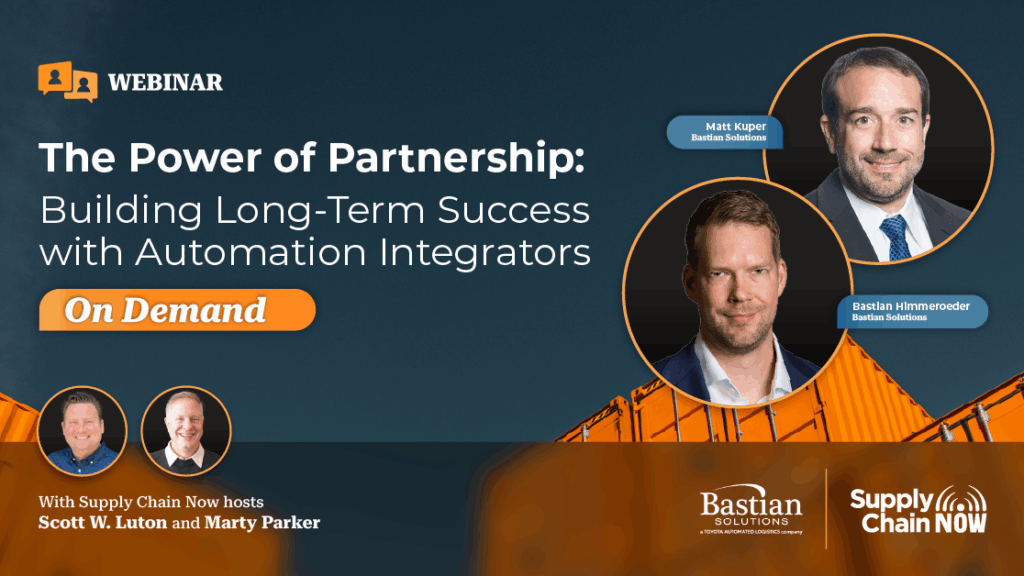
Key Takeaways from the Supply Chain Now Webinar with Bastian Solutions In today’s fast-changing world of logistics and manufacturing, one truth is clear: there’s no hiding from automation. Whether you’re a global enterprise or a growing regional player, success depends on choosing the right technology—and, just as importantly, the right partner. In a recent Supply Chain Now webinar, The Power of Supply Chain Partnerships, hosts Scott Luton and Marty Parker sat down with Matt Kuper and Bastian Himmeroeder from Bastian Solutions, a Toyota Automated Logistics company, for an in-depth conversation about how to unlock the true potential of automation through strong integrator relationships. Here are a few key takeaways that stood out: 1. Strategic Partnerships Trump One-Off Projects According to Bastian, the age of “one-and-done” automation projects is over. Today’s complexity demands long-term, strategic relationships between companies and their integrators—ones built on transparency, shared values, and a deep understanding of each other’s goals. 2. Culture Fit Matters as Much as Technology Matt emphasized that cultural alignment is the first critical element in selecting an integrator. Shared values, open communication, and mutual respect ensure that the partnership thrives well beyond implementation. 3. Experience and Support Drive Success Choosing a partner with…
supply chain analytics
August 25, 2026
From Data Chaos To Decision Intelligence: How AI Continues To Reshape Logistics
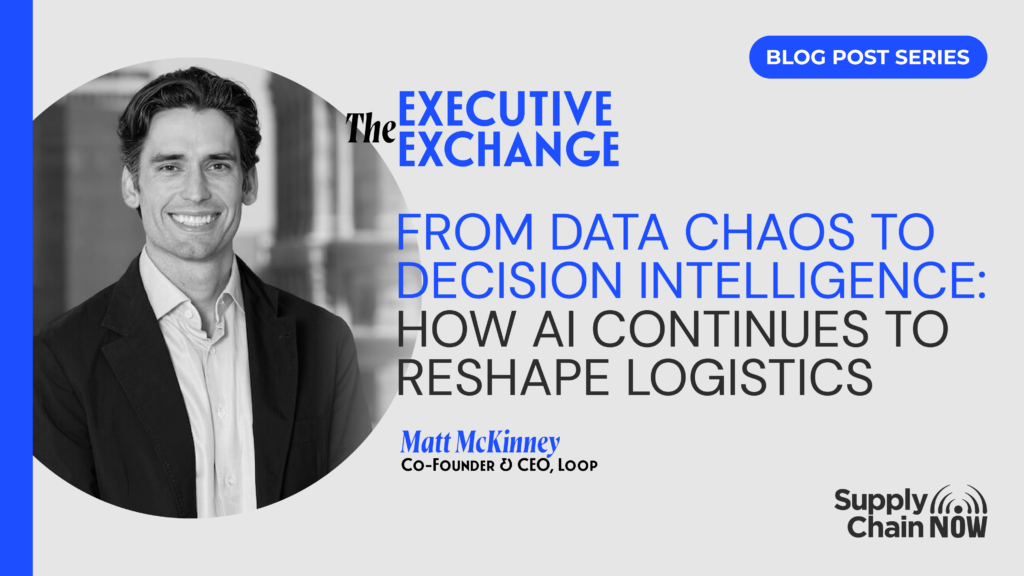
Supply chain organizations have never lacked data. What they have often lacked is the ability to connect it, normalize it, trust it, and turn it into better decisions. That was one of the central themes in a recent conversation between Scott Luton and Matt McKinney, Co-Founder and CEO of Loop. Drawing on his experience helping build Uber Freight and now leading a logistics technology company, McKinney offered a clear-eyed view of where AI is already creating value, as well as why the data foundation still matters more than the model itself. The Real Problem Is Not Data Volume McKinney traces Loop’s origins back to a recurring problem he and his co-founder (Shaosu Liu) saw at Uber Freight: rapid growth on the revenue side paired with a back office still dependent on people manually reconciling invoices, contracts, proofs of delivery, and surcharges. The bigger realization was that this was not unique to Uber. “The thing people miss is that the value isn’t in the quantity of data, it’s in the utility of it,” McKinney explained. “Most companies have plenty of data. What they don’t have is data that connects.” That disconnect is especially painful in logistics, where data is scattered across…