

More
recovering critical minerals from electronics
March 25, 2026
The Geopolitics of Junk
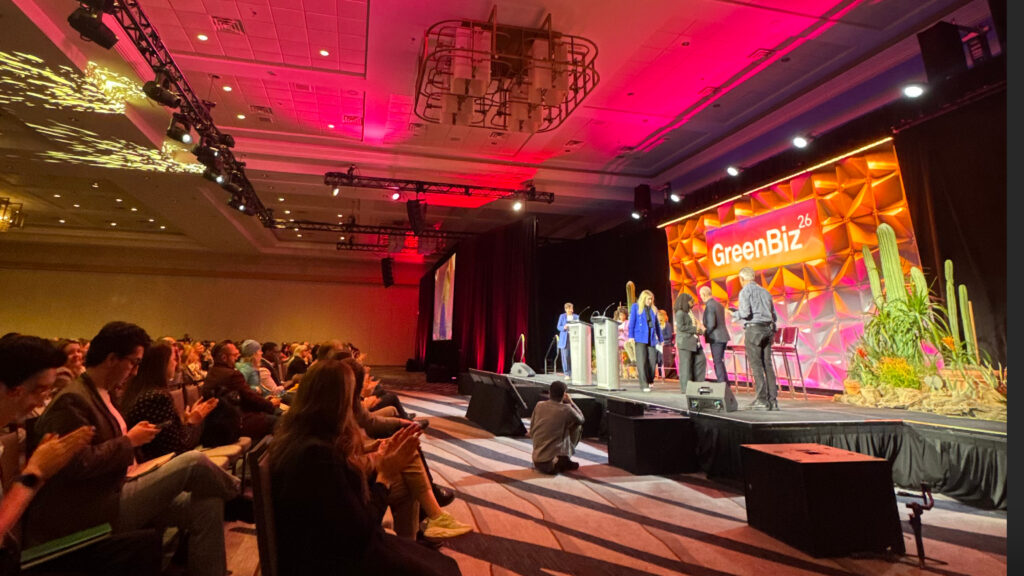
written by Deborah Dull, on site at GreenBiz 2026 I spent today in a room full of people who think about waste for a living. And the word that kept coming up had nothing to do with recycling. It was sovereignty. Here is the situation. The United States imports 95% of its critical mineral supply. Lithium, cobalt, rare earth elements, the stuff inside every battery, every semiconductor, every electric motor. We do not make it, we do not mine much of it, and we do not control the supply chain that delivers it. That is not an energy policy problem. That is a national security problem. Now here is the part that should make you put down your coffee. A ton of smartphones contains dramatically more gold than a ton of mined ore. We are talking about concentrations that make urban mining look like a gold rush compared to digging in the ground. And yet the recovery rate for those materials, once a phone leaves its first owner, drops to around 13%. We are losing roughly 80% of the value sitting in devices right now, in drawers, in closets, in landfills. E-waste is also the fastest growing waste stream…
automation
April 27, 2026
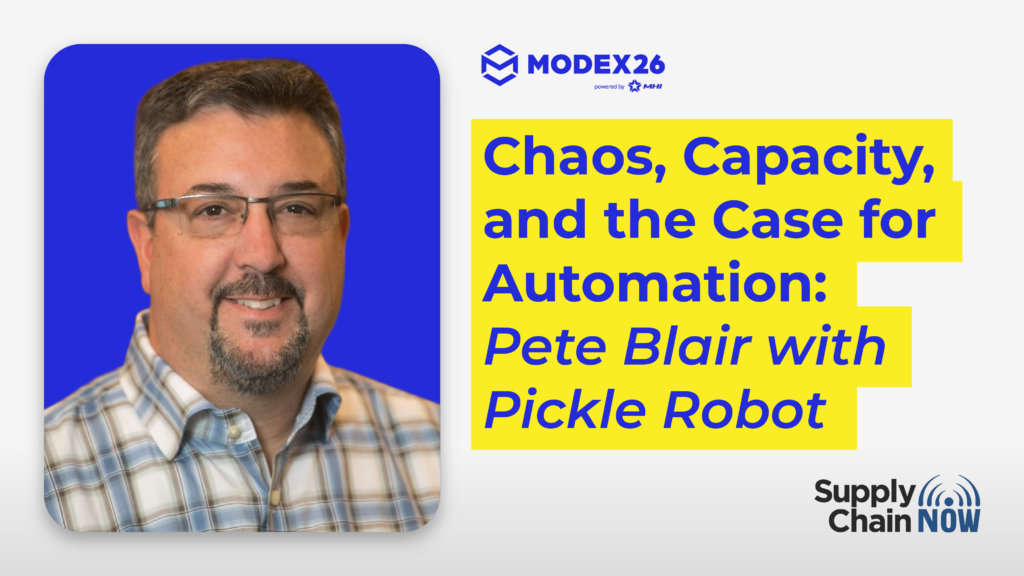
Chaos, Capacity, and the Case for Automation: Pete Blair with Pickle Robot
At MODEX 2026 in Atlanta, the energy was unmistakable. With thousands of supply chain professionals gathered, one theme echoed across conversations: uncertainty is no longer episodic. It’s constant and seemingly endless. In a candid discussion with Scott Luton, Pete Blair, VP of Product & Marketing at Pickle Robot, unpacked how organizations are navigating volatility, workforce challenges, and the growing role of automation in keeping operations moving. Navigating Tariffs and a Moving Target If there’s one word defining today’s global supply chain environment, it’s unpredictability. Blair points to tariffs as a prime example; and not just their presence, but their volatility. “The biggest thing we see… is the chaos of tariffs. It’s not so much that customers have to pay tariffs or not pay tariffs, it’s that they don’t know how to plan,” Blair explains. That lack of predictability is forcing organizations to rethink their networks in real time. Companies are shifting sourcing strategies, standing up temporary distribution centers in new geographies, and even making drastic decisions about whether importing goods makes financial sense at all. What’s particularly challenging isn’t the cost itself. But rather, it’s the inability to forecast. Supply chains, while resilient, aren’t designed for abrupt swings like…