
More
supply chain podcast
March 31, 2025
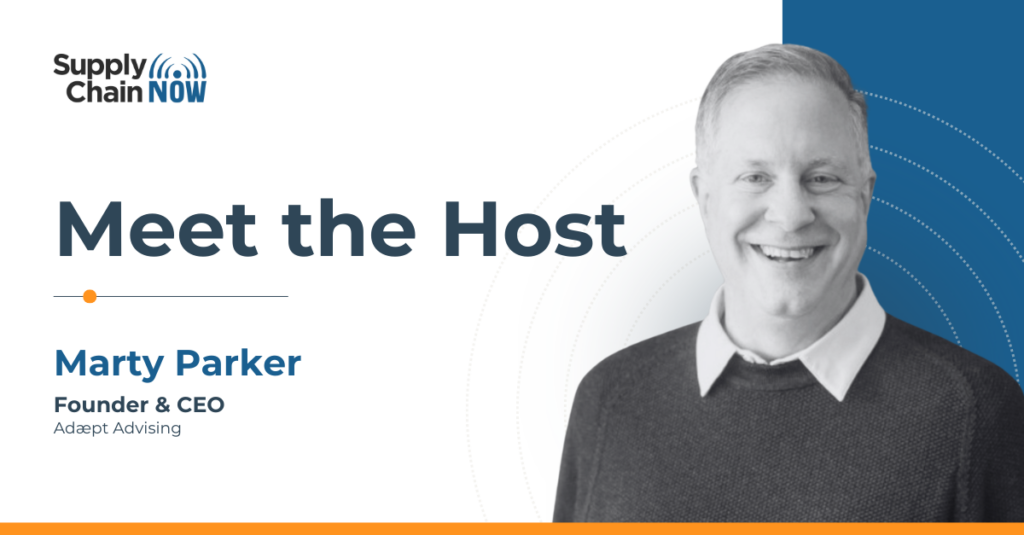
Meet the Supply Chain Now Host: Marty Parker
Supply Chain Now is the voice of the supply chain industry, and our hosts are experts in the field. Podcast listeners tune in to hear the words of wisdom from host Marty Parker, whose practical advice is taken everywhere from the classroom to the C-suite. An Educated Voice in Supply Chain Parker certainly has the supply chain chops to back up his advice. He has 30 years of experience in the supply chain C-suite (COO, CMO, CSO), is the founder and CEO of Adæpt Advising, and is an award-winning senior lecturer in supply chain and operations management at the University of Georgia. He also founded and leads UGA’s Supply Chain Advisory Board, is the academic director of the university’s Leaders Academy, and serves on multiple advisory boards, including the Trucking Profitability Strategies Conference, Zion Solutions Group, and Carlton Creative Co. Mentoring on Campus and in the C-suite Parker’s mentoring carries supply chain stakeholders from their student days to the C-suite. At UGA, he helps his students network and land internships and post-graduation jobs. Through Adæpt Advising, he works with C-suite executives to improve their skills, become better leaders, and develop strategic plans with detailed action steps and financial targets. He…
automation
April 27, 2026
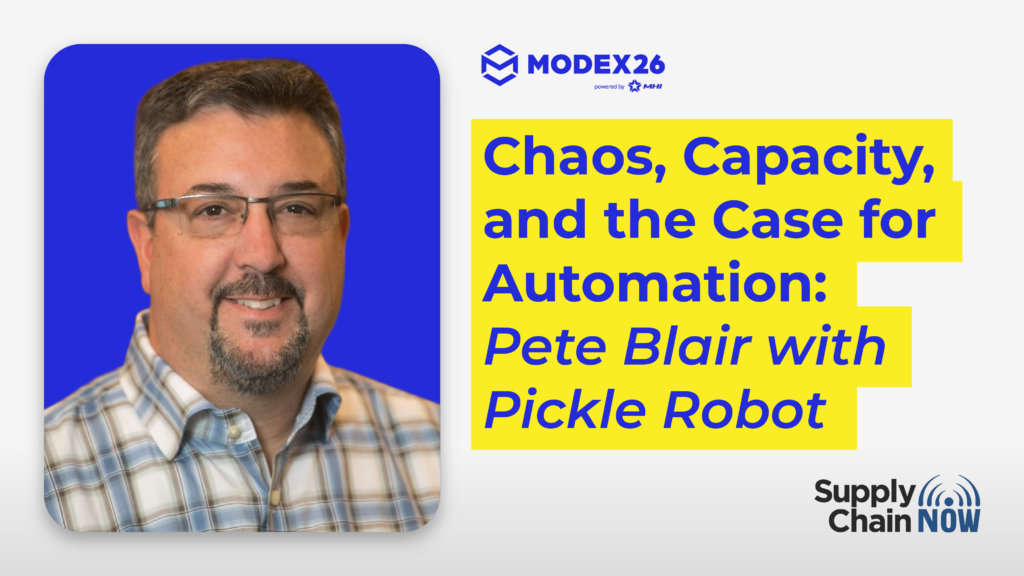
Chaos, Capacity, and the Case for Automation: Pete Blair with Pickle Robot
At MODEX 2026 in Atlanta, the energy was unmistakable. With thousands of supply chain professionals gathered, one theme echoed across conversations: uncertainty is no longer episodic. It’s constant and seemingly endless. In a candid discussion with Scott Luton, Pete Blair, VP of Product & Marketing at Pickle Robot, unpacked how organizations are navigating volatility, workforce challenges, and the growing role of automation in keeping operations moving. Navigating Tariffs and a Moving Target If there’s one word defining today’s global supply chain environment, it’s unpredictability. Blair points to tariffs as a prime example; and not just their presence, but their volatility. “The biggest thing we see… is the chaos of tariffs. It’s not so much that customers have to pay tariffs or not pay tariffs, it’s that they don’t know how to plan,” Blair explains. That lack of predictability is forcing organizations to rethink their networks in real time. Companies are shifting sourcing strategies, standing up temporary distribution centers in new geographies, and even making drastic decisions about whether importing goods makes financial sense at all. What’s particularly challenging isn’t the cost itself. But rather, it’s the inability to forecast. Supply chains, while resilient, aren’t designed for abrupt swings like…