

More
shipping optimization
August 6, 2026
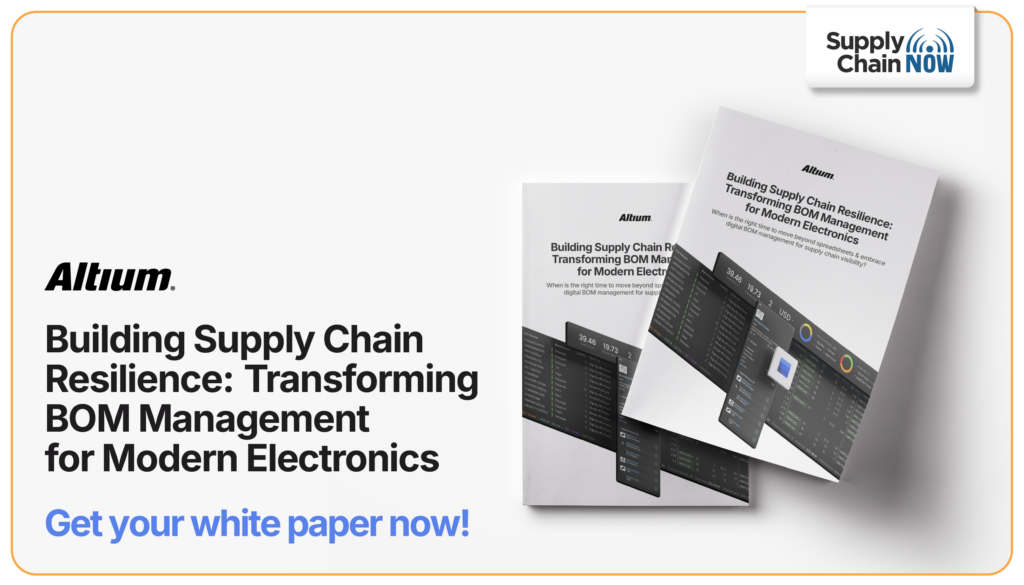
Building Supply Chain Resilience: Transforming BOM Management for Modern Electronics
The whitepaper explores why leading electronics companies are moving beyond spreadsheets to implement dedicated BOM management solutions that strengthen supply chain resilience, reduce costs, and accelerate time-to-market. What’s Inside This Whitepaper? Readiness checklist: When is it time to move away from spreadsheets? (hint: if you’ve had a costly redesign due to component availability, it’s time) Best practices for effective BOM management for electronics teams Key use cases of a BOM management system Overview of Altium BOM Portal ROI calculation examples with real-world savings Key Benefits of Altium BOM Portal Faster BOM completion with enriched supply chain data Data-driven BOM analysis for supply chain risk mitigation Comprehensive part library with full traceability Streamlined collaboration between engineering and procurement Cost savings on every BOM with automated saving opportunities Why Engineers Trust BOM Portal Nowadays, there are so many supply chain disruptions, maybe the PCB boards take weeks to come back. When you have an error there, the real cost is burning those 6-8 weeks. Because you’re using Altium 365 tools, you’re looking at maybe an 80% reduction in time to market. — Brandon Gilles, Founder/CEO, Luxonis
January 29, 2021
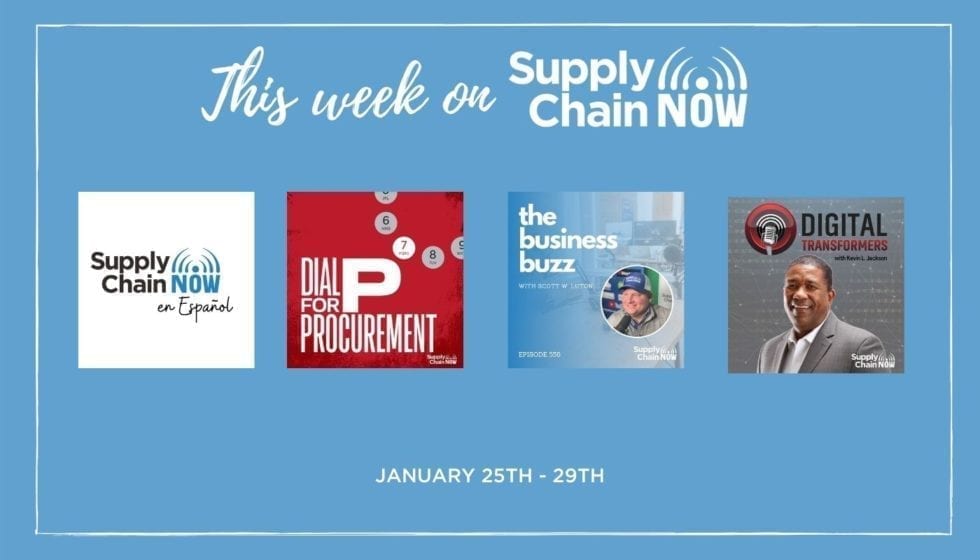
This Week on Supply Chain Now: January 25th – 29th
It’s been an exciting week here at Supply Chain Now! Catch up on all the latest episodes, interviews, conversations, and livestreams right here for all the hottest supply chain news! On Monday, we launched Dial P for Procurement with program co-hosts Kelly Barner & Scott Luton who welcomed two professionals who have put their procurement and supply chain experience to work in the service of others: Anna McGovern, Chief Supply Chain Officer at the Food Bank for New York City, and Kathy Fulton, Executive Director of the American Logistics Aid Network. On Tuesday, Laura Cyrus with Truckers Against Trafficking joined host Enrique Alvarez to share how supply chain & trucking workers are uniquely positioned to combat human trafficking. On Wednesday, we launched our new Digital Transformers series in partnership with Total Network Service. Check out our first episode as Scott Luton, Kevin L. Jackson, and special host Thomas Carter welcome Dave Stehlin and Chris Poli to the show. On Thursday, we released The Supply Chain Buzz with Kevin L. Jackson, Greg White, & Scott Luton who discuss leading stories from global supply chain and global business, including the skyrocketing costs of medical supplies, the impact of IoT…