

More
May 29, 2020
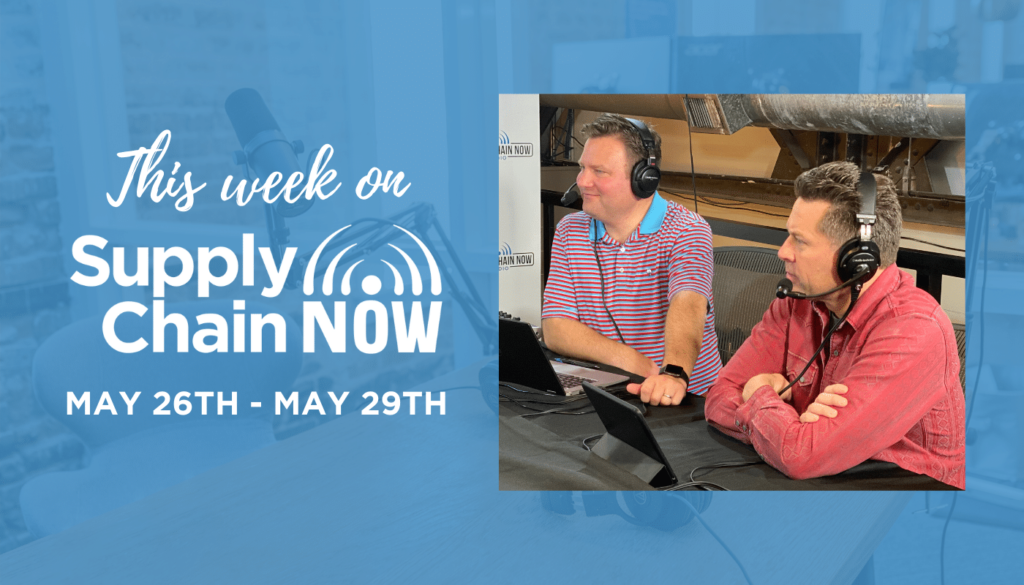
This Week in Supply Chain Now: May 26th – 29th
Another great week here at Supply Chain Now! Have you listened to all the episodes this week? If not, we’ve got it covered! Check them all out here: We took Monday off in observation of Memorial Day, and on Tuesday we welcomed Ward Richmond with SupplyChainRealEstate.com back to Supply Chain Now, and he gave Scott and Greg a supply chain real estate industry update. Supply Chain Now · “Industry Real Estate Update: Ward Richmond & SupplyChainRealEstate.com” On Wednesday, Mike Wasson and Aubree Duncan with Tosca joined Scott and Greg on Wednesday to talk about food safety and a supply chain update Supply Chain Now · “Food Safety & Supply Chain Update: Mike Wasson & Aubree Duncan with Tosca” On Thursday we published our popular Supply Chain Buzz, and Scott and Greg welcomed Jon Davis, Chief Meteorologist with Riskpulse to the podcast, who shared a weather update and how it affects the global supply chain. Supply Chain Now · “The Supply Chain Buzz for May 26th with Special Guest Jon Davis with Riskpulse” And on Friday, we welcomed MIchael Darden with DFM Data Corp to Supply Chain Now. Supply Chain Now · “Michael Darden:…
supply chain analytics
August 25, 2026
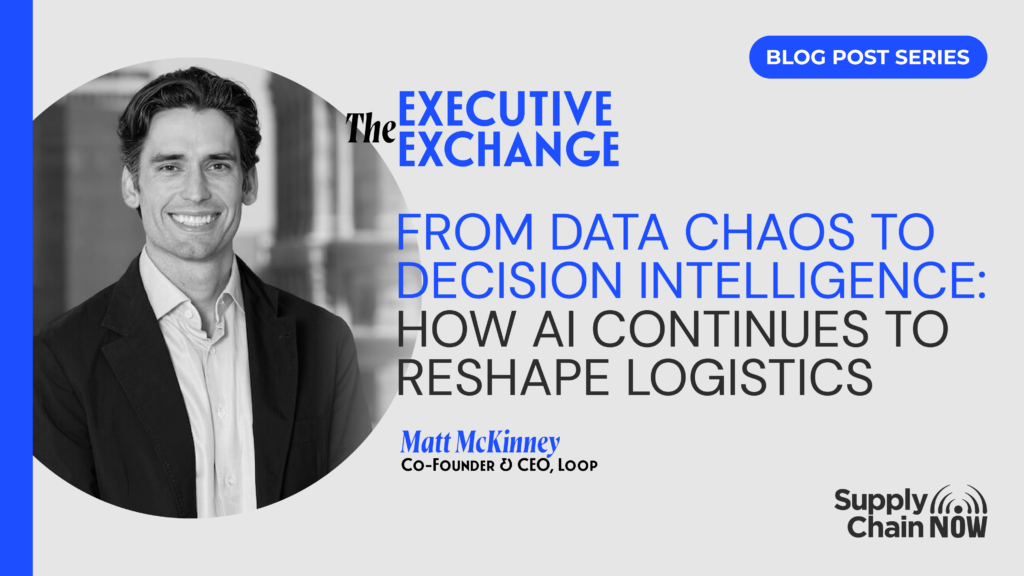
From Data Chaos To Decision Intelligence: How AI Continues To Reshape Logistics
Supply chain organizations have never lacked data. What they have often lacked is the ability to connect it, normalize it, trust it, and turn it into better decisions. That was one of the central themes in a recent conversation between Scott Luton and Matt McKinney, Co-Founder and CEO of Loop. Drawing on his experience helping build Uber Freight and now leading a logistics technology company, McKinney offered a clear-eyed view of where AI is already creating value, as well as why the data foundation still matters more than the model itself. The Real Problem Is Not Data Volume McKinney traces Loop’s origins back to a recurring problem he and his co-founder (Shaosu Liu) saw at Uber Freight: rapid growth on the revenue side paired with a back office still dependent on people manually reconciling invoices, contracts, proofs of delivery, and surcharges. The bigger realization was that this was not unique to Uber. “The thing people miss is that the value isn’t in the quantity of data, it’s in the utility of it,” McKinney explained. “Most companies have plenty of data. What they don’t have is data that connects.” That disconnect is especially painful in logistics, where data is scattered across…