

More
AI
December 18, 2025
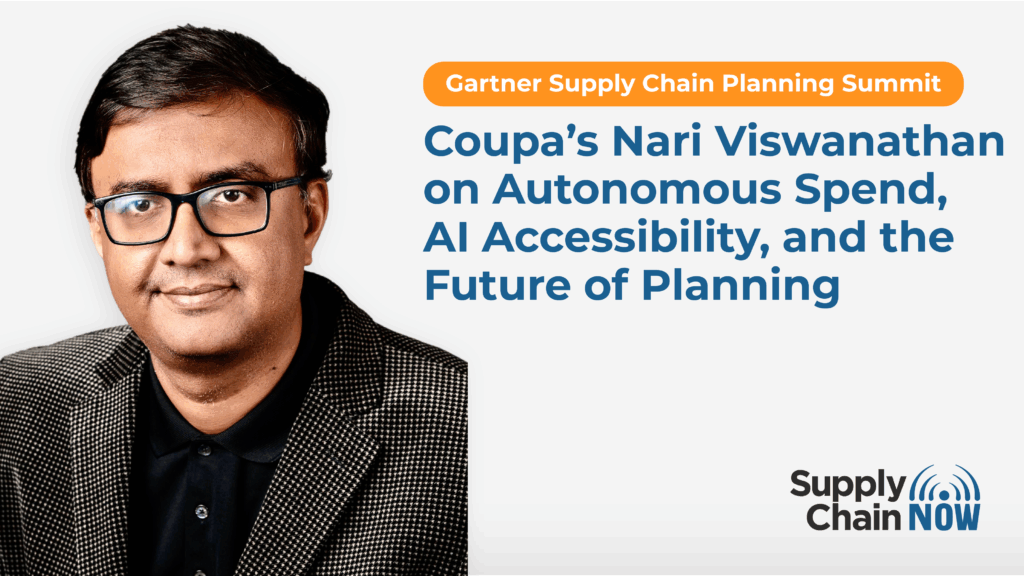
Coupa’s Nari Viswanathan on Autonomous Spend, AI Accessibility, and the Future of Planning
At the Gartner Supply Chain Planning Summit in Denver, Scott Luton sat down with Nari Viswanathan, a veteran innovator in the planning and procurement technology space and a key leader at Coupa. The two reconnected after several recent collaborations—including webinars, industry sessions, and conversations in Dallas—and discussed the new realities of supply chain planning and how organizations are embracing technology like never before. Coupa and Autonomous Spend Management For those less familiar with Coupa, Viswanathan explained the company as the global leader in autonomous spend management—a framework that brings together direct and indirect spending to help organizations manage total spend more intelligently. Direct spend, of course, is where supply chain operations come into focus, making planning, design, and cost optimization central to the value Coupa delivers. Viswanathan leads Coupa’s global supply chain strategy, shaping how the company positions and scales its solutions across the market. After years spent in supply chain planning technology, he now sits at the intersection of procurement, supply chain, and advanced analytics—an area he believes has never been more exciting or more critical. Old Problems, New Pressures—and a Greater Willingness to Innovate When asked about the biggest challenges facing planners today, Viswanathan emphasized a…
December 11, 2020
Understanding Logistics: A Discussion with Scott Luton, Founder & CEO of Supply Chain Now.
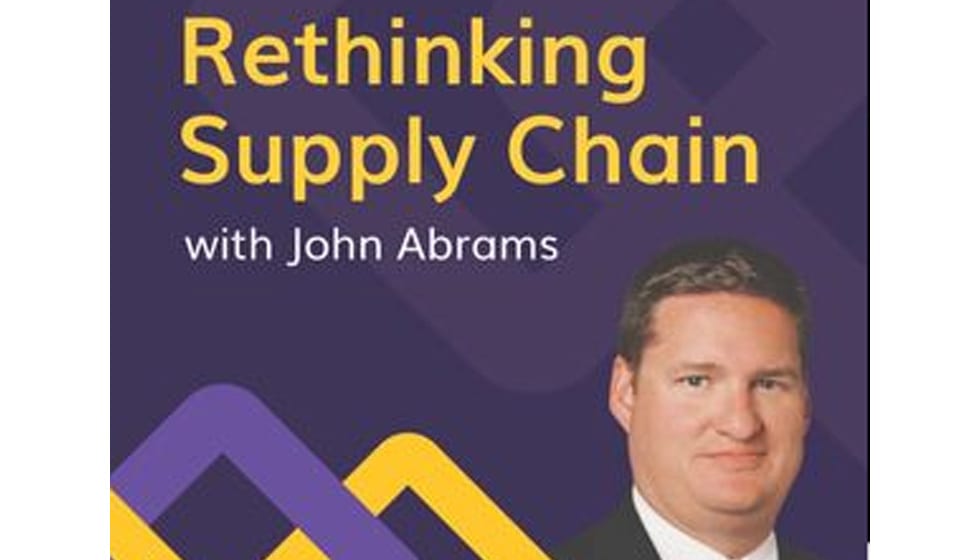
Scott Luton was featured in two episodes of Rethinking Supply Chain, hosted by Venzee CEO, John Abrams: Understanding Logistics: A Discussion with Scott Luton, Founder & CEO of Supply Chain Now. John got connected with Scott after listening to one of our podcast episodes that dove into the physical and automated aspects of supply chain. Listen to Part One of the interview HERE Listen to Part Two of the interview HERE