

More
supply chain culture
February 25, 2026
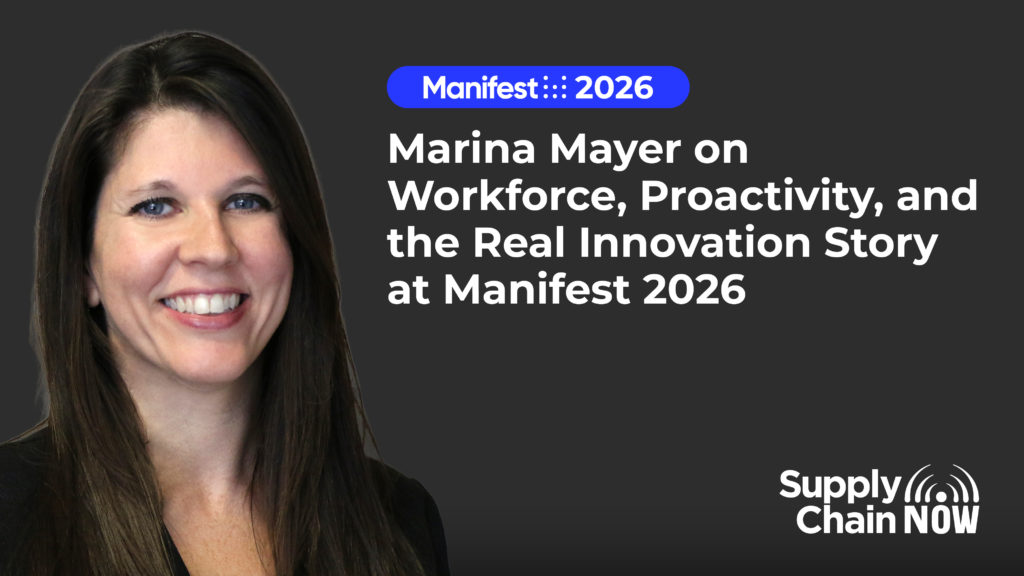
Culture Over Clicks: Marina Mayer on Workforce, Proactivity, and the Real Innovation Story at Manifest 2026
At Manifest 2026, Scott Luton caught up with Marina Mayer, Editor-in-Chief of Food Logistics and Supply & Demand Chain Executive, and Co-Founder and Content Director of the Women in Supply Chain Forum, for a conversation that cut through the tech buzz and landed squarely on what matters most: people. Marina leads two influential digital publications covering the full spectrum of supply chain — from temperature-controlled cold chain logistics to e-commerce and retail — along with four major industry awards programs and the rapidly growing Women in Supply Chain Forum, now entering its fifth year. But amid all the innovation on display in Las Vegas, her message was refreshingly grounded. Disruption Is the Baseline. Proactivity Is the Shift When asked about dominant themes shaping the industry, Marina didn’t hesitate. One common theme linking 2025 and 2026 is that “disruptions obviously still exist,” she said. From tariffs to trade wars to Mother Nature, the hits keep coming. What’s different in 2026 isn’t the disruption itself; it’s the response. Instead of dwelling on what’s gone wrong, companies are getting proactive. Leaders are “acting on it and being proactive about getting in front of it,” she noted. Since COVID, organizations have learned that…
freight network
February 12, 2026
How Freight Visibility is Reshaping Supply Chain Resilience
Special Guest Blog Post from Amazon Freight For supply chains across the globe, goods in motion are promises in motion. When a palletised shipment is delayed or goes dark, the impact is felt not just in transport teams, but in customer service, inventory planning, and broader network performance. In a conversation, economist Dr. Rebecca Harding and Chris Roe, Managing Director of Amazon Freight, explored how technology and collaboration are changing the way freight networks operate. While their primary focus was freight, their insights map directly onto the resilience challenges supply chain leaders face every day. Old pressures, new data In a study supported by Amazon Freight, every shipper surveyed agreed that technology is crucial to the freight industry’s resilience. While this isn’t a surprise, it’s an important reminder of the role that technology plays. Roe shared a key example where Amazon Freight connected a customer’s system to its own system. Visibility on the end-to-end movement went from essentially zero to a high level of coverage. Instead of discovering problems only when a shipment failed to arrive, the customer could now see disruptions as they emerged and act earlier. For supply chain teams, that move from partial, delayed information…