

More
June 18, 2021
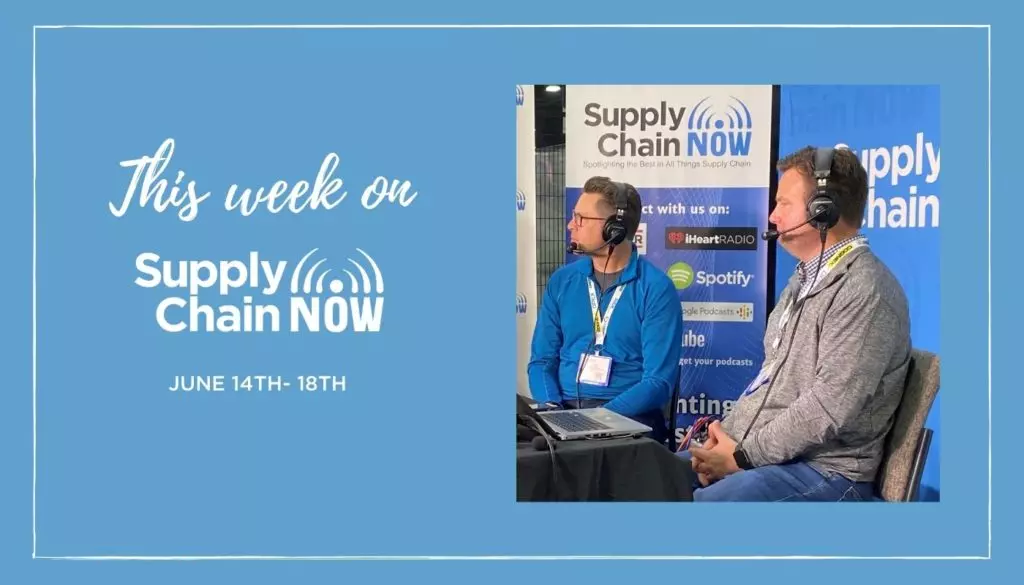
This Week In Supply Chain Now: June 14th – 18th
Step up your supply chain strategy by checking out all the latest conversations, interviews, and episodes we released this week here at Supply Chain Now! On Monday, we released 2 new episodes! On this episode of Supply Chain Now, hosts Scott and Greg welcome Nicci Scott with Commercial Transport Academy and Jenny Froome with SAPICS for the next installment of the Supply Chain Across Africa series. On This Week in Business History, host Scott W. Luton sheds light on 3 historical milestones that enabled us to move faster: cars, coasters, & computers. On Tuesday, we released 2 new episodes! On this episode of TEK TOK, host Karin Bursa takes us through 6 strategies to boost resilience, agility, and response in your organization’s supply chain. On TECHquila Sunrise, we’re looking back on a “Sunrise Special” episode where host Greg White shares how venture capitalists decide which companies to invest in (and how much!). On Wednesday, host Scott Luton welcomed Deborah Dull, Supply Chain Product Management at GE Digital, and Mucai Kunyiha, Chairman of the Kenya Association of Manufacturers and Group Chief Executive Officer of Kzanaka Ltd, to the podcast. On Thursday, we released a replay of our Manufacturing Monday edition of…
automation
April 27, 2026
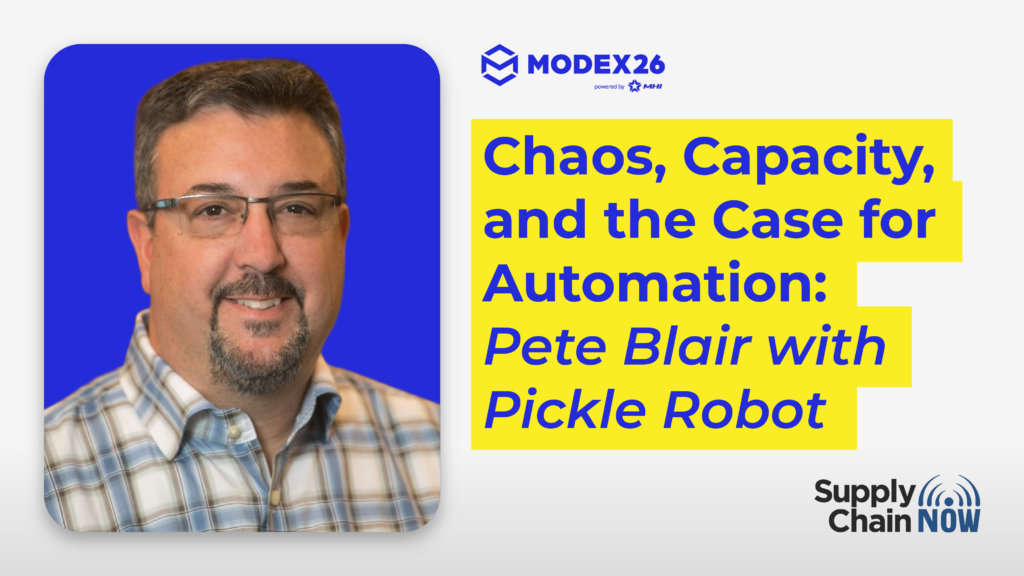
Chaos, Capacity, and the Case for Automation: Pete Blair with Pickle Robot
At MODEX 2026 in Atlanta, the energy was unmistakable. With thousands of supply chain professionals gathered, one theme echoed across conversations: uncertainty is no longer episodic. It’s constant and seemingly endless. In a candid discussion with Scott Luton, Pete Blair, VP of Product & Marketing at Pickle Robot, unpacked how organizations are navigating volatility, workforce challenges, and the growing role of automation in keeping operations moving. Navigating Tariffs and a Moving Target If there’s one word defining today’s global supply chain environment, it’s unpredictability. Blair points to tariffs as a prime example; and not just their presence, but their volatility. “The biggest thing we see… is the chaos of tariffs. It’s not so much that customers have to pay tariffs or not pay tariffs, it’s that they don’t know how to plan,” Blair explains. That lack of predictability is forcing organizations to rethink their networks in real time. Companies are shifting sourcing strategies, standing up temporary distribution centers in new geographies, and even making drastic decisions about whether importing goods makes financial sense at all. What’s particularly challenging isn’t the cost itself. But rather, it’s the inability to forecast. Supply chains, while resilient, aren’t designed for abrupt swings like…