

More
inventory control
July 16, 2026
The Sales You’re Losing to an Inventory Record
Inventory audits may be one of retail’s most overlooked revenue opportunities. Every large retailer has invested in software that predicts demand, triggers replenishment, and manages shelf space with precision. Almost none of that software questions whether the inventory number it’s reading is actually correct. A recent study in the Journal of Business Logistics suggests that blind spot is expensive, and that fixing it is one of the more overlooked levers a retailer has for growing sales. The researchers, working with a major UK grocery chain, examined roughly 24,000 products across 11 stores to understand why inventory records drift from what’s physically on the shelf, a problem known in the industry as inventory record inaccuracy. They then ran a field experiment to measure what happens to sales when a store corrects those records through a full audit. The results reframe a task most retailers treat as a nuisance into something closer to a growth strategy. Start with why the records go wrong in the first place. The study found that products carrying more inventory and products replenished more often were significantly more prone to inaccuracy. That makes intuitive sense: every case broken down, every unit moved from backroom to shelf, is…
leadership
April 29, 2026
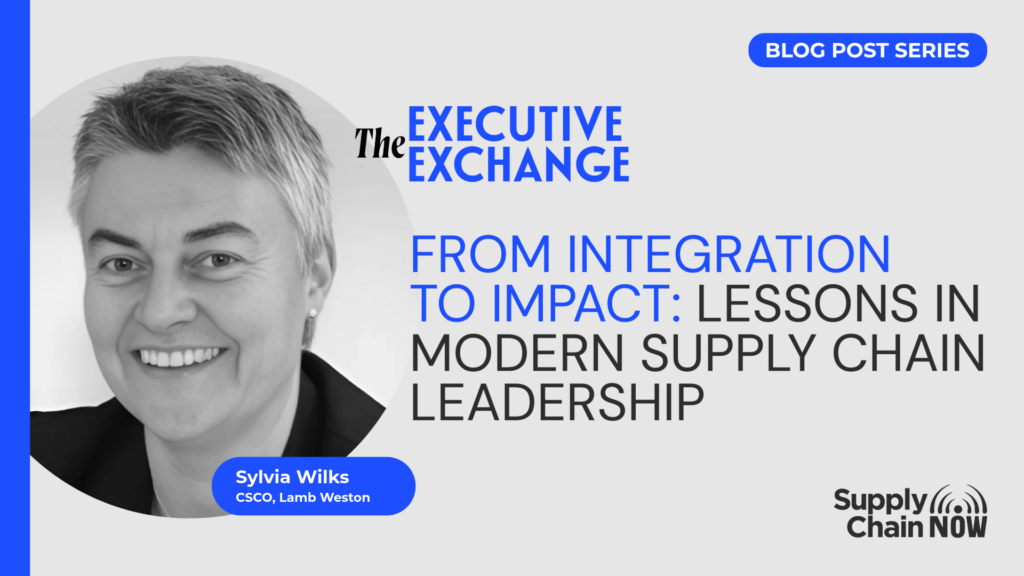
From Integration to Impact: Lessons in Modern Supply Chain Leadership
In a recent conversation, Supply Chain Now’s Scott Luton gained perspective from Sylvia Wilks, Chief Supply Chain Officer at Lamb Weston, who shared a powerful point of view on what it takes to lead in today’s increasingly complex, high-stakes supply chain environment. Her journey, from leading transformative initiatives at Starbucks to shaping global operations at Kimberly-Clark and REI, offers a consistent message: Success in supply chain isn’t just about systems or strategy. It’s about people, integration, and clarity of purpose. Wilks’ passion for supply chain was sparked during her time at Starbucks, where she led a bold initiative to insource instant coffee production. What began as a business case evolved into a transformative opportunity. “Seeing the entire chain, from strategy through operations, work seamlessly toward a common goal reinforced how much value organizations unlock when supply chain subfunctions operate collaboratively rather than in silos,” she explained. The idea of breaking down silos to create an integrated value chain has remained a central theme throughout Wilks’ leadership career. The Power of People and Integration Across organizations of all sizes, Wilks sees a common thread: The challenges may be similar, but outcomes depend on how well teams work together. “My passion…