

More
AI-powered supply chain solutions
March 5, 2026
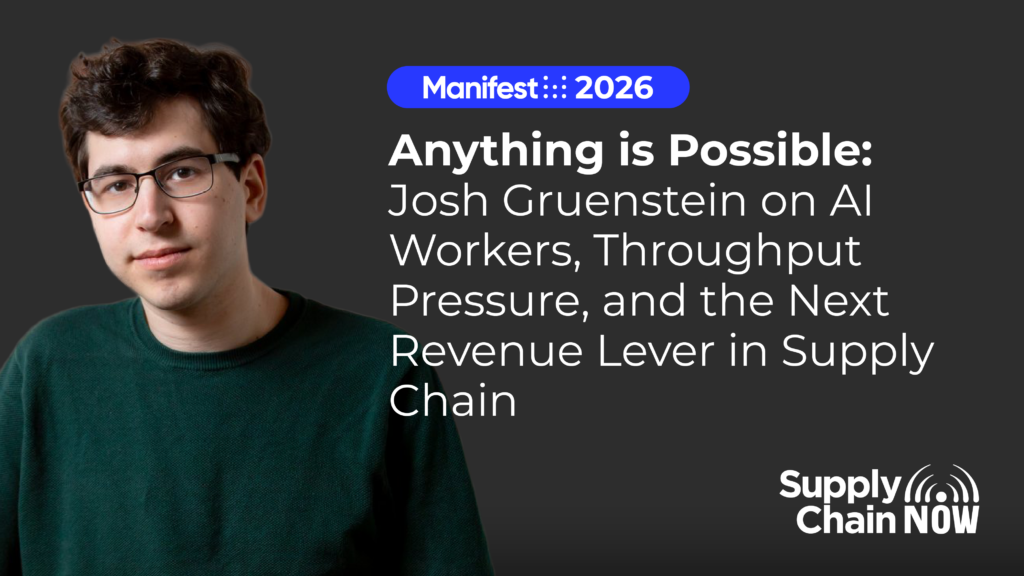
Anything is Possible: Josh Gruenstein on AI Workers, Throughput Pressure, and the Next Revenue Lever in Supply Chain
At Manifest 2026, Scott Luton spent time with Josh Gruenstein, Co-Founder and CEO of Tutor Intelligence, to talk about a future that’s no longer theoretical: AI-powered robot workers operating inside America’s warehouses and factories. And this isn’t a science experiment. It’s already happening. From MIT to the Warehouse Floor Gruenstein and his team came out of MIT’s Computer Science and AI Lab with a bold idea: build AI-powered robot workers that can handle the manual labor people don’t want to do. “We build physical robots,” Gruenstein explained. “We build AI models that enable robots to perceive their environments, and then we deploy those robots into factories and warehouses across the United States to do manual labor that people don’t want to do.” Unlike traditional automation projects that require massive capital outlays, Tutor Intelligence operates on a robots-as-a-service model. Companies can engage a Tutor robot for roughly $14–$18 an hour, creating a flexible, scalable path to automation without multimillion-dollar implementation risk. Automation Isn’t New. AI Is Changing the Playbook. When asked about dominant supply chain themes, Gruenstein pointed to a constant drumbeat: automation. But 2026 feels different. “Automation is obviously a constant theme,” he said. “What really seems different…
MODEX 2026
May 15, 2026
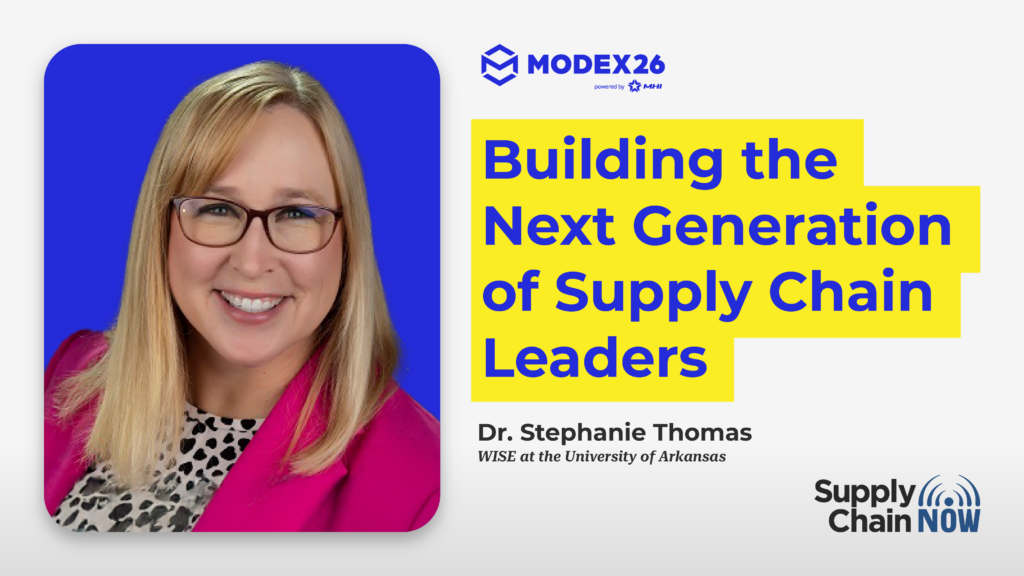
Building the Next Generation of Supply Chain Leaders
At MODEX 2026 in Atlanta, Scott Luton sat down with Dr. Stephanie Thomas, Associate Professor of Practice at the University of Arkansas and Founder & Executive Director of WISE, for a wide-ranging conversation about supply chain talent, AI, and the future of workforce development. One thing becomes immediately clear from the discussion: while technology may dominate the headlines, the future of supply chain still depends on people. Of course, that makes the ability for organizations to more effectively engage the new generations entering the workforce all that more critical. The Industry’s Biggest Question Mark: AI and Talent When asked about the biggest priorities facing supply chain leaders today, Thomas doesn’t hesitate: AI is at the top of nearly every conversation. “Everybody’s trying to unpack what is it going to do? How is it going to change things?” she explains. Organizations are wrestling not only with how to adopt emerging technologies, but also with how to prepare their workforce for the transformation ahead. From upskilling current employees to redesigning workflows, the talent implications of AI are massive. At the same time, the broader business environment remains highly dynamic. Geopolitical shifts, ongoing disruption, and rapid technological change are forcing organizations to…