
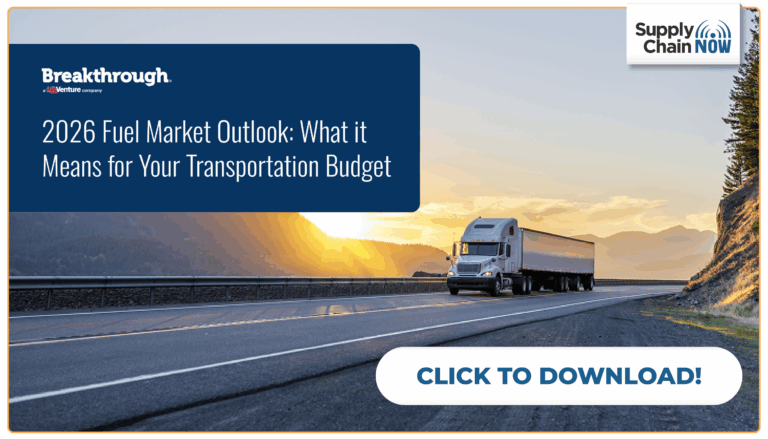
2026 Fuel Market Outlook: What it Means for Your Transportation Budget
Fuel is the second largest and most volatile operating expense in transportation, and traditional fuel surcharge programs expose your budget to unnecessary costs and risks. Forecasts for 2026 signal continued volatility, making it critical for transportation leaders to move beyond outdated, average-based reimbursement models.
Our 2026 Fuel Outlook provides the data-driven insights you need to navigate market complexities and turn your fuel spend from a volatile cost center into a powerful strategic advantage.
Key Takeaways from the Report:
- An emerging global supply surplus is creating downward pressure on crude oil prices, yet regional disruptions are adding significant volatility.
- Refinery closures on the West Coast and continued U.S. diesel exports are tightening domestic supply and creating complex pricing dynamics.
- Traditional fuel surcharge programs based on the weekly DOE index are inaccurate, leading to missed savings opportunities.
Learn why Fuel Recovery is the definitive solution for fair and accurate fuel reimbursement.
More Guides
content creation
Guides
October 16, 2025
Breaking Through: The Power of Supply Chain Podcasts
In a world of constant digital noise, marketing leaders need more than impressions—they need attention, trust, and measurable results. Supply chain podcasts have emerged as one of the most effective ways to achieve that, offering a platform to extend your reach to hard-to-access decision-makers, build authentic thought leadership, drive demand and generate qualified leads, and strengthen both brand recognition and visibility. Inside This White Paper, You’ll Learn: Why 80% of podcast listeners take action after hearing an ad—and how to leverage that to drive pipeline. How to usestorytelling to humanize your brandand create lasting audience loyalty. Proven ways podcasts canelevate brand awareness, support sales enablement, and accelerate deal cycles. Four key stepsto producing standout podcasts that deliver measurable ROI. Real-world success storiesfrom leading brands like Mattel, Colgate-Palmolive, Georgia-Pacific, and more. DOWNLOAD NOW
visibility
Guides
November 5, 2025
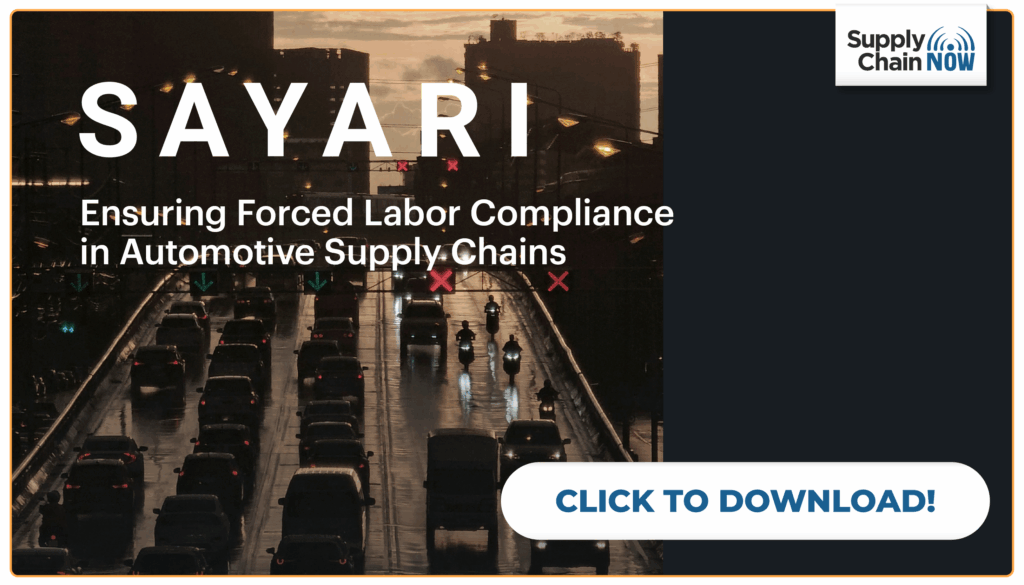
Ensuring Forced Labor Compliance in Automotive Supply Chains
Turn data into insight – map, monitor, and mitigate fortced labor risks across your value chain. Since the Uyghur Forced Labor Prevention Act (UFLPA) went into effect in 2022, sub-tier supply chain visibility has become an increasingly critical and ubiquitous prerequisite for import compliance. Automotive companies, due in no small part to their highly complex supply chains, are among the hardest hit by this requirement of anti-forced labor and ESG regulations. A recent study by Sayari analysts found that 95% of leading OEMs’ exposure to forced labor risk comes from sub-tier suppliers. The ability to identify and mitigate risks throughout their value chains is critical for OEMs aiming to minimize operational disruptions, avoid detentions, and maintain competitive advantage. Download the report to learn how Sayari is overcoming barriers to supply chain visibility, enabling OEMs to map their sub-tier supply chains, identify indirect exposure to forced labor risk, and foster greater supply chain resilience in an increasingly dynamic trade landscape. DOWNLOAD NOW