Intro/Outro (00:00):
Welcome to the Tango Tango Podcast, real, raw, and unfiltered conversations with veterans and those who support them. Tune in, be inspired, and walk away stronger.
Lloyd Knight (00:14):
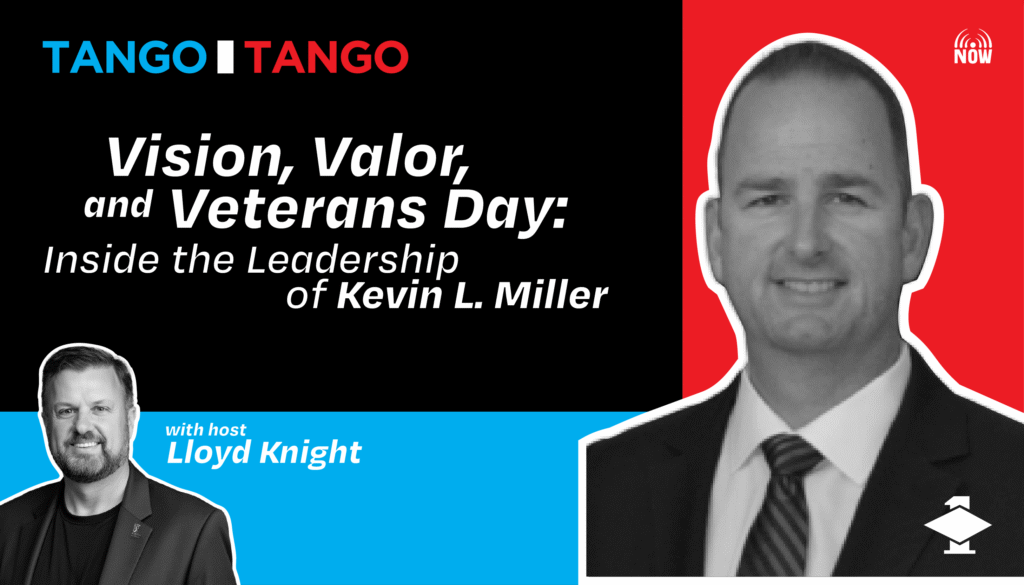
Welcome to the Tango Tango Podcast. It’s another great episode in season two, and I’m really excited to have Atlanta member, Atlanta Native, US Army veteran, and the leader of the Georgia Veterans Day parade, which is a lot bigger than that sounds. It’s amazing a venture. And Kevin does so much more for the veteran community here in Atlanta and Georgia and across the world, not just across the country, but across the world. Welcome to the Tango Podcast, my friend, Kevin Miller.
Kevin L. Miller (00:49):
Thank you, Lloyd. Pleasure to be here and looking forward to a great conversation.
Lloyd Knight (00:53):
So Kevin, I read your bio a little bit earlier today, Franklin, Pennsylvania. You graduated high school in Franklin, Pennsylvania. What was growing up in Franklin, Pennsylvania like?
Kevin L. Miller (01:04):
Actually, it was a great opportunity to … There was a lot of outdoor activities. It’s a rural area between Pittsburgh and Erie. It was a great community to grow up in as far as outdoor sports. Hunting, you figure in that part of the country, you get a lot of snow sports. Snowmobiling and four-wheeling and a lot of great family activities. Most of my family resided within, oh, probably 30 minutes of me growing up, both grandparents. So there was always family involved. I had a great time growing up there. And if you’re in the area, it’s a beautiful city to go back and visit. It has, from the colonial aspect, everything back to, I think, over 200 years of history.
Lloyd Knight (01:43):
Very neat. And what did school look like for you in Pennsylvania?
Kevin L. Miller (01:47):
School’s good. High school. Franklin High School is a very strong part of the community to grow up in. And it was, I think, really where you had a lot of social activity. For me, high school was a step to … I always wanted to serve, so I knew that it was not a barrier, but it was something I needed to accomplish to go into that next step. So I was always looking forward to military service. And getting through high school, I would say that I had good grades, but I could have had better grades if I’d applied myself a little bit more, something I remind my daughter of all the time. But for me, it was something I really wanted to get through that to get onto my next chapter.
Lloyd Knight (02:26):
Yeah. I reminded me of my kids of that too. And by the way, Kevin’s daughter, Tina, is amazing. So you joined the Army directly out of high school. Were you like me? Did you leave within three days of graduating or did you have some
Kevin L. Miller (02:40):
Finance? No. No, no. I had a plan. I took the summer off. When they were trying to get me to ship out, I said September. I wanted to spend those last three months with all my friends who would then be moving on to their different directions. And I said, “You know what? I want to take this summer because I was leaving for the military and when you do that, you don’t know if you will ever come back to that hometown and if you’re ever … Things will never be the same.” So I wanted to enjoy that time with family and friends. And then I left in September.
Lloyd Knight (03:08):
So you leave in September, get through a basic training. Where’d you do a basic and AIT in Fort Benning?
Kevin L. Miller (03:16):
I did. I was with Alpha Company, second to the 54th Infantry. Great unit, still on Fort Benning, training, some of the best infantry men and women in the Army today. Great organization. Some of those drill sergeants, and that’s skipping ahead a little bit, but I ended up seeing them at my next duty station. They came in as NCOs. So I got to experience two different relationships with them, but very professional NCOs. The training at the time, Desert Shield was taking place while I was going through basics. There was a lot of spin up to possible deployments to there once we would join our units. So the training was very, I guess it kind of was very comprehensive. And I was very happy to be a proud infantryman upon graduation. I was an indirect fire infantryman, 11 Charlie. So we shot mortars in addition to traditional infantry weapons.
(04:03):
So great opportunity to join the Army and be a member of the infantry.
Lloyd Knight (04:06):
So was it your training on Sandhill in Fort Bend?
Kevin L. Miller (04:10):
It was. We were just on the new Sandhill guys. Harmony Church, I think it was like two years before that. So it was in the transition. We had the really cool barracks, little star ships that are still sitting down there now, but I think every generation has it easier than that previous generation. But Sandhill is definitely my alma mater.
Lloyd Knight (04:31):
My dad spent a little bit of time on Stand Hill. And my son, as you know, my oldest son is 82nd airborne veteran, so he did all his training at Sandhill. You decide you want to jump out of planes.
Kevin L. Miller (04:42):
That actually came, I was two and a half years, three years as a leg, not an airborne infantryman. Okay. I was able to pick up, I had to go back through Benning to airborne school en route to the 82nd Airborne Division. So I did experience the traditional infantry for a couple years.
Lloyd Knight (04:58):
Yeah, that’s right. So you graduate school, and if I remember right, you head off to Korea.
Kevin L. Miller (05:04):
I did. I had a chance to come home for a little bit of leave. And then from small town Pennsylvania to the other side of the world, I flew into Korea and went through the in- processing. And I would say it was a wonderful culture shock because nothing I had ever lived around or near had this experience from not understanding the signs to … It’s January in Korea, so it’s fairly cold and windy. And then I joined the Second Infantry Division, and then we were all looking on the map of, as you go further north onto the Korean Peninsula, I was going up to Camp Casey for the second infantry division. And then I was assigned to the first of the 506, which was at Camp Grieves north of the MGN River, which is just a couple kilometers south of the south barrier of the DMZ.
(05:50):
So I would spend my entire year living at Camp Grieves. So as we looked at the map and followed it up to the top, we found out that we were basically the most forward deployed battalion within that area of operation. So it was a very proud distinction to be serving in that location. So at my 18 years of age, I was at a very unique place to serve.
Lloyd Knight (06:14):
This would set the foundation. We’re not going to fast forward kind of yet, but this first year in Korea would set the foundation for you to do some amazing partnerships later on, a post-military service, which we’ll talk about. But from there, you get a wonderful payback assignment for being a year in Korea and they move you to Louisiana.
Kevin L. Miller (06:37):
Everybody said that the Army doesn’t like you if they send you to Korea. And I thought, well, I’ll make the best of it. We have North Korea and propaganda. We have a DMZ mission. At least there, you had an important mission that you earned all of that by being and serving there. So then when I had orders cut to go to Fort Drum in New York, I thought perfect, more light infantry. And then the next day, my piece of paper was replaced with another piece of paper and something to the effect of needs of the army sent me to Fort Polk, Louisiana. Louisiana is full of wonderful people, but Fort Polk is a place that I wasn’t enthusiastic to be shipped there. So I was hoping for a better assignment, but I figured there’s something on the horizon that I’ll be going for.
Lloyd Knight (07:17):
That’s very fascinating because my last episode, I had amazing retired sergeant major who was the sergeant major of the Drummond Five Corp for most of his career. And he ended up going before the military going, moving to Louisiana. And he said the same exact thing, that people in Louisiana are amazing. However, so you’re in Louisiana. So is this when you decide that, hey, you want to go airborne or did that come a little bit later?
Kevin L. Miller (07:49):
It is. In all honesty, in Korea, I prefer light infantry. I never wanted to be on a vehicle. And being light and we were essentially on Air Mobile, we used Blackhawks a lot up on the DMZ area for the 506. And I never wanted to be in mechanized or tanks or anything like that. So when I got to Fort Polk, I was in an armored battalion as an infantryman and a mortar carrier. And I found out that was doing less infantry training and a lot more motor pool work. And that was not the direction I was comfortable with and wanted to pursue. So as my window came up for reenlistment, I relisted for airborne school, TDY en route to the 82nd Airborne Division.
Lloyd Knight (08:27):
All right, great. Airborne school. So as you know, I was a loadmaster. So I had the opportunity to go down to the airfield there and do the jumps for the training school there, which always that we love doing that because you would get a bunch of jumps. 120, you would land, you’d load up another 120. So you could get five sororities and drop over 600 people in like three hours. And then we were off in the crew rash. So we always liked that. Tell me a little bit about your first jump. I’m assuming it was a C130.
Kevin L. Miller (09:07):
It was 130. And as any honest paratrooper or most of us would say, every first jump’s a night jump, you do close your eyes when you go out the door. It takes a second to figure out … One of the best things about it was me and Keith DeVos, who was a buddy of mine, we met each other in airborne school and we jumped side by side for all five jumps. Ended up serving together in different units at the 82nd. But we were just messing around the whole time trying to look like we were not nervous about the first jump. And my uncle had been 82nd and 173rd airborne brigade in Vietnam. So he was a paratrooper. And I remember something he had told me, he says, “You would get so fired up that you would probably just all run out that door even without a shoot because you’re so motivated and they got you so excited.” And I had that going through my head as we were sitting there and watching the door go up and the wind and the jump master looking out the door and you’re kind of taking all this in and there’s a rush to it.
(10:00):
And we got up and before, I think I was third or fourth jumper out the door, it was so quick that we were outside of the aircraft. And the thing that shocked me the most was the drone of the 130 pulling away and how quiet and peaceful it was hanging under a canopy until … And you really have no idea what you’re doing. You have your basic idea that gravity is happening and all you have to do is hit this big plowed field of fryer drop zone. But it was just more peaceful than I anticipated. I don’t know what I thought. And then the rush of recovering your chute, running over to a consolidation point. And I think we did two jumps, two jumps, and one jump I think was the breakdown for Monday, Tuesday, Wednesday. So it was very fast paced, but I was a very proud moment to hit the ground and felt like I’d done something really exciting.
Lloyd Knight (10:46):
Well, you did. You did something bigger. What an accomplishment. From the Loadmaster’s perspective, I could tell you it goes just as quick. And it’s almost as scary too. So we go to an airdrop school in Altas, Oklahoma to learn how to do airdrop. It’s a four week school. It’s a pretty intense school. And then it’s broken into two blocks, the first dropping cargo, the second dropping the passengers. And so the first time you go and you open up those troop doors, you’re 1,200 feet off the ground doing about 200 miles per hour. So you open up the door, you extend the air deflector, they put out the platform and you actually have to step out on the platform. And it is beyond scary. So you have a parachute on, but it is really, really scary, but it’s the rush. It’s the thrill of it. And every time I did it and I ended up doing it dozens and dozens of times, if not hundreds, you get this rush.
(11:39):
But the quickness always amazes me. When you do cargo, you have three Humvees on board and green light, the drag sheet comes out and those three Humvees are gone in like five seconds because you’re eventually flying 150 miles per hour. So those are leaving at 150 miles per hour out of the back of the aircraft for perspective. And then the people. So you got both sides of the airplane dropping. They actually cross each other when they jump out. So on the 141, you would have 60 on each side and those 120 people are outside of the airplane in less than a minute. And it was always amazing and something that made me very proud as well. So that was 1993? It was. Okay. And then you go up to a Fayetnam up in Fort Bragg and you, so you joined, which unit do you join there?
Kevin L. Miller (12:38):
I became a white devil, which is the second of the 504th Parachute Infantry Regiment. I was with the 81 millimeter mortar platoons, so we were part of HHC 2504.
Lloyd Knight (12:48):
My oldest son was a red devil.
Kevin L. Miller (12:50):
Wow, perfect.
Lloyd Knight (12:51):
Yeah. So you get there in 93. How many jumps do you get? We’re going to talk about the green ramp incident in a minute, but how many jumps do you get before that?
Kevin L. Miller (13:02):
I have five jumps within Division. We had a couple E-Dries, we had deployments and readiness exercises, and it wasn’t always easy to get on jumps. And before we get to Green Ram though, I will say that the last jump I, or one of the jumps that I wanted to do was after having left Fort Polk to get out of there, I get to the 82nd, we get to 2504, and within a few months I hear I’m going to JRTC at Fort Polk for a month rotation and we’re jumping in for it. And I thought, what is it about Fort Polk that’s bringing me back in? And since I’d been stationed there, they didn’t have me do the jump into the exercise because I could go forward and be some of the advanced teams since I know the lay of the land and the area. So they asked me to go down and I missed the jump.
(13:48):
So had to go back to Fort Polk and I have not been there since. Where will I? So that was it for me.
Lloyd Knight (13:55):
It was really funny. I was reading Fort Polk doing a name change and it was largely not doing a name change for anything other than they wanted to rebrand themselves.
Kevin L. Miller (14:06):
Makes sense.
Lloyd Knight (14:08):
They kind of trick everybody. Yeah, they were going to someplace different. I mean,
Kevin L. Miller (14:17):
The stories had changed.
Lloyd Knight (14:18):
Yeah. So let’s move into the tragedy on the green ramp. This hit very close home for me. As you know, I was at 141, the load master in Charleston. So I was on the green ramp, you probably don’t know this. I was on the green ramp 48 hours prior to that. Yeah, I did not
Kevin L. Miller (14:38):
Know that.
Lloyd Knight (14:39):
Being in Charleston, I spent a lot of time on the green ramp and it just made sense. We were so close, we’d fly up there, do air drops, usually night drops, and then we would come home and sometimes I would be on the green ramp three times in a week doing training drops. So tell me a little bit about that morning. I always get around because you remember the old Army commercials. We do more by 5:00 AM than most people do the old day and I was always kid around, yeah, but the Air Force had to leave our houses at 6:00 PM the night before to get you there. And then what’s always funny about the military showtimes is like, there’s an actual showtime at every level that it gets to, they add additional, like show up an additional half hour earlier, an hour early.
(15:29):
Absolutely. So walk me through that morning. What time did you get out of bed and actually show up in order to go prep for this air drop?
Kevin L. Miller (15:37):
It was actually a normal day for us. Got up, did PT and grab breakfast with the guys and everybody was … A lot of people talked about this jump as a Hollywood jump, which a lot of people were just doing it to maintain proficiency and then we’ll be coming back. Our platoon was going to have a two-day field problem following that, that was going to give us a chance to do some training. So we were going to have some simulated heavy drops, people driving out and placing the vehicles on the drop zone. And then we were going to have the bulk of us jumping in. And so there was a lot of prep work with getting the vehicles and getting equipment, drawing out your equipment for that. And I was on and off the jump, I think, two or three times that day because I jumped the week before and didn’t need it.
(16:19):
So I was told I actually left my helmet bag with, I think, a large bottle of Mountain Dew and I don’t know a pop-tart or something in a Humvee because I figured I was driving it out to the drop zone. But the final coin toss put me on the jump and stood with members of my platoon when we did manifest and don’t have the hard time on it. For some reason, 1300 sounds about right that we were going to be pulling out to go from the unit area over to Rifle Range Road and out to Green Ramp for all the pre-jump procedures.
Lloyd Knight (16:50):
So Green Ramp, for those who are not familiar, it’s just an area. There used to be a Air Force base that was connected on a Fort Bragg called Pope Air Force Base. It’s kind of still there and it’s not, but that’s where the heavy cargo planes would land. So C130s, the C141 Starlix or C5 Galaxies, and you would go in the green ramp and you would load up either cargo, it could be unit equipment, it could be rolling stock tanks, artillery that do air drops, or it could be people. And it could be people you mentioned Hollywood. Hollywood was when they jump with just the parachutes, or they could be carrying their full battle gear from their chin all the way down their toes
Kevin L. Miller (17:32):
And- Waddling out to the aircraft, trying to get up into there.
Lloyd Knight (17:37):
So there was three drop zones, if I remember right, on the fairly close to the Enfor Bragg where we would go up. Sometimes if it was a short day and we got lucky, we could just fly and drop them. But other times the Air Force would have to assemblate combat missions too. So we would go out, especially at night and we would do low level approaches. So those could be a little bit uncomfortable. So you would fly 60 to 90 minutes, 800 feet off the ground doing about 200 miles per hour, hitting every bump in the sky and hopefully not too many people getting sick. And then you would approach the drop zones and you drop the cargo and equipment. And then a Fort Bragg was, and Pope Air Force Base was kind of interesting at the time because they were doing this concept that this incident proved it didn’t work.
(18:31):
So they were stationed fighter aircraft together with cargo aircraft in the same base. And basically what happened was an F-16 and C-130 were doing approaches. They hit each other and then unfortunately the debris from that crash hit a 141 star lifter that was on the ground loading paratroopers up and getting ready to fly that mission. And Kevin was on one of the 141. So where were you at? And then just walk our listeners and viewers through it, how quickly you figured out what was going on. And I imagine just chaos that was happening.
Kevin L. Miller (19:16):
It was in the speed of things, speed up and slow down over time as you think about these. But I remember we were all at the first mock door back right behind the 141 and up that little grass hill near the pack shed, behind the pack shed. We’re at the first mock door going over pre-jump procedures, the retraining that you do with every jump to ensure that every paratrooper, regardless of his level of expertise, has the same block of instruction before exiting the aircraft. I remember it was a sunny day, which really played well because typically you don’t get nice sunny days and a day jump at that, not a middle of the night jump. And I remember, yeah, it never happens. And I remember the F-16s flying and taking off because as they would come over us, we would have to stop the instruction period.
(20:04):
Then once it’s cleared out, we could all hear again and we would be talking. So there was that constant aircraft noise that we had going through there. I believe we just done PLF training, jumping off the platform and we were going over static lines. So on first class, Howard was doing static line injury prevention to how to exit the aircraft and not get entangled with your static line. And I believe he said some expletive crash or something that caused all of us to turn around, almost in unison. And I bring this up because I always show how different decisions change things. I was lazy that day after PLF training and I did not want to take a knee. So I stood in the back of the school circle so I didn’t have to take a knee and just I was standing up. So when I heard this, I could turn around and I could see towards where the impact was.
(20:48):
What he had seen was an F-16 flying into about 200 meters in front of the 141. We did not see that when we turned around. The first thing I noticed was the 141 in the area, the 141 just went up like a Michael Bay movie, just a fireball. And seconds later, we realized it wasn’t a stationary. It was a rolling fireball as the jet, the F-16 hit the 141 and then flew through our group. Initial shock, trying to take everything in. And I remember trying to turn and run kind of like in, I guess the easiest thing is just couldn’t get traction. You’re trying to run from something that you’ll never get away from. So I started movement and I would say a few steps before the wave took over me. I was hit in the back by part of the aircraft, I’m assuming, and I was thrown about 25 meters.
(21:37):
And where I mentioned the earlier me standing up as opposed to sitting down, some of my guys who were sitting around me who had taken a knee were unable to get up.
(21:48):
So being a little elevated, I was launched away from it a little bit more. So there’s left and right decisions in life that you just never know what they’re going to do to you. So I came to about 25 meters away. And if anybody’s been there, you all know the small chain fence and then the conexes. And my initial thought when I was coming at me was to run behind Conexs, which I didn’t even remotely come close. I remember being tossed. I kind of felt like being in one of those old air popper popcorn things. I just remember being thrown
(22:17):
Through the air and everything pelting me. I came to in a fetal position and was in an area that wasn’t completely on fire and got up and started figuring I had to move somewhere. I couldn’t stand. My left leg was not working at all from the hip down. It ended up that my ankle and everything was shattered and all the trauma had basically numbed the leg. And so I was able to lock the knee back and I stood up and I saw images you would expect to see. And I reached back and I could feel part of my skull in the back. I had been split down into the back of my head and then my hands were severely burnt in the face, but we all collectively, as we told the story, we all felt like everything was on fire around us and there was a little bit of light through the smoke that we all figured if this is the final walk or if this is getting out of the fire and debris, that’s the direction to go.
(23:10):
So we started moving out of there individually, but collectively we told this story later. I tried to jump that fence, but my legs weren’t working. So I came to rest and they were worried I had fuel on me. So I pulled off my trousers and everything and I’m just laying in the grass at this point.
Lloyd Knight (23:27):
Wow. Wow. Terrifying. I mean, I’ve read about the accident dozens of times and I’ve heard it from crew members’ perspectives, but it’s the first time I’ve heard it from a trooper. What followed that?
Kevin L. Miller (23:42):
Well, because I was bleeding so much from the head, a buddy of mine later said they already thought I was gone because your head, of course, bleeds. And I had my face down because I was a little nauseous and that you’re just trying to figure out what’s going on. Then the 20 millimeter from the F-16 started cooking off, which is adding to an already bad situation. I always remember one of our young enlisted, who was one of the truck drivers, would come over to check on me after they saw that I was moving. And one of the 20 millimeter cooked off that he actually laid a bit on me and it would not have stopped it. That selfless reaction was something that unless you’re in the military, you’ll never understand or most likely witness. So they originally started making sure that they were trying to get me stabilized, getting the head wound treated, the burns, and basically started evacing.
(24:33):
And this is what I always think about when we talk about our military service. Had this been, and this isn’t anything negative towards civilians, but had this been civilians, there would’ve been three times as many killed and injured simply because of the reaction from the young enlisted. The only thing he knew was to put on a first aid bandage and apply pressure, an alternquet if needed, to people grabbing POVs, privately owned vehicles for evacuation to Womack Army Medical Center. If we didn’t have those people springing into that muscle memory of training, we would’ve had so many more deaths at the Green Ramp location. And I was, even though it was a terrible day, I will always be one of my most proud during my military times as I’m laying there witnessing a friend of mine had lost his leg, so he was laying in front of me and I was getting my belt off for a tourniquet and people were just coming in, all reacting, all doing something to impact people’s lives.
(25:30):
And when you go back to Green Ramp, it was such an unexpected wartime, you have your mind spun up to possibilities, but on a beautiful day at Fort Bragg, you’re not really thinking these kind of things are going to happen. So seeing the reaction time and how everybody responded was one of my proudest moments to be a soldier.
Lloyd Knight (25:48):
Yeah, heroic. So if I remember right, the numbers right, 25 bed over 100 injured? 24. Okay. Yeah, 24, you’re transferred, they take you to Womack Hospital on the base. I mean, did you stay there or they immediately take you somewhere else?
Kevin L. Miller (26:09):
We had some severely burned and I kind of covered my injuries a little bit and I like to say all of my different injuries, neck and back injuries and burns to the hands, the head, the ear, and I was one of the lucky ones. We had some severely, severely burnt and injured paratroopers. So out to local medical centers throughout North Carolina, and then of course the flight started taking down to BAMC at Brook Army Medical Center. Because of mine, the burns were something that they could initially treat at Womack. I stayed about one week at Womack when they were trying to stabilize the foot. And I was later, about one week later, sent down to the burn ward for the next three weeks for surgeries.
Lloyd Knight (26:51):
Wow. They did an incredible job. I think you’re prettier now than you were before. And I’ve seen fishers. Well,
Kevin L. Miller (26:58):
A little facelift at 21 helps a little bit, but the work that they do down there, the burn water is never a place you want to go to, whether you’re a patient or a family member, but the amazing work that each of them did, and this was the largest mass cow that they’d had since Beirut in 83. So they were bringing in people who had recently separated from the military, were still at San Antonio. They were bringing them in. And the amount of work that they did rebuilding my hands to putting on the skin graft to my ear to, they were possibly going to have to remove the foot, but they were able to fuse and rebuild it. They were so miraculous and skilled down at that medical center that, and this is actually something that they told us, some of the things they tested on us, and that sounds probably more archaic than it is, but some of the items that they were using for both the donor site treatment as well as the burns, I’ve seen now as medical pieces that you can get at CVS because of the burn pads and things.
(27:59):
So this large number, and the three weeks down at Brook Army Medical Center, it was, I think, 85% humidity, 85 degrees because of everybody was in a compromised state. So very much amazed at the skill level they had. And even more so was the response of the 82nd Airborne Division having NCOs down there. So Sergeant Joe Steen who was part of my battalion was down there making sure two 504 repair troopers had a familiar face to make sure that we weren’t disconnected, as well as the Gary Rezobeck and some of the other staff that took care of me. Those are the people that really kind of made the mental part of this stabilize while the body was healing.
Lloyd Knight (28:39):
And yeah, we kid around because that’s what veterans do. We kid around with each other, but I know this is a lifelong battle for you. I mean, with your injuries with this, I happen to have a health issue on my own and I’m getting acupuncture because I’m trying everything and I’m laying down and they’re sticking needles at me like, “Hey, you’re a veteran.” And it’s like, “Do you know? ” And I’m like, there’s a lot of veterans. It’s like, Kevin Miller. It’s like, yeah, I actually do know Kevin. Kevin’s a great friend and it sounds like acupuncture is really helping with some of your injuries.
Kevin L. Miller (29:16):
It is. A lot of the, just from being a paratrooper and infantryman, your body ages a little bit. And of course the crash didn’t help and the years since, but acupuncture, acupressure, any of those, I am open to any type of pain relief and especially anything that can be done more naturally like that, that doesn’t have side effects and everything. So acupuncture’s been a really good remedy for, it won’t take away the pain, but it mitigates, it corrects things for a little bit and then you go back for a maintenance upkeep. So I’m happy that it’s working for you as well.
Lloyd Knight (29:49):
Yeah. Actually, what’s really working for me these days is massage therapy. And this is not your typical go in relaxing massage. This is some intense It’s painful and wow, is it much better than any pill or drug or anything like that? And it needs to be covered in our health insurance. Our health insurance should absolutely be covering some of this stuff, especially for veterans.
Kevin L. Miller (30:17):
And you think of what the amount of pills and other things are doing side effects that are only going to increase your medical costs over time where something natural like this would be a cost saver for insurance companies. Absolutely.
Lloyd Knight (30:29):
Unfortunately, this tragedy and these injuries ended your army career because I know you wanted to serve until retirement. So fast forward a year, you’re discharged. I’m sure that was completely heartbreaking. What does life after that look like for
Kevin L. Miller (30:46):
You? It was really an unknown because the natural transition for guys who are infantry and weapons guys are like, “Well, okay, well, I guess I’ll go be law enforcement.” Well, my injuries took the backup plan away because it was just not going to happen. And this is where I always try to tell people that nobody has the same transition story. And we can only do our best to pass along what worked for us. And hopefully one piece of that will help another person. In the 90s, there wasn’t a lot of infrastructure for transitioning. They were downsizing some of the military units and I was out before I knew it. I remember I come home and took the uniform off and realized the next time I put this on, it’ll be almost like a costume. It’ll be not who I am. I was making the decision of if I wanted to go back to Pennsylvania, and this is absolutely nothing against my hometown or my home state, but I felt if I went back, I would never leave.
(31:37):
And I always wanted to go places and I enjoyed that part of the military. And I had a friend of mine who lived in Atlanta and said, “Come down here. Come down and experience Atlanta for a little bit.” So as I was out processing, I came down on two different weekends and really fell in love with the area. And I said, okay, this was mid ’90s, a lot of opportunities post Olympics. There was growth. I said, “I need to go down here and at least try. If it doesn’t work, I go back to Pennsylvania and I figure out another plan, but you just have to move forward.” So the first, other than figuring things out, my first job was in an office where I subsequently met my wife. So that first civilian job worked out great for me. But I just went in as a general office worker and wanted to go in and just kind of figure things out and do this while I figured it out.
(32:26):
So the transition was, I think achieving that to where you have a job or you have something that is going to make you get up and be accountable. But I think the more important thing is I had a really good structure of family and friends around me that provided a lot more support than they’ll ever know. Just somebody to talk to, somebody to kind of get your left and right limits for, just to keep moving forward and know that there is something that you’re moving towards, even if you don’t know what it is at that time.
Lloyd Knight (32:51):
So that reminds me of what you said about taking a knee and standing up, those decisions, how impact they can be. Look, you move to Atlanta, right? I’m not going to say on a whim, but you moved to Atlanta. You find your life, and by the way, absolutely amazing. Yeah, you’re batting way above your average, as they say.
Kevin L. Miller (33:18):
And very blessed.
Lloyd Knight (33:20):
Yeah. And then you find an amazing home. I mean, you absolutely find an amazing home. You’re a huge part of this city by making that decision, by not taking that knee, by standing up and saying, “I’m going to continue to move on. I’m not going to let this define me and I’m going to move to Atlanta and I’m going to change.” It didn’t seem like it at the time, but I’m going to change who Atlanta is in the veteran space. Oh, thank you. And you’ve done that. It’s an incredible decision points that’s paid dividends for you, for your family, but most of all, of veteran and family members in the greater Atlanta area and Georgia as a whole. So you get down here, you work in the office job, you have some other successes in business, but I want to talk about the Georgia Veterans Day Parade.
(34:09):
So how did you get involved with this amazing venture?
Kevin L. Miller (34:13):
Much like, I always say I’m lucky and blessed, but I also try to say that I’ve tried to put myself into positions where good things can happen. And this one, I’m going to lean heavily into saying it was all luck. My wife took a phone call. Georgia Veterans Day was looking for donations at the time. And this was right after nine eleven, like two weeks later. And I’d spent the last two weeks where people were asking, “Well, would you get called back to service?” And nothing feels more like being, not even the last kid picked a kickball, but you’re not even going to be picked for kickball. I said, “My military days are over. I will not be called back to service.” It wasn’t disheartening. It was just more like I felt like, “Well, I got to figure out something else to do to impact our military and our veterans.” And with that call, my wife said, “Of course, we’ll donate, but what about our time?” So within about a day later, or maybe an hour, I can’t remember, we received a call saying, “Can you come to a meeting?” I’m like, “Sure.” So about a week later, we went to a meeting where they were ramping up for the 2001 Veterans Day events.
(35:17):
And I think at the following meeting, we were voted in as directors, members of the board of directors. And my wife and I have served continually since October of 2001. What that gave me under, and Marvin Myers was the president at the time, a Vietnam veteran, former major Silver Star recipient, great mentor and did an amazing job assembling a great team of many Vietnam veterans. And it was such a great opportunity to work and meet so many people that either had read stories, Hal Moore and Joe Galloway coming in and Medal of Honor recipients. I had these opportunities to meet some icons of history and it kind of refilled that battery that was low through not being in the military anymore. And I found that being there and putting on these events was our way of … We always say, “We don’t do any of this for us.
(36:09):
It’s for those before us and those who will come after us.” We’re all good. We talk, we work together and you especially, we’re all in the same veterans battle space. We work together to make sure that those who’ve served are reminded that their service mattered and that there’s an immense value to that regardless of where they served and when they served. And we want to inspire that next generation to serve our military or if they’re called to serve, feel proud about what they do. So the Veterans Day events were bringing that all together for me. And I had the opportunity to serve under Marvin for, I guess it was nine years. And December of 2009, he announced he was retiring and nominated me to replace him as president and chairman of the association. And I’ve been in that position ever since.
Lloyd Knight (36:52):
Yeah, amazing. So yeah, Marvin Myers, I got to meet Marvin once. I meet a son every year at the Freedom Ball. I had the opportunity and what an amazing … I’m so grateful for it to be a Marvin Meyers Lear Award during the COVID. So I’m just so impressed with what Marvin did and then even more impressed of what you’ve done and taken it over. So can you talk a little bit about the mission of the Veterans Day Parade and the Freedom Ball?
Kevin L. Miller (37:24):
It is. It’s one of the biggest things that we do is it’s about honoring those who’ve worn and have worn and currently wear our uniform. It all goes back to that. And for us, we want to shorten that military civilian gap that can appear. And I think all of us who work in this battle space, that’s what we’re always working against. One of the things we do is we have three different events that we host on one day, which means that my team of volunteers and board of directors are exhausted by the time the Freedom Ball that evening, they’ve left it all on the field. But we host an observant ceremony, which is an indoor event at the Woodruff Arts Center now, which is a formal ceremony to honor Veterans Day. And we have key leaders who come in and speak like Commissioner Georgia Department of Veterans Service, Trish Ross, is a dear friend who comes in and we’ll give an overview from the state on their operations.
(38:14):
And she provides a lot of insight and support to our organization. She’ll speak. We’ll have veterans being recognized in there. And what the idea to pivot that indoors was about some of our older veterans, our Korean War veterans and Vietnam veterans who are older, the weather could make them decide not to come out for Veterans Day activities. So by hosting one of our events indoors during the day, we have that ceremony that they can attend and know that it’s in the weather, safe place. Immediately following that, we have one of the largest Veterans Day parades in the country. Ours typically will last about an hour and a half. Sometimes it’s gone two hours. We have about 80 entries and 45 schools with JROTC. We have a Huey helicopter. Fort Benning will send up assets to be a part of it. It’s a great community event to bring about both the veterans and some of the cultural from the Korean and Taiwanese that’ll march representing their military service.
(39:09):
It’s a great community event to bring everybody together. And nothing makes, I think, many of us emotional more than some of our veterans riding in the parade and waiting and hearing people cheer. And that’s what fires me up every year. And Lloyd, you’ve been with us for many years to attend the parades, and I know you get excited to see our veterans coming down the street as well. At the end of the day, we do a Black Tie Formal, which is our Freedom Ball. And other than one year off, I think for COVID, we’ve been at the Georgia Aquarium for the last almost 15 years, I guess. But it’s a four hour black tie event. Every ticket’s subsidized because if we charge the normal ticket at price, it would be very high because we have an orchestra outside there. So we subsidize every ticket to bring it down $225 to try to make it as accessible to our veteran community as possible.
(39:58):
Of course, sponsors provide tables as well because we want to ensure that our event, as grand as we want it to be, still has the people we’re wanting to honor in the audience. And it’s a great opportunity to network. And something that I’m very proud of with Georgia Veterans Day is because our mission is all about veterans. There’s no other itinerary or agenda. Every other organization feels comfortable coming to our events. So our freedom ball will have most of the VSOs and military leaders, political leaders, veterans, organizations, and groups. Everybody comes together. So you have this dynamic in the room of, and of course with you standing for your service songs, you get to see how the room is filled with our veterans. And many of us are masters of camouflage. There’s high school teachers, police officers, corporate. There’s veterans everywhere. We just don’t all wear the hats.
(40:48):
So when we get that moment to come and stand up at the ball, it’s just a great time to show that brotherhood and sisterhood is service.
Lloyd Knight (40:55):
Yeah, it’s amazing. Kudos for you. One of my pet peeves are these organizations do these big events and they price out the normal veteran or the service member that can’t afford $500 a ticket. So when I’m inviting the people that come to the Freedom Ball, I’m like, “It’s $125.” It’s at the aquarium, right? It’s incredible mill entertainment. I love it. I go every year. I went with my late wife. I went a couple years single and I’m going with my new bride. Unfortunately, the COVID year was the year I won the award. We had a small arm for you. Smaller room, 10 feet apart trying to give a speech with a mask on, but it’s absolutely amazing. One of my favorite memories or one of the years I marched in it, we had a UPS semi-truck pulling REITs across America rig, a trailer. We had a UPS package car with blame job and another package car and probably about 25 UPSers.
(42:00):
It was really incredible. I’ve got the right and the Corvettes. I got to be a judge like three or four years. I’m convinced that I’m going to eventually bring my 68 Mustang out to participate in the parade.
Kevin L. Miller (42:14):
Absolutely. As a friend, to both me and the organization, I thank you for your support all these years. And that’s what we want is everybody to make it their parade. And I appreciate your comments on the ticket price because that is a key motivator for what we do with … We’re a hundred percent volunteer, myself included. Everybody on the staff is a volunteer. So all the corporate sponsorship and the money that we get goes into offset the cost of the Freedom Ball to allow no cost to be in the parade. There’s no fee. And all of these things we put on that, other than that $125 to come to the ball, everything a veteran can come out and enjoy. And one of the things that we try to do is every veteran has a different speed of assimilation, maybe is the word of coming back in.
(42:58):
Some want to jump right in and be with their fellow veterans, other want to stand back. So we try to create an environment that if you’re standing on the side, you could still participate. If you’re right in the middle, you could participate. If you want information or your family member wants information from VSO, it’s available, but it’s not being pushed on you. So there’s a lot of this about creating that environment that everybody will feel comfortable.
Lloyd Knight (43:20):
Well, kudos to you. You’ve absolutely have done that. Working with you guys, it feels like I’m part of the extended Miller family. You are. And Kevin’s got a big family. It seems like everybody there is like a cousin or a … It’s a pretty awesome or a niece or a nephew
Kevin L. Miller (43:40):
And a- Nobody’s safe from volunteering. Everybody gets called to service.
Lloyd Knight (43:44):
Yeah. I absolutely love that. So absolutely amazing job. I’m already pumped for the next one.
Kevin L. Miller (43:51):
This year coming up is our theme for this year is going to … We typically have a cooling down period from a period of conflict before we honor because we want everybody to kind of have a little bit of a reset. So this year we’re going to be honoring the Global War on Terror and the 25th anniversary of the nine eleven terrible tragedy. And it’s our 45th annual event. So this will be our 45th and we’re going to be focused. It’s going to be bigger this year. I can tell you that the interest level and everybody being represented, this is going to be our largest selection of, I think, younger veterans or mobile veterans that we’re mobilizing for this. So I think it’s going to be a great event on seven November. These will take place. So definitely encourage everybody to come out and take a look and participate, line the streets of Atlanta and help us honor these great men and women.
Lloyd Knight (44:38):
We’ll continue to get the word out. Atlanta is going to be a big year for us too. Our Q, and I haven’t even told you this yet, our Q3 summit’s at the College Football Hall of Fame. It’s going to be a summit/America 250 summit. So to celebrate the 150th anniversary, we have my good buddy, Mark Riley, who was on the last episode with the Washington Tattoo. So he’s coming out and bringing entertainment. And so the first time we’re going to have an entertainment component to it. So big year, come see us in Atlanta, that Atlantic Q3 summits, then stick around in November for the Veterans Day parade and the Freedom Ball. Well, we’re not done yet. Let’s move over a little bit and talk about your connection with the Asian community and specifically what you do with the Korean military and Korean veteran.
Kevin L. Miller (45:23):
We discussed it earlier about my first duty station. When I left Korea back in 1992, I never thought I would go back, but everywhere I went, my service was measured by that year. It was colder in Korea. It was the hills were harder. The mission was harder. It was always that what I always say where I became an infantryman wasn’t at Fort Benning. They kind of put it together, but walking around in team spirit exercise in 1991 was where I learned what an infantryman was and the gear and everything that you carried around there is where I felt like I finally had earned that role. So it was always in the back of my mind. And I would find Xinramen, which is my favorite ramen at the time. I would find it at stores. And there’s always a romantic look back at Korea. I married my wife who’s a Philippine ancestry.
(46:09):
So we had an Asia pivot already, but as we were talking about Philippines a lot, I was already talking about Korea. A good friend, Sunny Park here in Atlanta. Everyone knows Sunny. Called me up one day.
(46:21):
Called me up and said, I think this was in summer of 21, said, Kevin, I want you to talk to KDVA. You should be involved in this group, Korea Defense Veterans Association. I said, “Okay, Sonny, send me some information.” And I think it was in short order. I was speaking with Colonel Steve Lee, who’s the senior vice president of KDVA about how I can contribute and what we can do. Parallel to that, there’s also an amazing program that KDVA is the administrator for, for the Ministry of Patriots and Veterans Affairs for Korea. And that is a revisit trip. You revisit Korea. And much like your award you received during COVID in 2021, I was selected along with eight other veterans to go back to Korea for one week, fully paid by the Republic of Korea to showcase what our service allowed to happen. Our military men and women have served on the Korean Peninsula since the start of the war.
(47:16):
Their efforts, all they’ve done, each person, whether they served on the DMZ or down south, everyone’s contributed to the safety and security of the peninsula to allow Korea to rebuild itself and to become one of the strongest economies. So they want to remind our veterans who’ve served over there that their service mattered. So I’d never been thanked for my service more than I have when I was flown over there and met military commanders. Our senior leadership from the United States, from the Secretary of Defense was there for an event as well as their leadership that we attended. It was a very much an opportunity to realize how much that alliance is important and our service on the peninsula mattered. So I came back from that as Sonny jokes because you were fully recharged. And it had been 30 years since I’d been on Peninsula. And that revisit program that KVA coordinated was life changing.
(48:06):
I began talks to … They had one chapter that had started in Hawaii, but they wanted a Continental US a Conus chapter. And I volunteered to start the Georgia chapter and General Brooks launched us in October of 2022 as the first CONUS chapter. So what a great opportunity to bring all the Korea defense veterans, the Katusas, the Koreans augmented the United States Army who serve alongside of us over there. The Republic of Korea veterans, those who served in their military, who are now residents of Metro Atlanta, all come together and bring this veterans group, as well as the community at large. One of the things that I love about being a member and working with KDVA is our membership. There’s regular membership for those who’ve served on Peninsula and served there in that capacity as a military member, but we have associate members for everybody else.
(48:54):
My wife’s a member, people who like K-pop demon hunters want to learn more about Korea, join KDVA. And we also have a lot of international relations and security, North Asia security talks and webinars that we put on. So we try to bring more than just a veterans group. We look at it as an opportunity to engage in international relations and really strengthen the Rock US Alliance from both here and in Korea. So one of the key things that I’m happy about is membership is 100% free. So anybody could sign up. Sign up and join and learn more about it. Our entire board of directors, we have most of the USFK four-star commanders, as well as three-star commanders are on the board and they provide amazing insight to sit across the table and hear briefings and their perspective on security on both on Penn as well as throughout the region is something you don’t normally have access to.
(49:44):
So it’s something that kind of pulled me in. And then back in January 24, I was invited to join the headquarters staff up in DC. So I work for KDVA now as a membership coordinator. And my role is to grow and engage the membership as well as strategic planning for chapters that were opening up throughout the United States. So as you said, you just never know what one year in Korea had always been that thing that pulled me back mentally is now something that every day I’m working for the Rock US Alliance and reminding people what something that I always go back to as a young E1 on the DMZ to who I work with now and for was US Forces Commander, a four star. You couldn’t look at two separate limits to who was on Peninsula, but everyone from myself to him and everybody in between through the whole period, their service contributed to the success of Korea today and it mattered.
(50:39):
And that is our one mission to is ensure that every Korean War veteran, every Korea defense veteran knows that their services mattered.
Lloyd Knight (50:46):
Yeah, that’s amazing, Kevin. So hey, our viewers and the listeners, how can they find you? How can they find more information both about the Korean initiative and the Georgia Veterans Day Parade?
Kevin L. Miller (50:58):
Information for Georgia Veterans Day is really simple. Just go to gvda.org. And for Korea Defense Veterans Association, and it’s very similar to GVDA, so I’ll leave a pause. It’s K-D-V-A. V-E-T.vet. And I encourage everybody to take a look at both of those organizations and my contact information’s there. If anybody has any questions or if there’s something I can do to explain the organizations, but it’s an honor to serve and be a part of both of them.
Lloyd Knight (51:27):
Amazing. Kevin, I want to thank you first for coming on Tango of Tango. Thank you for your friendship. It matters a lot to me. And then thank you for what you’re doing for the veterans community in Atlanta and in Georgia and across the globe. So you’re making a difference and it matters, my friend.
Kevin L. Miller (51:44):
Thanks. I really appreciate this, Lloyd. Great time.
Lloyd Knight (51:46):
Great. And to my listeners and viewers, as always, be safe, be kind, and be remarkable.
Intro/Outro (51:53):
The Tango Tango Podcast is produced in partnership with Supply Chain Now. Join the Tango Tango community for more inspiring stories. Follow us on Facebook, X and LinkedIn. Subscribe to the Tango Tango YouTube channel and follow and listen to Tango Tango wherever you get your podcasts