[00:00:00] Patrick Flood: I got a couple commercials again from that, started getting some castings and some decent shows and, and was really doing pretty well. Was starting to get a-list castings and it just felt empty, like I was living someone else’s life, and I’d always had this feeling. Part of the reason that I wanted to join the military was because I felt a great deal of a need to serve others in a capacity of leadership, serving leadership, but also to be able to pay back my country.
[00:00:30] Voiceover: Welcome to the Tango Tango Podcast. Real raw and unfiltered conversations with veterans and those who support them. Tune in, be inspired, and walk away stronger.
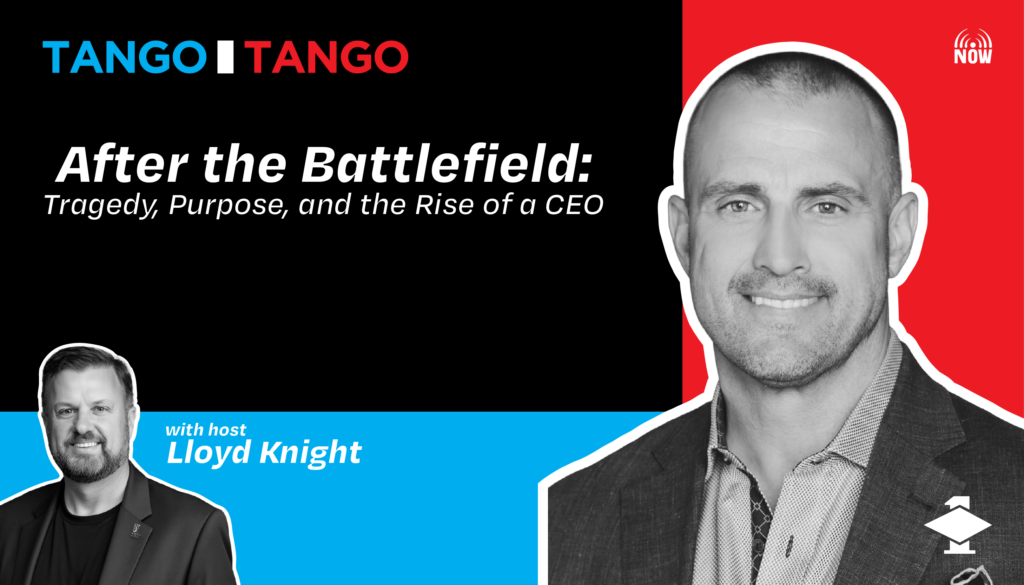
[00:00:45] Lloyd Knight: Welcome to the Tango Tango podcast. As always, I’m your host, retired First Sergeant Lloyd Knight, and we’re gonna have an honest conversation with a real hero, an amazing army veteran actor, CEO, and founder of Owners in Honor, and one of the most passionate veteran advocates that I’ve ever met, and that says a lot.
[00:01:07] Lloyd Knight: Patrick, welcome to the Tango Tango podcast.
[00:01:10] Patrick Flood: Thanks so much for having me, Lloyd.
[00:01:13] Lloyd Knight: So we’re gonna ju jump right into it. So how I know Patrick, we are Bush Institute Presidential Fellows, and I’ve been wanting to have him on this podcast since we got on a bus ride together, and I think we were headed to Dallas Fort Worth airport after class one day headed back home and there was a lot of traffic.
[00:01:33] Lloyd Knight: The, the traffic in Dallas is about as bad as it is here in Atlanta, and so it was long bus ride and we had this amazing conversation and I was kicking myself in the butt. If we’re not a, uh, hitting record on my iPhone, and I think I asked you right there that it’s like, Hey bro, we come on the podcast ’cause this is a story that, that needs to get out.
[00:01:55] Lloyd Knight: ’cause it’s, man, there’s so much in your story. There’s success, there’s failure, there’s tragedy, there’s hope and recovery. And a, uh, man, just, it’s better than Rudy and a, uh, the, uh, I think it’s, it’s good. And, and unlike Rudy, it’s, it’s real. So, hey, let’s get a, uh, where’d you grow up, Patrick?
[00:02:17] Patrick Flood: I grew up in a pretty small town in Wisconsin called Ephraim.
[00:02:23] Patrick Flood: So, and, and what did, what did your About 315.
[00:02:26] Lloyd Knight: 315. Wow. Wow. 3, 315. And, and what did your childhood look like?
[00:02:32] Patrick Flood: I don’t know. At the time I thought it was pretty normal. So I was one of four kids. My dad. Worked mom, my dad and mom actually both worked at, uh, the Nor Door Clinic, so a regional healthcare center that essentially was very similar to like urgent cares are today, but a a little bit more extensive ’cause regular doctor visits as well.
[00:02:54] Patrick Flood: Uh, and then my older brother, I had an older brother, a younger sister, a younger brother. And then unfortunately I had a, a very young brother who passed away shortly after birth when he was real young. So technically I was one of five. But yeah, and small, small, generally small town, you know, played little league grown up was in the Boy Scouts, was generally pretty small.
[00:03:16] Patrick Flood: High school, pretty small schools in general. And uh, but had an opportunity, I was Allstate and Track and Field. I was a captain of a couple sports teams, then president of my class for, from when I was a sophomore until I was a senior.
[00:03:31] Lloyd Knight: Oh, yeah, I, I get that from you. You definitely have this leadership ability to know how you, you know, how to.
[00:03:37] Lloyd Knight: One of the things I admired from you, from watching you in five to six months of class is the, the way that you deal with all groups of people and, uh, I, I think you do it really well and I think we both have that in, in, in common. So thank you. I see that leadership from you in a very early age. So, um, you graduate high
[00:03:58] Patrick Flood: school.
[00:03:58] Patrick Flood: I think, give a shout out real quick since we’re talking about how I grew up to my dad and my mom. Yeah. Doing it. I think because my dad was a medical provider, a lot of the way that I treat people, you know, between that and being growing up Catholic, I think is, you know, I was an altar boy and had really op good opportunity to have a Jesuit priest as our mean priest when I was growing up.
[00:04:18] Patrick Flood: So, taught me a lot of stuff, but I try to lead with giving everyone dignity. I think everyone, regardless of the background or whether or not they have a political opinion or differing opinion to mine, I think they still deserve dignity.
[00:04:33] Lloyd Knight: Yeah, absolutely. I, I agree with you and I think we are. We definitely had some challenges and sometimes there were some, so there were some grace that had to be, uh, definitely applied on, on all ends and in that six months.
[00:04:48] Lloyd Knight: So, uh, Patrick, what did high school, you know, after high school, what did that look like for you?
[00:04:53] Patrick Flood: Some at third generation American. I think a lot of times when we tell our, our immigrant story, it’s one of, you know, it’s came from nothing bootstrapped our way up to talk about all the success then that you achieved through resilience and hard work.
[00:05:09] Patrick Flood: I think sometimes we forget the amount of unintended shame that I think goes along with it. My dad, because he did take a big gamble and bought a business after having left a company that he’d worked for for about 10 years. We didn’t have a lot of means. And so both my brother went to West Point, my older brother, and then I did, I had AROTC scholarship to go in a presidential leadership S scholarship to go to George Washington University.
[00:05:37] Patrick Flood: I wouldn’t have been able to go for sure to a private school without getting a scholarship. A couple scholarships. And I think if I had I gone to a state school, I still would’ve had to work my way. You know, I have a full-time job essentially all the way through college. There’s no way that my parents were in a position financially to be able to help me do that.
[00:05:58] Patrick Flood: And I think my life glossed over a lot of that, I think. And ’cause it’s almost, it’s always nicer to talk about how you’ve arrived than how you got there, I think. And I also didn’t wanna bring shame upon my parents, but with what I’m doing now, and we’ll get to that eventually. I think the story of the thinner times and, and the resilience and the closest family that’s helped people.
[00:06:24] Patrick Flood: Find community and then be able to, to survive things that are otherwise quite difficult. I think is is all integral part of the story.
[00:06:33] Lloyd Knight: Well, we’re gonna, we’re gonna do rocky one. We’re not gonna go right where you arrived.
[00:06:38] Patrick Flood: Yeah.
[00:06:38] Lloyd Knight: We’re, we’re gonna go to you, you downing 12 raw eggs and then chasing chickens and, and, and to hear, hear about the struggle.
[00:06:47] Lloyd Knight: So you, you graduated high school and, and you do head off to college. Did you go to George Washington?
[00:06:52] Patrick Flood: I, to George Washington. I was, uh, initially a pre-law major, but then they, they canceled the pre-law major and gave us a different major. Initially it was econ economics, but then I switched to English ’cause I got better grades in it.
[00:07:07] Patrick Flood: I did a bunch of stuff my freshman year, joined the fraternity, was in ROTC, did way too much and got a very poor grade point average my very first semester. So my resolution without guidance was that I was going to leave college and join the Navy. I signed a delayed entry program to be to go to one of the UDT teams and, ’cause they still had those.
[00:07:33] Patrick Flood: And thankfully my dad, who was in the reserves at the time, army Reserve, did his two week rotation out in DC at Fort at Walter Reed. And so he ended up talking to my b, my battalion commander at Georgetown. ’cause that’s where Army ROTC was. And they convinced me to stick around based on a basic lesson of economics of how much it would’ve cost me to leave and the regular JAB bill.
[00:07:57] Patrick Flood: ’cause the post nine 11 JAB bill didn’t exist at the time versus almost a full ride scholarship, 85% scholarship from ROTC and then also the scholarship from school for the Presidential Leadership Scholarship. So. I stuck with it, which was challenging ’cause I had to take summer school on my own dime. I had to try to get my grade point average back up and ended up graduating with close to a three average.
[00:08:21] Patrick Flood: So just, just under, I think it’s like 2 9 1 or 2 9 7 or something.
[00:08:26] Lloyd Knight: Let’s back up a little bit. How different, uh, your small town kid from Wisconsin, 300 and some people in the town, and now you’re at George Washington University in, in DC Wow.
[00:08:39] Patrick Flood: Yeah, I, I think quite a bit different and I think that was one of my main challenges is that, you know, I was a average to large fish.
[00:08:49] Patrick Flood: You know, my dad had a business, everyone kind of knew me growing up. They knew my family. I was able to, because I went to a relatively small high school, I was able to achieve a lot of stuff that maybe would’ve been much more competitive in a different place. And so I took all of that stuff, went to George Washington, tried to do exactly the same thing that I had done in high school, especially that first semester.
[00:09:10] Patrick Flood: And I definitely bunked, but thankfully I’d, I’d found a really good group of friends. My best friend is still my best friend. I’ve met him on move in day. He and I joined a fraternity together as well. And I credit them not just then, but even now, like when there’s been difficult times that they’ve always been really as, as close to family as you could get.
[00:09:35] Patrick Flood: And which what was interesting about specifically George Washington is that everybody is transient. Nobody’s from there. Everybody was from somewhere because it’s in dc everyone’s from a different part of the country. So I ended up joining a. Pi Kappa Alpha that happened to match my values. So scholarship leadership, athleticism and gentleman conduct, shout out to Pi Kappa Alpha.
[00:09:57] Patrick Flood: And so because of that, you end up with surrounded by people very similar to when you joined the military that share your values. And it was great that we shared values and to this day they’re some of my closest friends.
[00:10:10] Lloyd Knight: Yeah, that’s amazing. So you, you spend a full four years there and graduate
[00:10:15] Patrick Flood: Four plus.
[00:10:16] Patrick Flood: Yeah. So four, four and a half. I interviewed Captain Summer school closer to five maybe. So I got commissioned out of ROTC and I got a reserve commission, otherwise known as an active duty commission. But then, uh, because of the size of the army getting smaller. Ended up in the Army Reserve, but I was an armor officer, so the Armor Corps in general shrank quite a bit in 19 95, 96.
[00:10:43] Patrick Flood: And so I tried to stay in college another six months, see if I could get another shot at AT assessment to see if I could assess again. And then they decided that they would not reassess me. Graduated the following year, but really was done in December of, of 25. And so technically, I think I graduated in 1995, but it was actually six months after my technical graduation.
[00:11:04] Patrick Flood: And I walked with the 2026 class. So, or sorry, 20 26, 19 96 class. It’s not, not yesterday. And so the, uh, so any rate, the 1996, I guess it’s 30 years ago. Yeah. So from that ended up in the IRR because I couldn’t, there was no armored reserve units anymore. ’cause they had changed the National Guard, the Army Reserve.
[00:11:26] Patrick Flood: So wasn’t doing anything for about six months. Went to the 29th Infantry Division and apparently drilled, that’s a National Guard unit in Maryland. Drilled for free, didn’t realize I was drilling for free. I thought that I was transferring my, my commission over to the National Guard, but it turned out I couldn’t.
[00:11:43] Patrick Flood: So did that for about a year. Worked in DC for about a year. I’d also previously been an intern at a organization, a think tank in DC for about a year, my senior year at college as well. And then after a year doing that and really barely making ends meet ’cause new communication assistant still make very much money in DC.
[00:12:04] Patrick Flood: Had ended up moving out to Los Angeles with a friend. And then once I got to Los Angeles, then I got a, a Telegram, which the Army used to send your orders via Telegram, Western Union Telegram, which is really just a letter and got it out, read the dot matrix printing and it said that I had to call.
[00:12:24] Patrick Flood: Reserve, I think it was Reserve Branch or Army R person. So Army personnel, reserve command. And talked to them because otherwise they were gonna recoup my scholarship money. So I had to go find any, uh, reserve unit regardless of branch and go sign in. And so I did, I found, I went to the phone book, found a reserve unit that had space, and ended up a platoon leader of a general support platoon at a quartermaster company down in Bell, California in the sixth 93rd quartermaster company.
[00:12:53] Lloyd Knight: Right. You got the, and so all the younger listeners are, are listening in like, what’s a phone book? You know, what’s the telegram?
[00:13:02] Patrick Flood: Yeah. Sorry. I didn’t
[00:13:03] Lloyd Knight: mean what’s the do matrix printer?
[00:13:05] Patrick Flood: I didn’t mean to Yeah. Talk, talk about the wagon wheels and the trip across the Oregon Trail and how many times I got distant Terry.
[00:13:13] Patrick Flood: Yeah. I didn’t, I didn’t mean to. Sorry about that.
[00:13:16] Lloyd Knight: So the, uh, so wow, what so, so different now you’re in a quarter master. Did you find success of that right away? Were you, were you content with that?
[00:13:25] Patrick Flood: Yeah, it was super easy. Um, I showed up and, you know, I had never been to the basic course, so I basically had ROTC advance camp under my belt and four years of ROTC and there’s five officers in the unit.
[00:13:39] Patrick Flood: There’s only one that, it was actually a quartermaster officer. The rest of us had all been recalled from something. So one was a signal officer, one was an engineer, another one was a Intel officer. And then there was, there was the one, and then me, who was an armor officer. And then there was the one, uh, quartermaster officer.
[00:13:56] Patrick Flood: But yeah, about 40% of the unit was showing up at the time. We had a lot of our TA 50, which is the basic equipment you get when you get initially to assigned to a unit. We were trying to figure out how to get it back because in the reserves we had to go through the MPS at Fort Irwin to try to go get the equipment back from soldiers that hadn’t been showing up, declare the May wall, go through a whole thing, national Guard, you could call the state troopers or somebody else to local police to go pick ’em up.
[00:14:22] Patrick Flood: So yeah, it was actually quite challenging. So it was great. So there’s actually, there was a couple of folks, a Kaia Morgan I think is, uh, if I’m getting her last name correct, I think she’s been married since she was a an A GRE five. And then we had an A GRE seven or E eight who are ops sergeant and like our, essentially our.
[00:14:52] Patrick Flood: Like, I guess our both were were op sergeant, one was like assistant ops operation sergeant. The other one was Operation Sergeant. So between me working with them and then there was a guy who was the acting XO who is a engineer officer. So that we ended up taking our entire annual training plan, revamping it, engaging with the Marines down at Camp Pendleton and also the Los Angeles Air Force base and started doing.
[00:15:16] Patrick Flood: When we had drill weekend, we would do things at the other location. So we would either work in a warehouse at the LA Air Force base ’cause they had the equipment that these young soldiers that we’d had in our unit trained on, but they hadn’t ever used because the reserves has a lower grade of equipment.
[00:15:34] Patrick Flood: From doing that, we ended up talking to the DRMO over at LA Air Force Base and we had still had field jackets in the unit. So that’s a thing. I don’t know if you remember that, what that is.
[00:15:44] Lloyd Knight: I do. I was virtue one,
[00:15:46] Patrick Flood: but uh, but from that then the DRMO, they, the Air Force had gotten the first issue of Cortex and so when they were getting rid of everything, there was a lot of stuff still in the package that they sent to DRMO.
[00:15:56] Patrick Flood: So we ended up going over there, got the whole unit Gore-Tex jackets, which was great. Gore-Tex pants, and then worked with the Marines. Then at Camp Pendleton we would, we had a food service platoon, so we would go down. A weekend, a month about and open up their dac ’cause they also didn’t have enough money to open up the dac.
[00:16:13] Patrick Flood: And we had money for food, but we didn’t have enough people to feed. So we, and you couldn’t legally give the food away, so we always had to throw it out. So instead we would go down there, the Marines would trade us and the Marines would teach us land navigation. You know, have instructors, you know, help teach the unit, land aviation, basic rifle marksmanship, drown proofing, whatever.
[00:16:34] Patrick Flood: So actually have people feel like they were in the military. Uh, we would do, you know, a, an actual convoy exercise going down there. No one used their cell phones. We used tactical radios to be able to do a convoy exercise down to Pendleton from la. And it was great. Like by the time I left, probably our participation was closer to 90% on drill weekends and people actually enjoyed coming to the unit.
[00:16:56] Patrick Flood: We were pretty highly decorated as a unit at that point. And then. I don’t know how far you wanna go down this rabbit hole, but, so when I moved out to LA I was working in production. So I started out as a production assistant and then eventually moved up production coordinator and assistant production manager.
[00:17:13] Patrick Flood: And, uh, I, through kind of a interesting twist of fate, ended up being an actor. I got something called Taft Hard Lead, which is like a union, uh, waiver for someone who has special skills or abilities or, or access to, to become an actor. So I got waived essentially into the Screen Actors Guild, which is a really hard thing to do.
[00:17:34] Patrick Flood: And from that ended up acting as a job for about two and a half years. Uh, almost three.
[00:17:40] Lloyd Knight: Yeah. Let’s, let’s go down that rabbit hole ’cause Sure. ’cause it’s, it’s a great, it’s a great rabbit hole, first of all, before we do that though, kudos to you for all that training. Yeah. That, that you were able to, to, to get those soldiers because five, six years later.
[00:17:56] Lloyd Knight: They, uh, you know, I’m sure some of those soldiers put that training to get the good to use after nine 11.
[00:18:03] Patrick Flood: Yeah. The, it was a de it was definitely challenging. You know, I, I talked to you about a little bit about 2026 being the year of killing my ego. And, uh, I would say my ego was significantly bruised at that point.
[00:18:16] Patrick Flood: You know, I’d gotten my first choice of branch, ended up not getting really a job in the army and then getting a branch that was, would’ve been on the lowest on my totem pole. And I would say when I showed up, I was definitely feeling sorry for myself. And it probably reflected in my leadership and through really good NCOs who thankfully saw something in me that I kept showing up even though I didn’t wanna be there.
[00:18:42] Patrick Flood: And eventually they helped me understand the fact that even if you’re not where you wanna be, people need leadership. And sometimes you just gotta be the leader they need instead of the leader that you wanna be.
[00:18:57] Lloyd Knight: Yep. Absolutely. So yeah, let’s go down that acting rabbit hole. Sure. So what, what was the first, like, who convinced you to be an actor?
[00:19:09] Patrick Flood: Convinced? So, I don’t know. I don’t know if convinced is the right word. I think so. I worked in production and when you’re working behind the camera so much, you see all this stuff. Right? And quite frankly, actors are not to maybe a civilian, someone who doesn’t work in entertainment, like actors always seem like to be sort of on the top of the mountain, right.
[00:19:29] Patrick Flood: And on set. They’re really not, they’re treated like, uh, uh, evil, like a, a, like a necessity. Like I, I wish we could do this without the actors, because everyone else generally is very professional. They’re very time sensitive, they’re very good at coordinating with each other. There’s all the different departments that work really well with each other.
[00:19:50] Patrick Flood: I mean, you got, and I’ve think, I think I’ve talked about this before, but you have like blue collar union guys who are teamsters running trucks and cables and building stuff. And then you have, you know, art department people that are very, sometimes very flamboyant and very creative, and they’re working together to create something great, and no one really gets their personal feelings involved.
[00:20:12] Patrick Flood: And everyone’s just about the product. And then it’s all about the time. So it’s all about timeliness and making sure you’re, you’re hitting all your, all your times. And so anytime there’s a delay, it’s challenging. And most of the delays come from, I would submit, most of the delays either come from, you know, bad, probably bad production development.
[00:20:32] Patrick Flood: So like understanding the sequence of things and when it needs to happen, and then wasting time in between setups or from actors that don’t show up, don’t know their lines are unprofessional, don’t leave their trailer, create emotional events on set, et cetera, et cetera. So Cool. Most of the crew sees actors as a necessary evil, but would like when you’re a civilian environment outside of, outside of the entertainment world, actors are always seen as sort of this, uh, put on a pedestal.
[00:20:59] Patrick Flood: They are absolutely not on set. And I think you’ve already, if you were to ask most professional actors, they would agree with me. And so from that, I didn’t really have a lot of high thoughts about actors or in, in aspiration to become one. But when you’re working on a set, and we are working on a set of a, of a pilot for a show that was being done by Steven Spielberg’s company, inland Entertainment.
[00:21:23] Patrick Flood: So high value show, really expensive. An actor didn’t show up because professionally he had found out that there was a different opportunity on a different show. And our show probably wasn’t gonna go to air, wasn’t gonna go to network. So he left to go to the other one, which is turned out to be a very good career decision.
[00:21:40] Patrick Flood: But we had built his costumes and built the set and all this stuff for him. He wasn’t there. And so they ended up, um. Checking everybody on set to who fit the costumes. And it was me and one other guy. So me and another coordinator ended up getting stuck on behind the green screen, acting like we were, you know, pilots and mechanics in these space ships that looked like transformers, I guess.
[00:22:04] Patrick Flood: Uh, so it was a TV show called GS was based on. And, uh, and then that’s it. So, but then from that I ended up meeting a set photographer who was a set photographer over at CBS. He had done most of their publicity. He offered to do head shots for free, which is suspicious, but at the time I didn’t, I don’t think my antenna were up very much.
[00:22:27] Patrick Flood: I was like, oh, it’d be funny. So I ended up getting headshot taken by him, and then he put them in his book of all of his headshots, and he had done most of the actors that were, that were the main actors on the soap operas on, on CVS, one of those soap operas is Young and the Restless. There was a, uh. A casting director saw my photo and decided to call me in for an audition thinking I think that the photographer said that I, he had met me on this, you know, or he had met me while I was working on this, uh, Amon Entertainment job.
[00:22:57] Patrick Flood: So I ended up going in auditioning, getting the job, and then got what’s called under five. So I kept coming back and I was getting paid, I think over, you know, as a production person, I was getting paid anywhere between, you know, two and $400 a day. And in acting I was working probably six hours a day and I was making $500 a day.
[00:23:17] Patrick Flood: And in production, you’re working, you’re almost getting paid that per pay working 24 hours in a row.
[00:23:22] Lloyd Knight: Mm-hmm.
[00:23:22] Patrick Flood: So it was like cost benefit analysis. It just made a lot of sense. And what was great about it is that my schedule was very planned out so I could act certain days and I could still, you know, be an independent contractor and work in production the other day.
[00:23:34] Patrick Flood: So that’s kind of how it started. And then I got cast in a, a Coca-Cola commercial, so I got an agent from that. Got cast a Coca-Cola commercial, ended up not getting it because someone else was chosen. Turned out that actor had a conflict because he’d done a PepsiCo job in the past and they called me. I couldn’t get in touch with me ’cause I was on set.
[00:23:57] Patrick Flood: I had an emotional event and ended up going to my agent’s office and fired him through a tantrum. ’cause I’m 24 years old and you know how dare he do this? He was 70 plus years old. So he’d worked in Hollywood for like 50 years and he was very gracious to me in the fact that he gave me advice instead of really damaging my future as an actor in la he’d said, Hey, you need to go get professional classes.
[00:24:25] Patrick Flood: This is a business. It’s not just something that you can kind of show up and get through just based on talent. And so. It was great. So I ended up going and getting, you know, professional lessons at a couple different places of coaching and then they recast the role that I was in that became a, a series regular, but the series regular was cast to somebody else.
[00:24:46] Patrick Flood: ’cause he told him that I wasn’t interested, which is a great lesson. But in the meantime, he also didn’t like blackball me, didn’t talk to, did I could, you know, I could get another agent, I could do other stuff versus what could have happened, could have been a lot worse. Could have been a big setback.
[00:25:00] Lloyd Knight: How many episodes did you appear on?
[00:25:03] Patrick Flood: That’s a good question. I, I’d say probably it was like about six months. So I was working maybe twice a week. So I would say 20, uh, maybe more. Um, but you know, it’s under five, so sometimes you have lines, sometimes you don’t. Almost all the time I had, I’d un you have under five lines. So it was usually something small like, here’s your coffee or.
[00:25:24] Patrick Flood: Nothing crazy, but it was, but it was enough. It was good money. And it’s where a lot of people started is either backup actors or, or extras or as you know, getting under fives are really small parts and stuff, but being good and showing up and having all your stuff ready and making sure that, that you’re seen as professional.
[00:25:43] Patrick Flood: And then after that I got, you know, a good, a better, better agent had, you know, went to a good studio, started getting good acting instruction, and then started booking jobs and, uh, got a couple commercials and then, uh, got a commercial for NBC for friends, which was good. It was during the NBA finals, so that was pretty good.
[00:26:07] Patrick Flood: Got me a lot of exposure, which got me more auditions, which was good. And then I had a then intervening variable as I got cast in a movie called Deep Blue Sea. My younger brother who had been attending UCLA, he was 19. Transferred to Wisconsin, uh, was Redshirted when he went to Wisconsin. And then through, uh, at least the medical opinion is, is that he was, he was being overtrained, ended up with a form of anorexia mm-hmm.
[00:26:35] Patrick Flood: And killed himself, you know, committed suicide. So I didn’t go to the job, which wasn’t the best career move, but makes perfect sense and went home instead. And my brother and I had always been roommates growing up, so he was my, I would submit that he was my closest sibling at the time.
[00:26:56] Lloyd Knight: Mm-hmm.
[00:26:57] Patrick Flood: And it, I’d, I’d say that he and I were most alike versus my sister and brother, I think are, my sister and older brother I think are a lot alike.
[00:27:07] Patrick Flood: And so it was shocking to me that, that he died in that way. And it was hard to perceive of what I was gonna do next. And I just felt like I didn’t have a whole heck of a lot of. Ambition to do anything at that point. And then I’d auditioned for a role in a small, independent, cowboy movie, like a, a Western movie.
[00:27:33] Patrick Flood: And I had told a white lie about being able to ride a horse. And so when I was in Wisconsin, I found out from my agent that I had been cast in this movie. And thankfully my dad, you know, one of his patients owns a ranch and he does horseback riding and does, you know, trail rides and stuff like that. So my dad asked him how long it would take to, to help me learn how to ride a horse believably.
[00:27:59] Patrick Flood: And he said he thinks he could do it in three weeks if I really dedicated myself. And so I was like, okay. So every day for three weeks, I’d show up at five o’clock in the morning, uh, dress the horses, get the stalls cleaned out, take um. Take lessons on horse anatomy and different things about equine science.
[00:28:23] Patrick Flood: And, uh, and then I started out barebacking in a stall. So going in a circle in a stall and learned how to get my seat. And then after that, got a saddle, learned how to drive Western after learning how to ride Western, learned how to ride, uh, English. And so within three weeks I was completely comfortable in and on or around a horse.
[00:28:44] Patrick Flood: So it was unintentional equine therapy, I would say. And ended up going back to LA to go get the job. And then the funding of the movie fell out, but now it was back in la so it kind of got me as I joke around about it sometimes. It literally got me back on the horse. So I, I got back out there and I was like, okay, I’m gonna make a goal of this.
[00:29:04] Patrick Flood: I don’t want my parents to think that me that I’m screwing around and wasting my time out here. So I was single at the time, moved out, got my own apartment, was living with a roommate. My same. Close friend of mine, a best friend, had moved outta my own place. ’cause I was just like, I’m gonna be singular in my focus and all I’m gonna do is try to get work.
[00:29:23] Patrick Flood: And then I did really well. I got a couple commercials again, got a movie called Prison of the Dead. It’s terrible, don’t watch it. Um, you know, time back. But from that started getting some castings and some decent shows and, and was really doing pretty well. Was starting to get a-list, castings and, uh, and it just felt empty.
[00:29:45] Patrick Flood: Like I was living someone else’s life. Like, it just didn’t feel, it just didn’t feel right. Like, it felt like I, I wasn’t serving a purpose. And I’d always had this feeling. Part of the reason that I wanted to join the military wasn’t just to pay for college, but it was because I felt a great deal of. A need to serve others in a capacity of leadership, serving leadership, but also to be able to pay back my country.
[00:30:09] Patrick Flood: And so the Army was having this voluntary recall program, and I was switching units to a psychological operations unit that was down in Los Alamitos. I went to the signal course and at the Signal course, the Chief of Signal offered all of us that were National Guard Reservist to be able to come on to active duty for a contract because they were short officers.
[00:30:33] Patrick Flood: And then based on that, they would kind of negotiate with each of us individually. So I went in, I can’t remember her last name. First name was Vern Verna, I wanna say. But General wa. General WA was, I wouldn’t say it’s Verna Washington, but, uh, she was the chief of Signal, a really great lady. She ended up being in charge of afis afis later on.
[00:30:51] Patrick Flood: But she came in and she was like, so tell me what you want. And I was like. I was like, well, I’ll be honest with you ma’am, I haven’t really had the best experience in the Army. So it’s far nothing that I’ve asked for. It’s actually worked out and I think I’ve, I’ve done like decent stuff. I’ve been, you know, I was maybe in the bottom third of my top choice, but I still was able to get my top choice.
[00:31:10] Patrick Flood: And so it’s, uh, like I want really to, if I’m gonna come back in, I want it to be on my terms. And she goes, okay. So we, I signed a one month commitment, or one 12 month commitment with a year extension that I could extend for another year. And, uh, with that negated the rest of my eight year commitment. So it was like I was starting over, which is both good and bad.
[00:31:34] Patrick Flood: Bad because I had to go back through meps, um Oh, did you? Nonsense all over again.
[00:31:41] Lloyd Knight: Oh,
[00:31:41] Patrick Flood: wow. Um, but I was basically direct commissioned into the active Army as a first Lieutenant. And so the. Uh, I asked for my maycom choice or my major command of choice. I asked for my post of choice and she gave me everything.
[00:31:55] Patrick Flood: And so I ended up having Fort Bragg, which is where I wanted to go. I asked for uses, so, which is the major command. So the United States Army Special Operations Command got assigned there, ended up getting further assigned. The second battalion, third Special forces group was a signal signal commander and got due to some, there was a data, there was data corruption issues.
[00:32:14] Patrick Flood: When they were transferring all of our files from FISCH to data or to digital in whatever it was, 2000 at the Army Personnel Reserve Center. And they were combining everything to, to, what is it called now? I can’t think what it’s called right now, but to otherwise to personnel come in. And so they were combining everything together and in so doing, I got kind of stuck, like my files couldn’t be transmitted to my unit.
[00:32:43] Patrick Flood: So I was kind of in limbo in order to, to find some things. I had to find my initial. Commissioning certificate, which had like a tea stain on it. I had to like find all of this stuff, like all my original documents I had to go try to find so I could Wow. Get into my unit. So I finally got to my unit. I should have gotten there July 15th, 2000 instead.
[00:33:02] Patrick Flood: I got there January 15th, 2001. And so I owed 12 months from January 15th until really January 14th, 2002. And it turned out about January, late January, mid to late January of 2002, I was standing in the airfield, the pull fire force base because Afghanistan had kicked off because of nine 11 and I wasn’t getting out of the army.
[00:33:26] Patrick Flood: And so because we’re a nation at war, so I ended up deploying into one of the first units that went into Afghanistan during OI F1 or O or OE F1 operation during Freedom one and helped set up the signal center down at Kandahar, which is the same one that I ended up. You know, commanding years later, uh, when I was a A OB Commander in Southern Afghanistan.
[00:33:47] Patrick Flood: But yeah. And then from that got deployed, went to a different special operations signal unit, got deployed to, uh, cutter in support of Operation Iraqi Freedom at the very beginning, helped set up a lot of that stuff. And then after that, had a really incredible boss, Pete Gallagher, who gave me the advice of, Hey, I think you’re a great officer, or giving you a ton of responsibility.
[00:34:08] Patrick Flood: You’re able to achieve everything they ask you to do. You are really good at operating as a singleton or with just one other person being able to do stuff, but you don’t have a ton of interest in all the technical aspects of being a communications officer. And eventually you’re gonna plateau. So my recommendation, his recommendation was for me to go to Special Forces selection and to see if that would be a better pathway for me.
[00:34:31] Patrick Flood: And he was right. And so I went to Special Forces Selection and, uh, and made it, and then got assigned to seventh Special Forces Group later on.
[00:34:42] Lloyd Knight: Wow. Did anything from your acting career like, like help you in your army career?
[00:34:49] Patrick Flood: It’s funny. I would, yes, a variety of things. So in, in acting you have to memorize a lot of stuff and so especially when we were doing operational planning and we had to do briefings.
[00:35:03] Patrick Flood: So like I remember briefing Annex K, which is like the signal annex for this big operation that was in Afghanistan. ’cause I was the senior signal officer in our task force. And which is also kind of a funny story ’cause the military advisor for this commercial that I had done for this weapons manufacturer that was, that did their military advisor was a seal for this commercial when I was acting, ended up being like the.
[00:35:28] Patrick Flood: The command master chief of the SEAL team that was doing the thing. And so like after the briefing, after I’d given this briefing, and this is where I think there’s translation, so I gave, like, I was really comfortable in front of people, really comfortable being able to talk about stuff at length, comfortable rehearsing, you know, a lot of combat, especially special operations is really rehearse, rehearse, rehearse.
[00:35:50] Patrick Flood: And so that was, I was completely familiar with that and I really enjoyed being able to rehearse and then put it away and then being able to, to, uh, improvise a little bit if you had to or answer questions and be, be confident about what it is that you were talking about. But afterwards he was like, Hey, aren’t you an actor?
[00:36:07] Patrick Flood: And I was like, well, funny story. I was, yeah, but it was crazy. Small world, uh, time. I think he was from Seal Team two, but yeah, real small world, but pretty funny.
[00:36:18] Lloyd Knight: Yeah. That, that, that is a, uh, that is funny. That. Let’s talk about your combat, uh, experience. So now you’re at Special Forces.
[00:36:26] Patrick Flood: Yep.
[00:36:26] Lloyd Knight: You’re back in, you’re in Afghanistan, you’re your Special Forces deployment.
[00:36:31] Lloyd Knight: Were all in Afghanistan.
[00:36:33] Patrick Flood: Not, well. My combat deployments were, um, with the exception of what one was considered a combat deployment in support of OEF, but it was in Southcom. It was in Guyana, yeah, that’s
[00:36:44] Lloyd Knight: right.
[00:36:45] Patrick Flood: But the ones with my team were all in Afghanistan, and so I spent three deployments as a Green Beret in Afghanistan.
[00:36:54] Patrick Flood: And then, is that right? Yeah, three deployments as a Green Beret and one is a signal officer in Afghanistan, and then one is a signal officer in Iraq
[00:37:04] Lloyd Knight: and a, um,
[00:37:06] Patrick Flood: and a budget time in Latin America.
[00:37:08] Lloyd Knight: Yeah. And a, uh, I, I definitely want to get into your Latin America experience, but let’s talk about Afghanistan.
[00:37:16] Lloyd Knight: Sure. Was it always. Y you know, we, we have a lot of civilians that watch this podcast too. Were during your special forces combat, you had deployments were, were you always on, I mean, was it always combat or was it a shift?
[00:37:32] Patrick Flood: It depended. So each rotation was different. And the rotations, so the one combat deployment was in 2007, 2008.
[00:37:39] Patrick Flood: Another combat deployment was 2008, 2009, and then the other combat deployment was 20 15, 20 16. And so the. First combat deployment. It all depends on your job, right? So my job the first time as I was a team leader, so my team was in Gresh, Afghanistan. The Helman, we were at the time the only team that was dedicated to the Helman, which is some of the nastiest parts of Afghanistan and includes the Senge and sala, a couple different places that shook I that people know only because of like big bad accidents or things that have happened.
[00:38:14] Patrick Flood: A couple places, Firebase Robinson was there. It was where the British, technically the British were the ground space or battle space commanders. From that, that deployment, we had a lot of troops in conduct incidents, probably over 120 days, most of them multiple days. So it was a lot. So it’s almost four months of time in contact over the course of seven month deployment, seven and a half month deployment.
[00:38:38] Patrick Flood: So it was a lot ended up. I don’t even know how many conops we did. ’cause what we had, our stuff was different. So our concepts of the operation were different than a lot of the ones in the other units. We would do almost monthly ones and then we would do frago ’cause we would just stay out of our fire base sometimes for a month, sometimes longer.
[00:38:57] Patrick Flood: And then we would rotate guys in and out. So we did a lot of split team operations. We ended up getting, so we maintained constant pressure on the enemy within our sector. And we were coordinating quite a bit with the British battle space folks that were there. And then the 82nd came in later on, first 5 0 8.
[00:39:15] Patrick Flood: And then there were some three letter agencies and some other tier one units that were in our area. So we did our best to coordinate with them. Deconflict, I would say technically the term is deconflict. ’cause we could not coordinate with them, but we would deconflict our operations with them. And uh, yeah, we, I think we did, we pretty great job during that deployment.
[00:39:36] Patrick Flood: We lost one. Based on all of those different ticks, we had a lot of enemy, KIA, all VA verified through signals intelligence and human intelligence. So we were, our battalion commander was very strict about us getting confirmations of everyone who had been killed or injured on the enemy side, which is always challenging ’cause sometimes you can’t do it right away.
[00:40:00] Patrick Flood: It takes sometimes a fair amount of human intelligence gathering to be able to determine who got injured and why and where did they go and did they eventually die of wounds and all the other stuff that goes on. And then we lost one British liaison that was with us, uh, that was the only KIA during my, uh, friendly ka during my tenure.
[00:40:18] Patrick Flood: And then just, I ended up getting blown up twice and bit by a Cobra and that’s a thing, and ended up deploying a little bit early because my left eye wasn’t working for that one. I did not get a purple heart, uh, or battalion at the time. Did not perceive head injuries as purple heart worthy. And so I didn’t get a Purple Heart for that, but I fought for my two guys who were in the vehicle that received most of the concussion from the explosion to get Purple Heart.
[00:40:48] Patrick Flood: So I was happy that they ended up getting, getting their, uh, awards. But I figured one, one Purple Heart was enough for me and I did not get a Purple Heart for being bit by a Cobra. We could not confirm that it was Taliban trained, although it did happen during the firefight, which is a whole thing. And then, yeah, so it was a pretty, pretty froggy, uh, year.
[00:41:08] Lloyd Knight: We, we, we gotta, we, we gotta talk about this, this, go back to this and talk about the Cobra story. First of all, you don’t get anything extra for additional Purple Heart. So, so I’ve got a friend put command in Sergeant Major, Roger Rowley, that that’s got a couple of them. And I was like, dude, you didn’t get an ex, you got anything extra for getting shot a second time.
[00:41:27] Lloyd Knight: But, but what you did get is you, you, you, you got a story, man. You, you got bit by a Cobra King Cobra. How many
[00:41:37] Patrick Flood: Brown, brown, speckled Cobra, according
[00:41:39] Lloyd Knight: Brown speckled Cobra. How many people in the US Army can say they got bit by a brown speckled cobra? So
[00:41:46] Patrick Flood: I think
[00:41:47] Lloyd Knight: I’m fine enduring a firefight. So yeah. How in the world did that happen, Patrick?
[00:41:52] Patrick Flood: So I’ll give, I’ll give the shorter version of the story.
[00:41:55] Lloyd Knight: Alright.
[00:41:55] Patrick Flood: So the shorter version of the story is that we were going into an assault at that point, MARSOC was there. So Marine Special Operations Command had an element there and we were working with them. They were great ’cause they were very organic.
[00:42:10] Patrick Flood: They had all the assault force and everything else organic to them. They weren’t working yet very much with partners, but we were, so they ended up being dedicated as the main effort. We were the supporting effort because of our partners. And when we were rolling up into this high value target area, one of their vehicles hit a mine.
[00:42:29] Patrick Flood: We started getting mortared. We could hear enemy conversations over our, our telecommunications intercept. And so. In their communications. We could hear our vehicles, we could hear the diesel of our vehicles, and we knew therefore, that the spotters were close, whoever was calling in the mortar fire. So we dismounted all the SF guys and our Afghan partners all exited our vehicles dismounted and had knife issue goggles on, and went down in both sides of the ravine, essentially where we were.
[00:42:58] Patrick Flood: So one element that went down the right side, we went down the left side basically as we were facing the target and we hit a fighting position, fought through the fighting position, and had a couple of enemy ks, a couple people withdrew, but as we. When continued to assault down the passage I was calling in, I was on the radio ’cause that’s technically my job.
[00:43:22] Patrick Flood: My job is not to shoe rifle, it is to use this, use the radio as my primary weapon system. So I was calling in the troops in contact. I was the ground force commander, so I was calling in everything, giving situational awareness to the salt element. And for cover, I’d gotten into the trench line and was walking down sort of the edge of the trench line and must have stepped on a snake.
[00:43:43] Patrick Flood: So I never saw it, but uh, ended up biting me through the ankle of my boot and it hurt. I thought I was shot. It was not, I did not get shot obviously, but didn’t, had never felt that level of pain before. And so, but uh, I felt down. I had my whole ankle, couldn’t figure out what it was. So I just kept working and it was like, it hurts a lot, but I could still walk.
[00:44:07] Patrick Flood: I could still, but then it started feeling like it was going up my leg. So I thought maybe I’d get by been bit by one of those desert scorpions that are pretty nasty. And I was like, oh, maybe I’m going into some form of anaphylactic shock that would suck. Uh, we had medevaced a guy like about the week previous for anaphylactic shock who’d gotten scorpion bit when he had went in his, um, sleeping bag, I think sleepy system.
[00:44:30] Patrick Flood: So we, uh, the guys kept assaulting. I told him to go ahead. Me and the TURP were there as it became more painful, determined that we needed to go back to the vehicles, made it back to the vehicles. Short story long, um, medic, uh, Chuck ended up meeting me and uh, he ended up Maxwell. Chuck Maxwell met me. He was our replacement delta ’cause our other Delta had been injured earlier in the rotation.
[00:44:57] Patrick Flood: And he checked out and he was like, Hey sir, you didn’t get put by a bug. You get put by a snake. And I was like, that sucks. What kind of snake? Well, like what do we do now? And he goes, well, it depends on the kinda of snake. And I was like, okay, so what’s the difference? And literally we’re having a regular conversation while we’re being shot at, mortars are still falling
[00:45:14] Lloyd Knight: Wow.
[00:45:15] Patrick Flood: In the, in the dark. And uh, he goes, well, it’s either a neurotoxin or hemat. Toin. If it’s a hemat to, and you’re gonna lose everything below your, uh, if I put on a tourniquet, you’re gonna lose everything below the tourniquet probably. And if I don’t put on a, and I was like, well what happens if you don’t put on a tourniquet?
[00:45:30] Patrick Flood: He goes, well, if I don’t put on a tourniquet, it’s a neurotoxin. You might die in about 20 minutes. And so I was like, okay, so let’s put on a tourniquet, see if you could save my knee joint. I called in a medevac. There was some confusion because snakebit actually means something different over the radio.
[00:45:45] Patrick Flood: So I had to clarify that I was bit by a s snake. They couldn’t figure out who was bit by a snake because I was, I was calling in it for myself and I was on the radio so they, I had end up using in the clear. So I had to literally just explain who I was. Some it’s Captain Flood. You know, I’m the team leader of ODA seven through six and I was bit by a snake and I dunno what kind of snake, uh, but we need a medevac.
[00:46:09] Patrick Flood: And so the medevac came from the British Air airfield that was close by. They had a, a field medical facility that was there. They picked me up like in the middle of a firefight with the CH 47. Flew all the way back to the, uh, base Sebastian. They ended up checking me out, determined that the blood protein was a neurotoxin, not a hemat, toin, left a tourniquet on, et cetera, et cetera.
[00:46:31] Patrick Flood: So eventually I couldn’t feel my leg for the recovery was I couldn’t feel my leg for about a week and couldn’t feel my foot for about a month. Checked myself out of the hospital after a week. Um, because we had other guys, other casualties come in who needed the beds, I thought. And so I called my guys and they came and picked me up and I went back to the fire base and two days later I ended up back out in the field.
[00:46:52] Patrick Flood: I was supposed to be recovering, but there was too much work to be done, so I just ended up. You know, still operating. I was just really careful about where I walked ’cause my foot fell like it was asleep and then just recovered in theater just like I had after the first blast wound that I got like the second week I was there in April.
[00:47:10] Patrick Flood: So yeah. And then eventually got, that was another, a vehicle that lost the back of its vehicle, hit a mine. Our vehicle was right next to it. So we the there, the blast hit our vehicle as well, like specifically the TC side. So I ended up being subjected to that blast as well. And then that’s when I came back and I was really concerned about the guys who were in the vehicle that lost the back half of it.
[00:47:33] Patrick Flood: We had a interpreter get hurt and then we had two of our soldiers that were in it get pretty shook up and I wanted to make sure they got medical attention that we replaced the vehicle ’cause we had to destroy the vehicle on site to deny it. And, uh. That’s when our doctor, or turned out our group, doctor Doc Landers ended up checking me out and he was like, Hey, your left eye isn’t working.
[00:47:57] Patrick Flood: I was like, oh, that’s weird. He’s like, yeah, it doesn’t track. It doesn’t like, there’s no pupil dilation. There’s something wrong. So they sent me back, sent me back on a reefer and so like a, a like a regular resupply bird instead of a medevac. So that caused problems later on. That was just an error. So I couldn’t get into the medevac system, couldn’t get to the, couldn’t get seen at the hospital.
[00:48:21] Patrick Flood: Ended up having to go home. My dad arranged a MRI from a guy that worked with Green Bay Packers, ’cause I went back home town. So got an MRI. From the MRI was able to go back to Fort Bragg and get in the TBI clinic. Went through all the TBI therapy, got cleared and then deployed back to Afghanistan about four months later.
[00:48:41] Patrick Flood: And then was there for 11 months. And then, needless to say, I was married at this time. My wife who. I think it was pretty damaging to our relationship for me to come back and be so set on getting back to war and getting back to the guys and not about reuniting with her. And, but I was, to be honest, I was a little bit scared.
[00:49:05] Patrick Flood: So I was, I had shown up at the Harris Teeter, which is like the local grocery store a couple times. Didn’t know why I was there, couldn’t remember why, why I’d gone there. I was having some memory issues. I was having a speech impediment and thought because I’d seen other guys have significant head trauma, that that was maybe gonna be my future.
[00:49:24] Patrick Flood: So my focus was just trying to get better and it was not in trying to reunite with my spouse at the time who had gone through me almost dying three times over the course of seven months. So I, I definitely didn’t have as much empathy as I probably could have. And then went back to combat for 11 months, came back and we got divorced, so it’s not.
[00:49:42] Patrick Flood: A shock. ’cause that deployment went from eight months to, to almost 12, uh, because of the surge in Iraq. So we ended up staying in Afghanistan for an additional three and a half months.
[00:49:53] Lloyd Knight: And Patrick, you, you sacrificed a lot. The, uh, I mean, that, that is, that is a lot I find, I definitely wanna get to, um, Owners in Honor and, and that story.
[00:50:06] Lloyd Knight: So we’re gonna fast forward a little bit, but Sure. But how are you doing health wise now?
[00:50:11] Patrick Flood: I mean, so when I got, when I got blown up the first time, as it turns out I broke my neck. So I went headfirst through a mud brick wall and it created a compression fracture of C five. So I’ll always have a broken neck.
[00:50:24] Patrick Flood: I’ve had great medical treatment though, haven’t had to have surgery on it yet, so I’ve done a lot of maintenance so to, to try to prevent that. And it’s almost been 20 years. So that’s pretty good. I, I’m getting to the point though now between age and also the damage that was done to it, I’m probably gonna need surgery at some point, but because I have a 4-year-old son, I’m gonna wait to get that in case something goes sideways and then it ends up affecting, you know, my nervous system.
[00:50:52] Patrick Flood: So I, I don’t want, you know, my son to be so dependent on me when, uh, that I go through that. And then, you know, because of that, I still have like headaches and stuff like that. I’m on pretty regular prophylactic migraine medicine, but it, it works. So as long as it, it rarely ever does not work. But, uh, to be honest with you, and this is kind of a segue into Owners in Honor, if it weren’t for the fact that I got injured and got, was a hundred percent permanent and total disability assessed and had my pension and was wounded in combat, I wouldn’t be able to afford to run the nonprofit that I’m running.
[00:51:30] Patrick Flood: That is ideally gonna be. Helpful for millions of dollars of economic investment. ’cause otherwise I’d, I’d have to find some other way of, of making ends meet while I’m building this. ’cause it takes a long time and a new nonprofit to be able to validate your concept, be out, validate the business plan, and then ultimately get people to trust you so that when they donate to you, they know that your money’s, their money’s going to a good cause.
[00:51:54] Lloyd Knight: Yeah.
[00:51:55] Patrick Flood: Then you’re gonna be a good steward of it.
[00:51:56] Lloyd Knight: I mean, that, that’s none of that what you’re getting as a gift. So yeah, that is all,
[00:52:03] Patrick Flood: I don’t know,
[00:52:03] Lloyd Knight: paid for sacrifice.
[00:52:05] Patrick Flood: It is, but I think, I think things happen for a reason. I think that being a person of faith, I would submit that my ability or my gift of having lived through all of that stuff is now a gift that it has put me on a path to do something that feels more fulfilling than almost anything I’ve ever done.
[00:52:29] Patrick Flood: And I don’t know that without the path that I had walked on, I would’ve ended up where I’m at, or that it would’ve been quite, quite as indirect as it was that it, that I would’ve arrived at it so early in my life. And granted, I’m over 50, but I still got, hopefully another 40 years to go. And as long as they take care of my health and the, uh, but that’s 40 years of being able to understand what your purpose is.
[00:52:55] Patrick Flood: And so that’s an absolute gift. I think there’s a lot of people who unfortunately pass away and never, never have that sensation.
[00:53:02] Lloyd Knight: Yeah, I agree. So let’s talk about the, uh, Owners in Honor, if I remember the story right? It, it’s, you started this because of which your dad went through selling his business.
[00:53:12] Patrick Flood: Yes. That’s sort of, kind of, so the, the cerebral way that I started it was because I went to business school, uh, ended up in a tax and consulting firm at Anderson and didn’t feel super, super fulfilled doing what I was doing. So I was working with a. Uh, veteran transition organization called the Honor Foundation saw that the only way that they were talking about entrepreneurship was through startup and startup’s, very volatile.
[00:53:36] Patrick Flood: And so for me, just in the simple sense of the psychological aspect of the distress you go through during transition, it didn’t seem to me that that was the psychologically safest way to become an entrepreneur, a safer way psychologically to become an entrepreneur with the same skillset is to acquire something that exists.
[00:53:57] Patrick Flood: And it was surprising to me that, that there wasn’t something obvious that was helping people do that. So it took about, about a year trying to map the landscape, figuring out who is doing what within the veteran nonprofit space, and then also who is doing what with veterans of the for-profit space as far as helping ’em buy businesses.
[00:54:18] Patrick Flood: And then it came down to. I don’t think anyone was doing it in a way that I wanted to be able to do it, that I thought needed to be done. And that was to try to address the number of businesses that are gonna be phased out just based on retirement over the next eight to nine years. So depending on who you are, it seems like a great opportunity, but really it’s a, it’s gonna potentially be a gigantic negative economic impact on consumers if you have all these small companies, service related companies, auto maintenance, what else?
[00:54:50] Patrick Flood: Small medical veterinary stuff all rolled up by private equity. Private equity isn’t bad, it’s just a, just a symptom of capitalism. And so if you don’t have people to buy these businesses, then that’s the only way that they can get sold. And so you want people to be able to buy businesses. So in that, I was like, Hey, this is a great pathway for veterans to transition in a different way.
[00:55:10] Patrick Flood: Find purpose, serve a community, feel like they’re connected. And ideally mitigate some of the psychological distress that leads to catastrophic outcomes post-transition. I was like, this makes all sense. Then I did that for about a year and was building stuff out and then I realized the more that I was in the space, that the exit was sometimes more problematic than actually going and finding something, and that the amount of money that veterans were losing and veteran families were losing in exiting their businesses without advice was massive.
[00:55:41] Patrick Flood: And so that’s when I realized the real reason I was doing any of this stuff, which goes back to your point, is because of what happened to my dad. So my dad was a 27 year veteran of both the Navy and the Army, um, super dedicated to his community, his country, his family, and his patients. Had about 3,500 patients, had a business that had great revenue.
[00:56:06] Patrick Flood: Um, and ended up selling the business for a sixth of the value because he didn’t know who to talk to. And it turns out the catalyst for a lot of that is because my brother, older brother got shot in the chest by a sniper in Afghanistan, in Iraq three days before I got blown through a wall in Afghanistan.
[00:56:23] Patrick Flood: And you know, just previously, eight years before my younger brother had committed suicide and it was just a lot for my parents to handle all to potentially lose all of their boys all within, you know, not to say that my sister has any less value, but, but to lose one boy to literally was born and died and then another boy to suicide and then potentially two others to combat was just a lot.
[00:56:47] Patrick Flood: And so I think my mom especially felt a lot of stress and wanted to kind of get out of, from under running the business and thought that it would be a good idea to sell it to a competitor. And then because they didn’t have the right advice. They were great business runners, but most people, you know, 80% of people only sell a business one time.
[00:57:08] Patrick Flood: And most businesses, 90% of business or something, 85% of businesses aren’t even sold. So only 15% of businesses are even ever sold. So the fact that they sold a business is good. The fact that they sold it for such a low dollar amount is bad. And so what I saw is that’s actually where the biggest need is, is in the next 10 years is being able to help veterans and military families be able to exit.
[00:57:31] Patrick Flood: In a dignified way, so that in a perfect world, virtuous circle, another veteran who’s acquiring a business or is interested in acquiring a business would then be able to acquire that business. And you could maintain sort of a virtuous circle. What’s interesting is, especially because some of the SBA rules that just came out, now there’s a even bigger benefit for someone who is a veteran business owner to sell it to another veteran.
[00:57:53] Patrick Flood: So there is, there’s a di big disadvantage, really not an advantage to sell it to a veteran, but a disadvantage to sell it to, to a non-veteran if you’re a certified veteran-owned business or a certified disabled veteran owned business.
[00:58:07] Lloyd Knight: And a fascinating, so, uh, our listeners and viewers, if they want to, uh, get in touch with you for, for assistance with buying or selling a business, how do that be that?
[00:58:18] Patrick Flood: Yeah, the best way is to go to our websites at ownersinhonor.org, so ownersinhonor.org. And then you go to the link to do this, says sell a business or buy a business. And then just in the last year we helped six veterans buy businesses, uh, total market valuation of a little over $11 million. And then, uh, total SBA lending is somewhere around seven or $8 million of all of that.
[00:58:48] Patrick Flood: So there’s some seller notes that are involved. So it’s been good and we’re looking at ideally doing more than that this year. And so now really the main thing that we would like to be able to do is to engage more veteran business owners, teach them about how exit planning could work, and then give them referrals to certified exit planning advisors to then be able to make sure that they get the highest value possible, whether or not they serve it to sell it to a veteran.
[00:59:12] Patrick Flood: But we believe that based on the fact that we have currently 20 veterans actively searching for businesses, that there is likely that we’re gonna make some matches.
[00:59:21] Lloyd Knight: Yeah, that’s. So, hey, I know you have a 4-year-old. The 4-year-old keeps you busy. I know the business keeps you extremely busy.
[00:59:29] Patrick Flood: Yeah.
[00:59:29] Lloyd Knight: And, and like me, you’re always searching for opportunities to, to grow and the, to serve the, uh, veteran population as well.
[00:59:38] Lloyd Knight: But what do you like to do for fun on top of all that? At
[00:59:43] Patrick Flood: I, so on, I think right now be based on the fact that I’m really growing, you know, the nonprofits, I’m traveling a fair amount. I think the thing that I find most fun right now is honestly spending time with my son doing things and seeing things through his eyes.
[00:59:59] Patrick Flood: So whether that’s going to the natural science museum here in Houston, or the beach or travel to go see grandpa or whatever, I like just this past year, I took him skiing for the first time and he, he’s, he did such a great job. I’m so proud of him. And like he got the day one, he decided that he wanted to get on a chairlift and fig, try to figure it out.
[01:00:21] Patrick Flood: And he did. And he didn’t, didn’t become a yard sale when he was getting off way better than I did. I think I started skiing when I was about seven and I was way worse than he is at four. And so like, stuff like that to me, like travel, spending time with my son, just seeing him sort of his, his whole body light up as he experiences something new.
[01:00:41] Patrick Flood: He loves the rodeo. Rodeo season in Houston is like a religion, so it’s almost a month long. And so we’ve already been to the rodeo a couple times. We’ll be back again. He just loved like that is to me, that’s amazing. And then for me, like, it’s also like where I find clarity or peace is, you know, I do walk, I walk in the morning sometimes with, uh, body armor on just because the additional weight is good just to work out.
[01:01:06] Patrick Flood: But it also gives me time to think when it’s quiet and cool, quite frankly in Houston. And then, um, and then there’s this other organization called Catch A Lift, which is a nonprofit. That’s great. Super happy I found. So when I moved from Los Angeles to Houston, I was a really hard time because I was swimming a lot in the ocean as both, I would say psychologically therapeutic, but also physiologically therapeutic.
[01:01:32] Patrick Flood: And when I got to Houston, that’s not a thing. And so they ended up connecting me to this resource that helps me get a membership at a, at a nice gym that has a really great outdoor pool. So I’d swim, you know, two or three times a week. And that’s great because when you’re swimming, you’re just swimming because you can’t do anything else.
[01:01:53] Patrick Flood: Uh, and so it gives me time to really sort of almost meditative, come into a meditative state, slow my mind down, you know, get into cool water and uh, and that I think is great. ’cause it gives me, gives me peace I think as well. But those are like the main things I think right now.
[01:02:09] Lloyd Knight: Wow. The, uh, very cool. I’ve enjoyed this last 70 minutes.
[01:02:13] Lloyd Knight: This is almost as good as that 70 minute bus ride that we did together and chatting. So the not quite,
[01:02:20] Patrick Flood: not quite as colorful as the, uh, bus ride, but you gotta keep it, gotta keep it clean for the internet.
[01:02:27] Lloyd Knight: Yeah, exactly. You’re, you’re a business owner as well, so that, that’s right. Well, well, Patrick, uh, thank you.
[01:02:34] Lloyd Knight: You know, thank you for your service in uniform, but man, thank you for your service outta uniform. So you’re helping veterans and their families. It’s such an honor, not only to be your friend, but to, to watch the way you carry yourself and, and the watching in action. So hope to do more of that in the years that come.
[01:02:55] Lloyd Knight: And the, uh, any, any closing comments you wanna provide?
[01:02:59] Patrick Flood: Uh, the one thing that I would, I would say of anything so is that for transitioning veterans and military families, it’s, it’s a extraordinarily difficult time and, and hopefully something you only go through once. And so. One, don’t be ashamed if you find that about a resource that you feel like you should have known earlier, but also ask the, like start broadening your network and asking people if you know someone who’s, you know, retired or separated a couple years before you start asking questions.
[01:03:31] Patrick Flood: Because there’s a lot of stuff I would say most of us who have transitioned. ’cause now I’ve been out four years, right? And I would submit, I’ve learned more in the last two years about different veteran transition organizations that I did the two years previous to me getting out and when it probably would’ve helped me do a lot of stuff.
[01:03:50] Patrick Flood: And I, I don’t want another veteran or military family member to have to go through that same. Pain. ’cause there’s a lot of stuff right now that I’m filing for appeals or waivers or whatever for that. Had I known about when I was in active duty, it would’ve been a lot easier for me to get done. So while you’re serving, if you’re considering retirement, please start talking to someone.
[01:04:10] Patrick Flood: It does not. If you’re considering leaving military service, does that not mean you’re a quitter? Doesn’t mean you’re a coward. And the reason I say that is ’cause I’ve heard people say that if you’ve served a single day in the United States military, you’ve done more than 99% of the people in the United States and God bless you for it.
[01:04:26] Patrick Flood: And so don’t take any of that. I don’t care if you’re in the reserves. The National Guard, the Navy, the Coast Guard does not matter to me at all, is that everyone deserves a dignified transition. And a great way to do that is by broadening your network and talking to someone who’s, who’s walked in the steps before.
[01:04:43] Patrick Flood: So that ’cause they’re more often than not super willing to make sure you don’t expend the same blood, sweat, and treasure. They did learning the same lessons.
[01:04:51] Lloyd Knight: Yeah. Had two guests ago we had a retired sergeant major with Army, uh, Tony Ton. And his, the, uh, his theme is ask for help.
[01:04:59] Patrick Flood: Yeah.
[01:04:59] Lloyd Knight: So don’t be for help to ask for help.
[01:05:01] Lloyd Knight: So,
[01:05:02] Patrick Flood: and there’s no
[01:05:02] Lloyd Knight: great advice.
[01:05:04] Patrick Flood: There are no stupid questions. And because I would say that I was ashamed of some of the things that I, because I’d been a battalion commander, I was like, how do I not know this? But there’s a lot of stuff, there’s a lot of programs. You shouldn’t be expected to know everything.
[01:05:18] Patrick Flood: And so ask questions and also don’t be a person who’s a gatekeeper. ’cause there are some people who they find out a secret way and they think that there’s only so much, so much that can, so many people that could do that. So they don’t want to tell any other, any other people about the secret way that they figured out how to file for the disability or whatever.
[01:05:36] Patrick Flood: Absolutely not share all that stuff to make sure that your brother’s in arms and sisters in arms actually benefit from it.
[01:05:43] Lloyd Knight: Yeah. Great. Well, th thanks for the closing comments. I’m gonna close it like I always close it. Be safe and like my friend Patrick Flood. Be kind and be remarkable. Thanks y’all.
[01:05:55] Voiceover: Thank you, Lloyd. The Tango Tango Podcast is proudly sponsored by Supply Chain Now. Join the Tango Tango community for more inspiring stories. Follow us on Facebook X and LinkedIn. Subscribe to the Tango Tango YouTube channel, and follow. And listen to Tango Tango wherever you get your podcasts.