
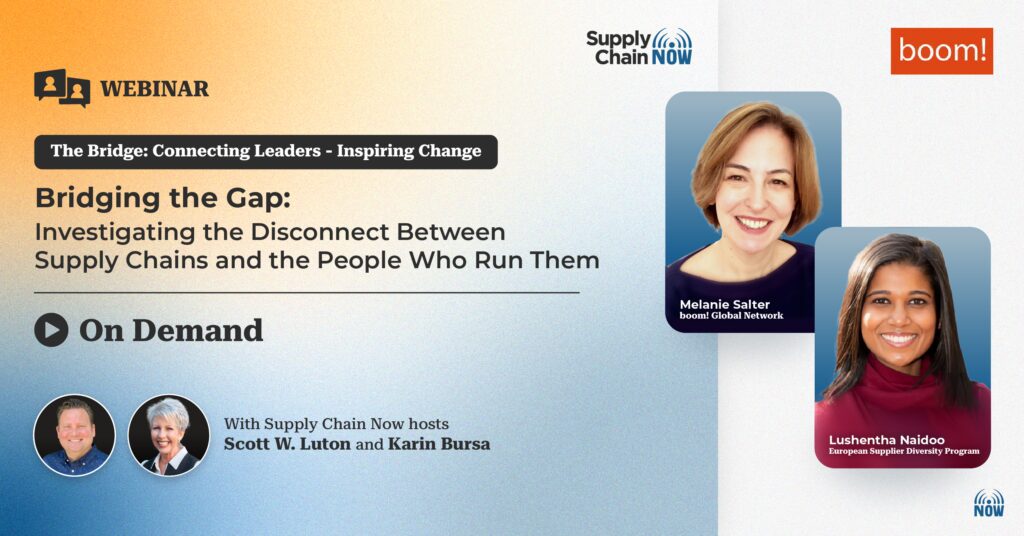

WEBINAR: Bridging the Gap: Investigating the Disconnect Between Supply Chains and the People Who Run Them
Our profession has a tendency to disconnect discussions about how to create high performing supply chains from how to create high performing supply chain employees and teams. We see this in both business and academia. In business, HR is often seen as more administrative than strategic, and supply chain and HR metrics and strategy are often not aligned. It’s a similar situation in academia, with even the great Michael Porter viewing HR as an administrative role.
In this webinar, as part of our webinar series, “The Bridge,” we’ll explore the reasons behind the disconnect and how to bridge the gap between supply chains and the people who run them.
More Webinars
data

Webinar
February 8, 2022
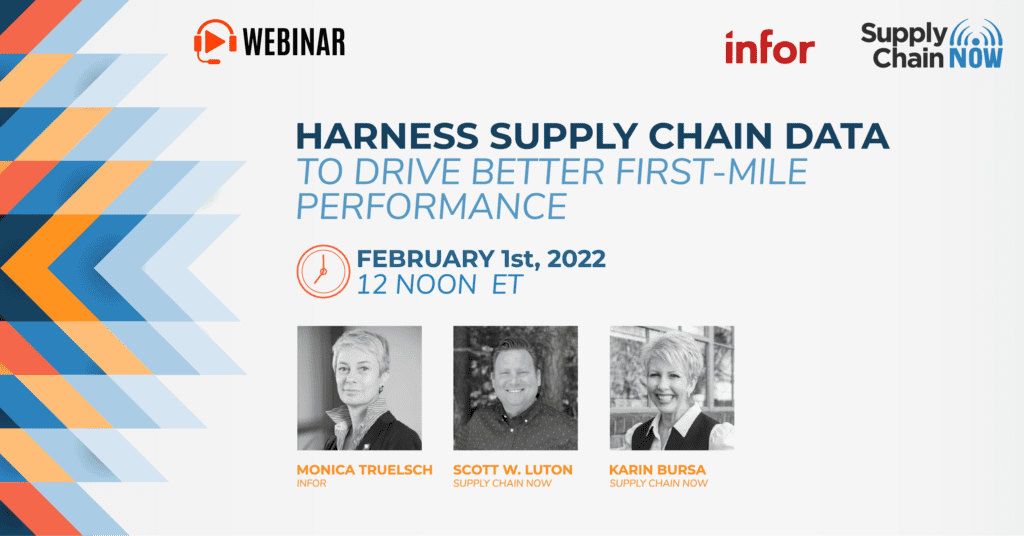
Harness Supply Chain Data to Drive Better First-Mile Performance
Today’s supply chain professional may be hungry for information but still drowning in data, never confident in how trustworthy some sources might be versus others. Pursuing supply chain transparency means expanding connections and communication across a global network of suppliers and logistics service providers, but only if you have the means to harmonize and transform disparate data. For confident decision support, some data must be augmented or presented with broader business context. Still other information should be cross-referenced with additional data streams or addressed with data science techniques to fill in gaps and gain useful forward projections or predictions. Join hosts Scott Luton and Karin Bursa from Supply Chain Now along with special guest Monica Truelsch with Infor to learn how synchronizing supply chain data across partners, technology stacks and back-office systems is key to improving supply chain performance.
end to end supply chain
Webinar
February 26, 2024
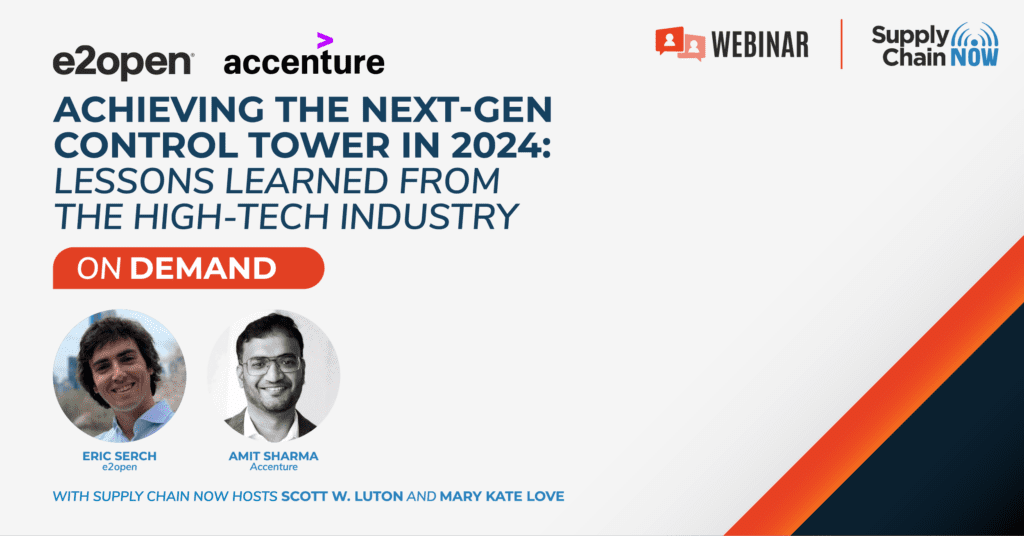
Achieving the Next-Gen Control Tower in 2024: Lessons Learned from the High-Tech Industry
In today’s world, many industries are recognizing that effective operations are not solely the responsibility of a single organization. Instead, the best outcomes tend to come from effective collaboration with all supply chain partners—including internal operations, channel partners, suppliers, logistics, and global trade providers. The high-tech industry is at the forefront of this trend leveraging control towers to transform its supply chain networks to foster collaboration and decision-making, and better respond to potential disruptions such as delivery delays, supply shortages, and demand signal shifts. In this webinar, we will explore how the high-tech industry is paving the way for future supply chain success and how you can apply this model to your organization. Join our panel of experts to hear about real-world use cases from various industries and discover best practices to achieve true end-to-end visibility and collaboration, enabling you to predict and respond to disruptions and align with strategic objectives.