Intro/Outro (00:02):
Welcome to Supply Chain Now, the number one voice of supply chain. Join us as we share critical news, key insights, and real supply chain leadership from across the globe. One conversation at a time.
Scott Luton (00:14):
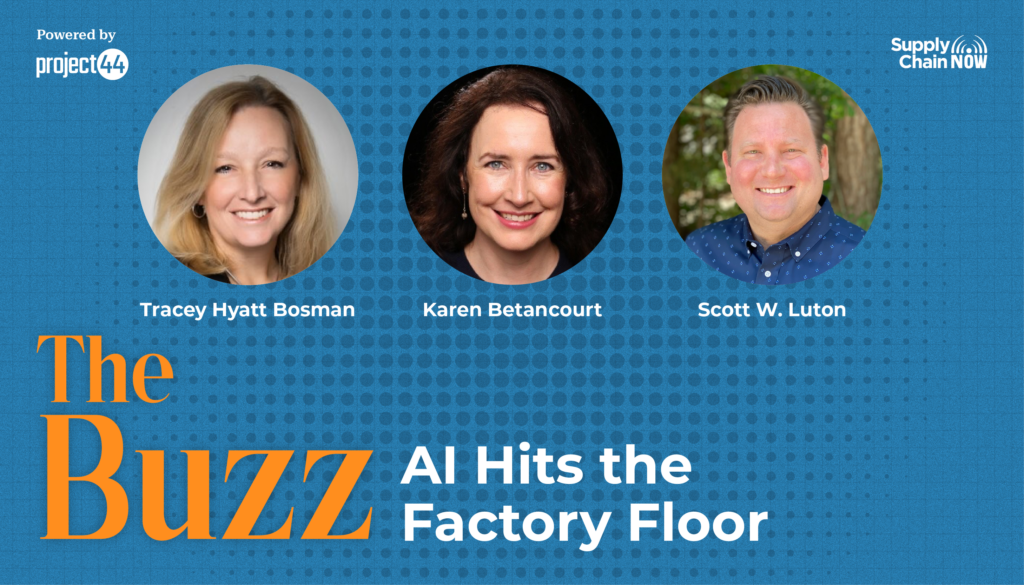
Hey everybody. Good morning, good afternoon, good evening, wherever you may be. Scott Luton and special guest host, Karen Betancourt here with you on supply chain. Now, welcome to today’s live stream. Karen, how you doing?
Karen Betancourt (00:25):
I am fantastic as always. Thank you for having me, Scott.
Scott Luton (00:27):
It is great to see you again. Admire your real leadership out there, done big things, move mountains, continue to do so. So look forward to your take here today on The Buzz here on a beautiful, beautiful March Atlanta Weather Day. Karen, how’s the weather out there in LA?
Karen Betancourt (00:43):
Well, I would like to say that the weather in LA is always just terrible. So today is a horrifically terrible, clear blue sky gorgeousness.
Scott Luton (00:50):
Well, usually I’m jealous, but not today because we’ve got some LA weather right here in the ATL. But getting aside, great to have you here today. Folks, you know on Monday, it’s the buzz where every single Monday at 12 noon Eastern time, we discuss a variety of news and developments and weather across global supply chain and business news that matters is what we like to call it. And folks, the buzz is powered by our friends at Project44, the decision intelligence platform for the modern supply chain. You can learn how to bring more visibility, certainty, and success into your supply chain organization by visiting project44.com. So Karen, we’ve got a big show teed up here today. Let’s see here. We’re going to look at new data on the US manufacturing industry for February. We’re going to be talking about how manufacturers are embracing AI, but hitting a few bumps along the way.
(01:36):
We’re going to talk about Women’s History Month, of course. Every month is Women’s History Month, it should be. We’re going to be discussing workforce concerns and challenges and much, much more. And in about 15 minutes or so, we’re bringing on a very special guest, Tracy Hyatt Bosman with Big Ins, Lacey, Shapiro and Company, who’s going to be sharing insights on site selection, manufacturing, and much, much more. Karen, I hope you had a big breakfast this morning because we got a lot of good stuff to get to.
Karen Betancourt (02:02):
I’m looking forward to it.
Scott Luton (02:03):
I am too. I am too. Big show, big co-host. We got to make sure we got lots of good perspective. And folks, we got some wonderful people already in the comments like Jeremy who stops by. Jeremy always has great things to say. Good morning. Don’t know if I can catch the whole thing because the fur pup is demanding some part-time very soon with Jeremy. We got to take care of the family and including our dogs for sure. Tricia, of course, happy buzz day. Big thanks to Amanda Tricia behind the scenes helping to make the buzz happen. She also shared, if you learn more about Project 44 right there. But folks, we want to hear from you. Let us know your take on all the stories we get to here today. Own the buzz, powered by our friends at Project 44. Okay. Karen, we have got to get to five things before we bring on a great guest.
(02:47):
Tracy’s going to be an outstanding guest. So we’re going to dive right in. You ready?
Karen Betancourt (02:51):
I was born ready.
Scott Luton (02:52):
You were born ready. That’s been my observation for every time I met you. So we’re going to start with our latest edition of WithThat Said, which published over the weekend. And this was a very special edition as we started with perspective from three members of our leadership team when it comes to careers, lessons learned and leadership. Now, I just mentioned Amanda, who’s always behind the scenes, doing great work, leading production here. Amanda shared in the article that quote, “Many of the most process-driven, systems oriented and highly organized leaders I’ve worked with are women. The ability to build repeatable processes and manage complex operations is incredibly valuable in supply chain.” Well said, Amanda. Mary Kate Love, our president here at Supply Chain now added, “The ability to think short-term and long-term simultaneously to manage complexity without panic to multi-thread conversations.” That is supply chain leadership. Many women bring that kind of strategic agility.
(03:47):
And then Catherine hence challenge folks with this. “You don’t need your entire career mapped out to get started.” She said, “Go where the growth is. Stay curious and trust that each step will guide you to the next right path.” Karen, did you happen to catch with that said, and if you did or if you didn’t, your thoughts on all that perspective?
Karen Betancourt (04:09):
I did. I actually read it a couple of times just to make sure that I was getting it and making sure that I could apply all the lessons. I loved something that every single one of the women shared. I think Amanda in the article actually mentioned that she’s learned a lot at the beginning of her career from those people that she would never want to emulate, but that having difficult or tough bosses has been beneficial to her. That last quote you had though, where you’ve got to don’t necessarily plan, you got to keep going, you grow and learn and far more eloquently spoken in your example quote is so key to always remaining curious, going out there learning and expanding yourself. There’s no limiting beliefs here. There is only understanding where you are. And it was fantastic. International Women’s Day, a little bit quieter this year because it’s on a weekend as opposed to you during the week.
(04:58):
And it was just fantastic to see.
Scott Luton (04:59):
Karen, I agree with you. I might be a bit partial, but I think Amanda, Mary, Kate and Katherine knocked it out of the park and they should be sharing their perspective every day of the year. So stay tuned. We got some more tricks up our sleeves, but really enjoyed what they shared. And folks, as Trisha has dropped, you can check out with that said right here. It’s our almost weekly newsletter. We give ourselves a little flexibility there, Karen. And folks, whatever you do though, however you want to celebrate and what you want to celebrate, get out there and recognize all the incredible endless, tireless contributions that women have made to industry and otherwise. See, Jeremy says, “I remember going to work with my mother. She was drafting technical drawings for a satellite company.” Man, I bet that is some complex stuff. And Vance checks in, the Red Zone team checking in from the helicopter hanger in the motor city.
(05:45):
Man, Vance, I got to find out all of that we just mentioned. So great to have y’all both here. What’s that, Karen?
Karen Betancourt (05:51):
Oh no, no, I was just excited. The helicopter, Vance sounds like he’s living in Motor City in a helicopter hangar. I don’t know where that is, but Vance, I want to be there.
Scott Luton (06:02):
Yeah, let us know, Vance. You can’t tease like that. You got to tell us the whole story. All right. So let’s see. We got us one down. And folks, as always, you can check out resources or upcoming live events, you name it. And with that said, next up, number two, we have to talk about one of my favorite days of the year, National Supply Chain Day, right? It is back April 29th. Folks, you got to have that circled in your calendar or you’re going to forget it like I do. National supply chain date. Join us at 12 noon for a virtual event that will feature a wide range of supply chain leaders. And we got a new keynote. We have got Billy Ray Taylor, who was author of this incredible read, The Winning Link, bestselling book. Folks, I love many things about Billy Ray’s perspective, including he always talks about what he learned from his mother and he bakes that into a business lesson.
(06:46):
I love it. So go check that out and be sure to join us on April 29th. Karen, is that on your calendar yet?
Karen Betancourt (06:52):
It was not because supply chain people usually stink at marketing. So I’m glad that we have a national supply chain day and it is absolutely on my calendar from now on.
Scott Luton (07:01):
Outstanding. Well, good. Well, good. And folks, Trisha’s dropping a link right there. You can join us, make it really easy, one click away. And Andrew is here today. Andrew from Schropshire for his weekly chat here. Andrew, we got a special thing for you here in a few minutes. We’re going to get you to weigh in on something that hopefully you know much more about, but great to see Andrew. Okay. Let’s see. Where are we? We’ve got also a couple big events here. We’ve got the American Supply Chain Summit, Karen. Come into Dallas. Folks, if this isn’t on your radar, it really needs to be. It’s entering its 10th year. The American Supply Chain Summit is a premier conference designed for supply chain executives and senior leaders. Now this April, you can join over 300 leaders, 50 impressive speakers to discuss supply chain disruptions, endless disruptions, our resilience, digital transformation, much, much more.
(07:52):
Key program themes include, of course, supply chain management, but process optimization, procurement, sourcing, logistics, and a lot more. So if you’re looking for a high impact opportunity to network and learn, you got to act right now because registration’s closing soon, you can come join me in Dallas on April 27th and 28th at the American Supply Chain Summit. Okay. I got one more thing I got to ask you about, Karen.
Karen Betancourt (08:16):
Okay.
Scott Luton (08:16):
It is this. It is this right here. You’re writing about the Frito-Lays chip challenge, and I got to put up front. I got to put up front. So I am a loyal, and I mean a loyal Cape Cod potato fan. I pick up a bag every time I go to Costco, but I’m open to Lays. So I’d love to hear what this was all about.
Karen Betancourt (08:35):
So this is a bit of the fact that I’m just a nerd in general. But so during the Super Bowl, the ads are a lot of the fun right there. And I am always passionate because a lot of things that are marketing, generally not really well thought out on the supply chain space because you need quick action and supply chain generally excels at being predictable and planned. And so I was like, I’m going to get this free bag of chips and figured out how to do it. The website, you definitely have to have had some tech deployments, know when they’re doing some restarting, all of that kind of stuff. But managed to get in and then ordered that bag of chips. And it was lovely. And marketing had just clearly not talked to supply chain because instantaneously they’re like, yes, this is the freshest bag of chips you will ever have.
(09:25):
Spoiler alert, it was actually the freshest bag of chips I ever had. They only ended up getting it to me with 10 hours remaining of their challenge. It’s a 72-hour chip challenge. The biggest thing that was very clear that happened is that they did, and all of us as e-commerce people have heard this, when you generate the shipping label, it creates a shipping event. It tells your customer, if you’re not careful or if you’re a marketing person who’s not savvy on supply chain, that the item is shipped. It has not been shipped until your shipper has a receipt scan and has entered it into your network. Until that happens, you do not have a committed delivery date. And so what happened is that every day it would promise me it was arriving today. And that was because UPS did not yet have it. And it was a beautiful, beautiful box.
(10:12):
So well thought out. The logo was gorgeous. The packaging was beautiful, but it was not prepared for the jostling that an individual bag of chips would encounter in a parcel network. So they were very fresh, highly fragmented chips.
Scott Luton (10:28):
Karen, I love it. And I’m so glad you’re a fellow supply chain nerd. You should write on more of your everyday observations and amongst other things, little more sales and operations planning perhaps. Regardless, I’m glad to hear someone say is the freshest bag of chips I’ve ever had. That’s high praise. Folks, you can read more. Trisha dropped link to Karen’s perspective there on that challenge. So check it out. And we welcome your own observations on your own challenge. Let’s see here. Jeremy says, “I overeat snack bags. I tend to avoid them these days, but love them.” Sane, Jeremy, sane. I can’t buy it. And the Cape Cod chips I mentioned, those are the 40% reduced fat.
Karen Betancourt (11:05):
That’s fantastic. But you’re buying them from Costco. They’re the giant bags.
Scott Luton (11:08):
Oh, Karen, you’re telling them … That’s right. They’re massive. They barely fit in truck. Listen, I think this-
Karen Betancourt (11:14):
Anyway.
Scott Luton (11:15):
I think this is Andrew Crisps. Yes. Chips are Crips in England. Okay. And he had to Google this. The foods who we’re talking about with chips. Hey, I’m glad Google is around to help bridge communication gaps everywhere. Okay. Let’s see here. We have got a terrific guest joining us here on The Buzz, the second buzz of March 2026, powered by Project 44. Karen, are you ready to bring on this great guest? We enjoyed our green room time with her. Let’s see here.
Karen Betancourt (11:41):
It’s going to be fantastic.
Scott Luton (11:42):
Tracy Hyatt Bosman develops and executes location strategies for corporate and institutional clients. She has 20 years of professional experience and has worked across a wide range of sectors, including data centers, manufacturing and logistics and much more. She is an experienced economic developer, having worked at both the county and state levels. She’s a frequent speaker at national real estate and economic development conferences and has authored articles relating to site selection trends, economic incentives, and alternative energy. So please join me in welcoming Tracy Hyatt Bosman, managing director with Biggins, Lacey, Shapiro and Company. Hey, hey, Tracy, how you doing today?
Tracey Hyatt Bosman (12:22):
I am great. Very happy to be here. Yeah.
Scott Luton (12:25):
And we were just talking about some of our favorite places, some of our favorite food items. And that’s what’s going to lead me to asking a very specific fun moment question for Tracy and Karen. So it is National Barbie Day, Tracy and Karen. It is Amerigo Vespucci Day, which by the way, folks, that’s where the word America came from, if you didn’t know that. It’s Canberra Day, it’s Commonwealth Day. And we were talking in the green room, Tracy and Karen about food earlier in its national meatball day. Now that makes me think of pasta. For some folks, I may think of sandwiches, but since this is my show, I get to choose which of those it is. And Tracy, I’m going to ask you, what is your favorite pasta and where do you get it?
Tracey Hyatt Bosman (13:07):
Well, that’s a tough one. I’m trying to decide between my husband’s lasagna or this Fiori lemon cream pasta bake that is from Katie’s Pizza and Pasta, which is a very small local chain in St. Louis. And no offense to my husband, but I think I’m going to go with the latter.
Scott Luton (13:26):
I love that. And I got to get your husband’s lasagna recipe as well, Tracy. Mix it with
Tracey Hyatt Bosman (13:32):
Sausage, so that’s pretty good.
Scott Luton (13:34):
Oh, man. All right. So Karen, I’m losing my track. Once we start talking food, I knew this was going to happen, but Karen, what is your favorite pasta and where do you get it?
Karen Betancourt (13:43):
Well, my favorite pasta, because you asked me this. Grow Falom from Costco. Bronze extruded, so it holds onto the pasta sauce perfectly. And my favorite serving papi spaghetti. My husband is stay-at-home dad. And so he developed as his first ever cooking item spaghetti. It’s unique every single time he makes it. There’s not a set recipe, but it is a family favorite.
Scott Luton (14:07):
Oh, I love that, Karen. And I got to tell you, I just learned about this bronze cutting thing. And Karen, correct me if I’m wrong, but some of the cheaper pasta is made with the non-bronze you tense- Yeah,
Karen Betancourt (14:17):
Stainless steel. So it’s very smooth. Yes.
Scott Luton (14:20):
Right. And the sauce, of course, doesn’t stick to smoother pasta. So you’re talking about the good stuff from Costco. So Tracy, I got to ask one last question before we get into news. Are you a Costco fan as well? Looks like me and Karen are big Costco fans.
Tracey Hyatt Bosman (14:32):
Yeah. I think I’m maybe a little bit on the newer side. I’ve only been going for about a year, but I get it. Yeah, there’s a lot of good things there.
Scott Luton (14:39):
A lot of good things. A lot of good things. And we’re kind of newer too. I think we’ve been in about three years in our Costco romance. So we’ll see. But Tracy, great to have you with us here today. So let’s get to work and start getting into some of the new stories we’re tracking. I can’t wait to have Tracy and Karen weigh in here. And up first, we’re going to talk about the manufacturing industry. One of my favorites. I spent a bunch of time working in and supporting the manufacturing industry, and a couple of recent data sets have been released. And folks, it’s a mix of good news and bad news. Here as reported by Reuters, ISM Manufacturing PMI. Y’all know we talk about this regularly. It was released last week for February 2026. It showed slight but continued expansion in the US manufacturing industry for the month, but input prices.
(15:24):
My goodness, four manufacturers hit about a three and a half year high. And lots of manufacturing participants in the regular survey, they were all commenting about the ongoing turmoil being caused by tariffs. Factory employment here in the US has declined by 83,000 jobs just since January, man. And that brings me to a second report that was released just last week. I think it was Friday. Might want to cover your eyes and steady yourselves here. As almost 100,000 jobs were lost last month in the US. We’ll see when the revised numbers come out. I think numbers 93, but we’ll see when those revisions make it. As reported here by CNBC, you can look a little bit further out in the trendline. I’m not a data scientist, but I can guess about this trendline and it isn’t perty. But Tracy, your thoughts on what we’re seeing in the manufacturing industry.
Tracey Hyatt Bosman (16:09):
Yeah. I mean, as you said, the news is a bit surprising and the manufacturing sector to us has felt pretty robust. So I’m actually kind of eager to see what next month holds because last month was fine. And whether this is a longer term indication or something shorter term, but the tariffs and now the conflicts in the Middle East and what that’s doing to the oil prices, they’re going to have to have an effect.
Scott Luton (16:37):
Yeah, no doubt. No doubt. Those input prices we were just talking about, I bet it’s going to push those further up. But Karen, your thoughts on what we’re seeing in manufacturing?
Karen Betancourt (16:46):
I think we’re just going to continue to see a little bit of contraction until we’re able to forecast at two to five years out to be able to do the automation that’s necessary. Most manufacturing at scale now involves a fair amount of automation, not fully automated, but that has lead times that are being impacted by the chip shortage that we’re seeing. And so as long as we start to get more focus on a stable economic approach or tariffs that we’re actually committed to beyond 120 days, I think we’re going to be in a little bit of flux. And unfortunately, cash is king. And so when you don’t have cash and you can’t predict out more than six months, you do generally have to reduce your workforce, which is unfortunate.
Scott Luton (17:29):
We can do a whole six-hour podcast on both your thoughts on manufacturing. I love the industry. Two quick thoughts that you triggered for me. Karen, number one, we were just talking last week about chips specifically for smartphones and how more and more data centers are vying for those memory focused chips. So we’ll see what the next few months brings there. And then the second thing you mentioned, I think I was going to touch on automation. You know what? It comes and goes sometimes. It comes and goes. I blame that on my three kids, so I’ll circle back on a second point. But hey, Trisha dropped the link right there. Y’all go check it out. Don’t take our word for it. Go check it out. And again, we welcome y’all’s perspective as well. Okay. We’re going to stick with manufacturing for our second story as the industry continues to turn to AI to find more and more success.
(18:14):
As reported by our friends at manufacturing dive, Cisco has a new report called the 2026 State of Industrial AI. Now, it’s based on a survey of about 350 manufacturing decision makers in 19 countries. Now here’s a few key takeaways and folks who have to go read the whole thing, but 59%, 5’9″ of these manufacturers surveyed said they had already deployed AI at scale. And some data points to how the AI manufacturing market, that whole sector, is set to rise from $34 billion this year to $155 billion in 2030. Folks, we got started manufacturing AI organization. Now, I think I’m getting this name right. Samuel Pasquier with Cisco Industrial IoT Networking says, quote, “What the findings from the survey confirm and what customers tell me directly is that AI is driving meaningful gains and productivity, quality, and resilience across manufacturing.” This isn’t about pilots anymore, it’s how work is starting to get done.
(19:13):
However, the survey illustrates that many manufacturers need to upgrade their networks and of course cybersecurity to continue to fuel more and more gains in a safe way. And lastly, 80% of those manufacturer surveyed said that companies that do not immediately, like in today, start investing in AI will certainly fall behind. Tracy, I’ll come to you first. Your reaction to that survey.
Tracey Hyatt Bosman (19:36):
Yeah, I mean, it’s not overly surprising. I guess the 59% that say they’ve deployed at scale is higher than I would’ve thought, but I think it’s to be expected and we’re going to see that at scale continues to be even bigger as time goes on. I think the one thing that always leads us to, if we’re working in manufacturing, is this going to take away all the jobs? And I might be getting into a little bit of our later Q&A, but I think we are seeing AI and this article proves it in the manufacturing workforce and workplace now and having an effect, but it’s also going to have an effect of creating some new jobs. So I think we can talk about that a little bit more.
Scott Luton (20:22):
Yes. A lot of truth in what you just shared there. And for our comment, Karen, your thoughts on what these survey findings.
Karen Betancourt (20:28):
I think sometimes these survey findings are a little bit like when your mom asked you if you did your homework when you were a kid and you said, “Of course you did.” And then you went back and we’re like, “Crap, I really do have to get it. She knows.” So there’s definitely a little bit about that. But high tech manufacturers have been using what we’re classifying under the really broad AI of advanced algorithms for heat detection, early failure protection of equipment for quite some time. So I’m eager to see what it’ll be. I do think that the cost of it is so prohibitive as they’re continuing to dig into it, that it’s going to be a cash crunch. You can’t afford to be behind, but also I have yet to see an instance in my clients or with folks that I’m talking with where it’s actually when you get them back drinking a glass of iced tea, that it’s actually hitting all its numbers so far.
Scott Luton (21:19):
That’s right. I love that homework analogy you used. I’m going to steal that from you, Karen. Two quick thoughts. And again, Trisha has dropped a link right there. Go check it out. You can also go to that manufacturing dive article and download the actual survey itself. It’s good stuff. Two quick thoughts. So going back to your point, Tracy, about AI, I saw a report over the weekend, I think it came out from the Challenger organization that attributed according to their data that AI impacted about 10% of the layoffs that we’ve seen. So we’ll see if that number continues to creep ups. But I thought that was interesting, at least according to their dataset. And then secondly, Karen, I remembered what I was going to share on the last stop, and I got to share it again because one of my favorite things last week. So you were talking earlier, Karen, about the ability to see further and further out, right?
(22:03):
One of my favorite examples, technology and manufacturing last year was in the automotive sector where a very world-renowned automotive company with a really big supply chain ecosystem replaced a spreadsheet-driven forecasting process been around for decades. It involved about 70 spreadsheets from across its ecosystem that was delivered to its suppliers to give them about, I think it was about 13 weeks forward-looking demand. They change all of that using high-falutine technology, AI and cloud computing, all this stuff to offer up, I think it’s a 46-week look ahead from 14 to 46. And better yet, those clunky, macro-driven, manual data entry spreadsheets all went away. Karen, that is good news if you ask me, huh?
Karen Betancourt (22:47):
If you have ever had to debug the macro in a nested spreadsheet, yes. No, that is fantastic. I would, however, I’m always a little bit of a skeptic. There’s no way in hell anyone can accurately predict anything 46 weeks out
Scott Luton (23:01):
At this
Karen Betancourt (23:01):
Point. But I do appreciate that they have the capability when we get back to a little bit more predictable times.
Scott Luton (23:06):
Fair enough. I have tried to hold customers to their far out projections earlier in my career, but you make a good case. All right, so Karen and Tracy, let’s see here. We’re going to move from manufacturing to, we’re going to check in on retail, one of the best reporters in the business. Folks, if you’re not following Max Garland with supply chain dive, you got to. Max reports that Target is expanding its next day delivery efforts to 20 new US metro areas. The company also issued a press release last week that said, “Target also plans to increase its capital investment plans by more than $1 billion in 2026 for a total of approximately five billion to support new stores, ongoing remodels, technology, and supply chain investments, music to my ears.” It goes on to say, “The retailer expects to open more than 30 new stores this year as part of its path to 300 new stores by 2035 while investing over 130 planned full store remodels.” Now all of this is going to make Amanda extremely, extremely happy.
(24:08):
So Tracy, your thoughts on Target’s continued efforts to keep up with the Amazons and the Walmarts of the world. Your thoughts there?
Tracey Hyatt Bosman (24:15):
Yeah, I think it’s what we’re seeing across the board is everybody wants everything right now and to keep up, retailers are having to really improve their delivery times and be kind of that omnichannel retailer model so that they can compete with all the different places that we can get our stuff because we all love our stuff.
Scott Luton (24:36):
We do. We like it. We like to know where it is. We like to get it on time, even if it’s a pair of socks. We
Tracey Hyatt Bosman (24:42):
Ships within 72 hours and we not know exactly when they’re coming in, right, Karen?
Scott Luton (24:47):
That’s right. Karen, she’s right. And whether it’s a pair of underwear or socks or something, we got to have it in like two hours. It’s crazy the human condition. But Karen, especially given a lot of your e-commerce experience, your thoughts on what Target’s doing.
Karen Betancourt (25:00):
Well, I think they have had more success with Shipt and their same day in quite some time. They are, however, dealing with a difficult spot and they’ve said that they’re going to invest more in- store personnel. The challenges of getting a supply chain completely accurate, keeping your inventory for your in- store shoppers as well as your same-day deliveries, as well as dealing with the fact that in general, it is nearly impossible to get below $8 per delivery. 13 to 30 is actually quite frequently the cost of a single delivery for same day. So if you look at that much margin contraction and the fact that Target originally really kind of set themselves apart as that place where you went in and you intended to get three things and you walked out with 30 and you lose out on all that opportunity to sell you the 20 additional because you’re getting people to, “I just need a pair of socks.
(25:51):
I just need a pair of underwear and send it to me. ” I think it’s going to be challenging for them for the margin perspective, but they certainly have the footprint to be able to support it. And I’m eager to see how they managed to pull this off.
Scott Luton (26:02):
I am too, Karen and Tracy. And I want to share, here’s a quick map you’ll see when you go check out the link. Again, Max, Garland’s one of the best. You see Atlanta already has, but a lot of the cities across the US are getting new same day coming soon to your friendly target. Really quick. I mentioned underwear earlier. I think I’ve been to Target once in the last two years, popped in there for one of those big old packs of underwear, and it was under lock and key, Tracy and Karen. I’ve never seen that. I was kind of blown away a bit, but I guess, hey, loss prevention is very real these days. But anyway, we’ll keep a tab on what Target is doing. TSquared says spreadsheets, 20% blessing, 80% curse. Hey, we got to … Would you go with that 2080, Tracy?
Tracey Hyatt Bosman (26:47):
Oh, I think at our line of work, we’d probably put it a little higher, but yeah, it’s definitely a mixed bag.
Scott Luton (26:53):
Okay.That
Karen Betancourt (26:54):
Hurts my heart. I love a spreadsheet. I will break out a spreadsheet for almost any decision where we have numbers.
Tracey Hyatt Bosman (27:01):
And I mean higher on the good side, Karen. Yeah, I mean higher on the good side. There’s more blessing to it than what he just said.
Scott Luton (27:08):
Well, we need to have a whole spreadsheet series to get you to the bottom of this, but love that T-squared and great E who holds down the Fort Forest on YouTube. Great to see you here today. And hey, Amanda, and this is Matias from beautiful Cologne, Germany. Matthias, looking forward to your perspective here today. Okay, we are going to keep driving and we’re going to be talking about next this story from bakeries, bakery and snacks. What a great magazine. It offers perspective from Rebecca Phillips, who has spent over 30 years in food manufacturing. She is currently the general factory manager at Fox’s Burton’s Companies, which is well known in the UK for making jammy Dodgers, which I’ve got a pack of right here. I’ll tell you more in just a second. But early on in her career, she says, “I was told I would never achieve my aspirations because I was a female.” The article goes on to talk about how manufacturing still has a visibility problem for many women, including some problematic perceptions and a general lack of female role models, especially at the higher levels.
(28:07):
Phillips, as you pictured here, points out that factors such as emotional intelligence and people leadership are big time advantages on the factory floor and beyond. There’s a whole bunch more to this article, but I want to get Karen and Tracy to way in, but folks go check it out. Tricia has dropped the link to the article right there and it’s a great profile piece. Tracy, your thoughts on what Ms. Phillips had shared?
Tracey Hyatt Bosman (28:28):
Yeah. Well, I think what she described about being a woman in the manufacturing place is that there are observations that we hear from a lot of women, but I think it’s also a very exciting time to be a woman in manufacturing. Definitely the doors are opening and there are really some great support groups like women in manufacturing that are helping women break into this space.
Scott Luton (28:53):
Yes. I agree with you, Tracy. And women and manufacturing is a great one. Go check out, I think it’s whim.org, wim.org, I think is our URL. Karen, your thoughts on the article and the perspective as well.
Karen Betancourt (29:05):
I will say it’s good we’re continuing to have this conversation. It’s sad we’re continuing to have this conversation in 2026. I know in my career when I was starting out that I had same people laugh at me and say I was never going to get anywhere. But the continued thing is, and I focus on, and it sounds like this manufacturing does as well with the Jamie Dodgers, we’re not just paving away for ourselves, but we’re paving in a way for the people who come behind us. And so the more that we disprove these limiting beliefs that other people hold, the better off we’re going to be in the future. And that’s really the books we have to have.
Scott Luton (29:36):
Karen, well said, you and Tracy both, and it is a shame we’re still having this conversation in 2026. Oh, for everybody, but certainly my perspective as a father of two daughters that I want to be able to do whatever they want to do in this life as they should, as anyone should, we got to keep having them, I guess, until things change faster and writer, that’s a word. Okay, a much lighter note. So Jamie Dodge, right? I think I’m saying that right. Jamie Dodgers. So I read the article and I was like, “Hey, it looks like they’re very popular in the UK.” And so I got them from Amazon, not same day. I planned it out and opened them up, gave them to me and Amanda and the kids. And I got to tell you, and I was in the minority in our household, but they weren’t Oreos.
(30:17):
They weren’t Oreos. Oreos is my go- to. Now, Amanda and them have told me that they probably pair really well with tea or coffee or beverages. But Tracy, have you ever had Jamie Dodgers? Jamie Dodgers.
Tracey Hyatt Bosman (30:29):
I’m not sure if I’ve had that brand. And I was just trying to look up how to pronounce it because I was Jamie, Jamie, I don’t know. But I have had those cookies and I think I’d agree that they’re not going to be you sit down with a whole sleeve of them like you might Oreos. But if you’re having them with tea or coffee, then they’re a very nice compliment.
Scott Luton (30:49):
I think you’re right. That’s what I hear at least. All right, Karen, your quick thoughts.
Karen Betancourt (30:53):
I’m going to say, I think that you need copious amounts of hot tea to go with them, and so they’re probably perfect for their origin country.
Scott Luton (31:00):
So Andrew, this is what on a lighter note I was going to get you to weigh in on. You may still not be with us, but Andrew, weigh in on these jammy Dodgers because they’re very, very popular in other parts of the world. Okay. Tracy, I’ve got a bunch of questions I want to pose to you and get learned in on some things. But before we do, I want to share a terrific event from our friends over at Project 44. So as we all know, the supply chain, of course, is evolving fast. It begs the question, are you leading it or just reacting to all the evolution and change? Well, you can join top global innovators at Project44’s free Decision44 event, April 8th and 9th in Chicago at the Willis Tower, I believe, or whatever the new name is for that. You’re going to see how AI power decision intelligence is transforming visibility into real world results.
(31:47):
Come join me and several hundred business leaders in just a few weeks, but you got to register and I would register today. We’re dropping a link right there in the chat. Okay. So Tracy, as I shared, I want to pose a few questions to you. I appreciate what you do in industry. So for starters, would you please share a few key takeaways from this event you attended, I think a month or so ago called the Executives Club of Chicago’s Annual Economic Outlook 2026. What were some of your key takeaways, Tracy?
Tracey Hyatt Bosman (32:16):
Yeah, it was a great event. I mean, I have to say thank you to Clayco for having me at their table, but there were four economists that spoke, Terry Savage, Dr. Bob Frolish, and Diane Swank and John Rogers. And so two observations just right off the bat. One is half of them were women, so that’s great for celebrating March Women’s History Month. And my gosh, why are economists such great speakers? They have this reputation for being boring, but they’re just amazing insights and very entertaining. And I think the key takeaway was they really didn’t have any doomsday predictions, so that’s good. But there were some concerns and around inequalities and spending power, which we’re certainly hearing a lot about, as well as the skyrocketing cost of child and elder care, which impacts families directly, but then indirectly also impacts our ability to come to work.
(33:08):
So with that, I would say Dr. Furlish in particular was very bullish in the US manufacturing sector. And he said, the manufacturing sector, a couple stats that I wasn’t fully aware of and it just really impressed me. Manufacturing itself, manufacturing sector itself, if it were an economy by itself, it would be the eighth largest economy in the world. So that’s just our manufacturing sector. And then also the point that the US has 26% of the global economy or the GDP, but we only have 4% of the world’s population. So that tells you what we’re doing and the area of productivity and that reflects back on that automation as well.
Scott Luton (33:48):
Tracy, a lot of good stuff. And folks, I think we’re dropping a link to the event because you can see more key takeaways that Tracy shared. But Karen, two good things. Two great things, I think. Number one, no doom and gloom. A loved one, really smart economists to get together and there’s not doom and gloom. But secondly, I can go to those events because I got a C minus on every economic class I ever took ultra college. They don’t let me in. So Karen, your thoughts on what we heard there from Tracy.
Karen Betancourt (34:14):
Well, you got to go back and take the class at least on microeconomics. You don’t got to go and back go. That’s where I go. No, I think this is just an excellent example of why people and executives like Tracy are so successful. They go and they do the continuing education that disprove your beliefs, go listen to experts who are really studying the things to help get you trends. And it’s fantastic that there’s just such a wealth of statistical knowledge in Chicago.
Scott Luton (34:40):
Yes. And I bet good food too. So Tracy, we’ll have to do a deeper dive. Trisha is dropping the link to some of your other key takeaways there. And Trace, I didn’t mean to cut you off earlier. Was there anything else you wanted to share there?
Tracey Hyatt Bosman (34:52):
Well, given what you said about your academic career, I don’t want to go over your head, but I found really getting down into the weeds that it was an interesting discussion around all the other things that might be going on that the headline indicators aren’t telling us. So under utilization rate has been increasing. So that’s measured by the U6 rate as opposed to the U3, which is our traditional unemployment rate. So that’s something to keep an eye on. And then there’s just this discussion that we know that the baby boomers are going off into retirement, some are coming back, but as a whole, they’re going off into retirement, which shrinks the workforce, which then tells us that maybe the unemployment, our job creation numbers aren’t as strong, but it’s not showing up in the unemployment rate because at the same time that we’re not growing or maybe even we’re losing some jobs overall, the baby boomers are diminishing the number of people that need jobs.
(35:52):
So really are a lot of different factors and forces at play.
Scott Luton (35:56):
Yes. Good stuff there. Karen, your quick comment on those points made. And you got to get to the broader theme there. We got to get to the story behind what the data is trying to communicate. Your quick thoughts, Karen?
Karen Betancourt (36:07):
Well, it’s just yet another great example of how the story, the why, what preconceiving notions you have influence how you look at a given takeaway and strongly influence what decisions you’re making. So the story, understanding inputs and outputs and how to adjust and measure those always vitally important.
Scott Luton (36:22):
That’s right. The signals, not the noise folks. We talk about it a lot. We got to find the true signals. So Tracy, you’re kind of shedding a little light on this already, but I’m going to ask you the question when it comes to the manufacturing industry and its workforce. What is myth and what is reality? I think you were disproving a couple things. Anything else you’d add to that list, Tracy?
Tracey Hyatt Bosman (36:40):
Yeah. Well, and I guess maybe we have already touched on this, but when we hear a lot, manufacturing’s in decline, right? And if we look at manufacturing over the past 50 years, certainly we have seen overall jobs diminished, but at the same time, output from the manufacturing sector has continued to increase. So that’s due to productivity gains, as we’ve mentioned, and a lot of that’s coming from automation. And the other piece is if it’s going down and there’s fewer jobs, that makes us think, why would I try to find a job in manufacturing? There’s going to be fewer and fewer jobs. But at the same time, there’s this mismatch of skillsets. I’ve never met an unemployed welder or unemployed maintenance tech. And when we go into the field to do our due diligence on a location for a client, we’re meeting with area employers and we’re hearing about varying degrees of labor availability.
(37:32):
But again, I’ve never heard a manufacturer say, “We have more qualified applicants than we can hire.” So I think this idea that maybe manufacturing, it’s not a career, it doesn’t hold promise. I really just don’t think that argument holds water.
Scott Luton (37:46):
I’m with you, Tracy. And folks, go check out the Manufacturing Institute, I think is the name of it. I interviewed their president. We took a deep dive into dispelling a lot of myths when it comes to workforce manufacturing. Maybe we can drop a link there in the chat. Tracy, hold that thought too. We’re going to talk about workforce and site selection in just a minute. Karen, your thoughts? What you heard there from Tracy or other myths in manufacturing?
Karen Betancourt (38:07):
Oh, there are too many. What I will say is every time Tracy started talking about manufacturing, it reminds me of the old Chevrolet commercial, The Heartbeat of America is today’s Chevrolet, but is today’s America. We’re focusing on getting back to that and it’s how we built the country and it’s going to be a fantastic opportunity to focus and really for everyone to study how we can get more people engaged in it because I think there are a lot of bits on what Gen Z, the generation after them, what they’re interested in. I saw something this morning that said they’re addicted to bedrotting, which is just laying on your phone scrolling. That’s not a population that’s going to get into manufacturing, right? But I think we can disprove a lot of those things.
Scott Luton (38:52):
I think we can too. And just going back to your commercial reference there, that’s back when, and I’m a proud Gen Xer and I love sarcasm, but that was back when all commercials weren’t sarcastic Back in that era, a great Chevrolet series of commercials or Heartbeat of America. That was a good one. And Tricia has dropped the link to the Manufacturing Institute. You’ll find a lot more data and research, especially related to workforce. Okay. Speaking, going back to workforce, Tracy, and you do a lot of work, good work in the site selection field, especially for manufacturing, logistics, lots of sectors. You touched on this a minute ago, Tracy, how else does workforce concerns factor into site selection processes?
Tracey Hyatt Bosman (39:30):
Yeah, and it’s really critical to pretty much every project we ever work and certainly for manufacturing. And it’s the labor cost, the skillsets and the availability of those folks. And the challenge becomes to find the right balance between the competition for labor and the presence of key skillsets. If there’s a concentration of skillsets, if there are a lot of people that do that, there’s probably also a lot of competition for that labor. And if there’s no competition for the labor, it’s probably because it’s not there. So you’re trying to decide, do you want to be a big fish in a little pond as the saying goes or the little fish and a big pond? And there’s really four levers that our clients can pull in terms of getting the workforce they need. They can do it through pay and benefits so that they can beat out the competition.
(40:18):
They can do it increasingly through culture. So workers like you better than they like the competition. Training, so important. We could have a whole section on the training pipeline from the tech schools and the apprenticeships. And then the attraction of labor is the fourth, which means if the people you need aren’t there, what is your ability to bring them to your location? So you need to be in a place where people want to live. So as we’re working with clients, we’re starting with which of those levers best match their culture and operational needs? Which ones are they in the best position to be pulling and using? And then seeking to match that with the locations where they can successfully use those levers. But across the board, that labor piece is really critical.
Scott Luton (41:05):
I’m with you, Tracy. Even in this era of automation, there’s still lots of according to some of the groups I referenced earlier, lots of open jobs. Karen, she just shared, let’s see, I was trying to keep take notes and talk at the same time. Pay, culture, training, and location. I think we’re the four levers there. Your thoughts there, Karen?
Karen Betancourt (41:22):
Critically important and not just for site selection, but also site expansion plans, wage, every single company. Amazon, Walmart, Cardinal. I’ve worked with all of them. We’ve had to do the exact same thing. And there have been times where business decisions have to be changed because the only alternative is geographically and logistically. It makes a ton of sense to locate someone, but we’re already busing in workers from 75 miles away. What does that look like? It’s a real pinch point, particularly when you look at broad open spaces of which there are plenty in the planes, but not necessarily enough people living out there already. And it’s a chicken or an egg problem. So vitally important.
Scott Luton (42:00):
I’m with you. I’m with you. All right. So folks, for the sake of time, I’m going to move forward, Tracy. Folks, it’s fair to say if you want to learn more about those four levers to pull or best practices when it comes to site selection stuff, because really important we get that right, you have to connect with Tracy and her team because they can share lots of helpful perspective there. And by the way, T squared, I was not promise you, I wasn’t skipping over Gen X. I’m a proud Gen Xer, but as he mentions, we helped shatter Gen X. We helped shatter some molds and holds innovation. That’s right. That is right. And I would never skip over. And of course, we made TV and music history too. All right. So let’s talk about data centers, Tracy. I was fascinated given the work you’ve done in the data center space.
(42:43):
Share a couple of observations that maybe folks that are just reading about it now and getting caught up like so many of us are, that might surprise some folks. What’s that you?
Tracey Hyatt Bosman (42:52):
Oh, and I just have to take that opportunity to get on a soapbox and say, we’ve got to get this Nimi thing under control, folks, because I mean, seemingly overnight, data center projects have gone from being the holy grail of economic development to the pure devil incarnate, right? And I get it. Data centers, they make noise if they’re running their generators. They can use a lot of water. They absolutely use a lot of electricity. But here’s what I also know. So there are ways to mitigate noise. Depending on the cooling technology that the data center is using, it might not need more water than your local restaurant. So let’s not throw them under the bus before we have that conversation. And sometimes it’s actually beneficial to your local electric infrastructure and your rate structure, what you’re paying as a resident if you do have a data center move in.
(43:45):
It can also work the other way, but we have to have those facts in front of us as we’re making decisions. And data centers don’t produce hundreds of direct jobs. I think people know that going in, but they do create good high-tech jobs without putting additional strain on public education resources. And they’re massive investments that through the property tax they pay, they can literally change the way a community is able to provide resources and change the way that that community is made up. So we like our FaceTime, we like these podcasts, we like our Ring security cameras and our telemedicine and all those pictures we take at family gatherings, that’s enabled by data centers. So we have to have a solution for this widespread uprising, if you will, against data centers. And we need to create a new dialogue with communities and the data center operators.
(44:40):
And we are seeing that happen. Every location is not going to be the right location for a data center, but we do need to find some to meet the need.
Scott Luton (44:48):
That’s right, because we do enjoy all the AI gains as well. One thing I’m looking at, Karen, of course, with the continued spike of electricity demands, not just here in the US, but really around the world, I’m really curious to see how this is going to play out with technology providers building their own power plants. It reminds me of back in the day when Delta became purchased and was operating fuel refineries. Outside of their core capabilities, I think we could all safely assume, but it’s going to be fascinating to see these months ahead. Your thoughts, Karen, on data centers?
Karen Betancourt (45:17):
Well, I think the frankly, insatiable amount of electricity that they need is going to force us to come up with some better solutions. I think we’re going to need to take a new look at nuclear, which we already are. The three mile ion reactor is, I think, coming back online, which is shocking if you’re old enough to remember that. But it’s going to force us to kind of stop taking it for granted and really focus on how do we get sustainable high power, but without jacking up the rates for all of the customers who are not the data center, because right now they’re not quite paying their full share, is my understanding.
Scott Luton (45:52):
Yeah. We got some work to do. And as you and Tracy both are suggesting in a very clear-eyed manner, right? Let’s get us dispel the myths, let’s dispel some of the inaccuracies out there on all sides and because we all are enjoying the innovations that growing technology and all of its many innovations is providing for all of us. Okay. I wish we had another hour with you both, but Tracy, really quick, before we start to wrap, really quick, a market that is hot out there for manufacturing, development, Greenfield, Brownfield, whatever, that maybe is under the radar for folks. What would you say, Tracy?
Tracey Hyatt Bosman (46:26):
Oh gosh, there’s so many, right? And I’m going to say, I’m a game cock, I’m from the Southeast, and we all know Southeast can manufacture. So I’ll just set that aside. But the Midwest where I live now has some great opportunities too. And we’re seeing that. We’re seeing, you told me to name one, but I’m going to name several. So you’ve got the Intel plan in Columbus, you’ve got Eli Lilly in Indianapolis, you’ve got Kansas City that can compete with about anything you send its way, but you’ve got Detroit making a comeback. You’ve got St. Louis really doubling down on geospatial and aerospace. And then you’ve got these smaller markets. And that’s where I really think it gets interesting. Places like Toledo, Fort Wayne, Grand Rapids, Quad Cities, Pittsburgh, Lehigh Valley, they have manufacturing and their DNA and they’re less expensive than the bigger markets.
(47:15):
So I think we see some interesting prospects in those
Scott Luton (47:20):
Areas. And folks, again, you want to learn more, connect with Tracy and the team to get more valuable perspective there. Okay. I hate to do it, but we got to start to wind down. Really quick before we make sure your folks want to connect with Tracy and Karen, I want to share a couple of quick resources. Folks, if you like, live programming like The Buzz or our webinars, live streams, you can go to our site are still new. I’m going to still call it new. It’s about, I don’t know, eight months old. Is that still new? I don’t know. Supplychainnow.com for all of our upcoming live programming. And check out some of our written stuff in our resource hub, right? We have published a slew of new interviews like this one with Marina that stem from our onsite coverage of Manifest 2026. I go check that out.
(48:00):
Okay. So Tracy, for starters, if folks want to connect with you on anything you shared here today or come to you with their projects and problems, how can they connect with you, Tracy?
Tracey Hyatt Bosman (48:12):
Yeah. So probably the easiest place is just Tracy Hyatt Bosman in LinkedIn because not too many people have those same three names, but you can also check out our website, which is BLS at, sorry, blsstrategies.com.
Scott Luton (48:27):
Okay. And not to be confused with the Bureau of Labor Statistics.
Tracey Hyatt Bosman (48:31):
Correct. Right.
Scott Luton (48:33):
We’re making it even easier because Tricia has dropped Tracy’s LinkedIn profile. You’re there one click away and she is. I know from experience, she is the only Tracy Hyatt Bosman on LinkedIn. All right. Karen, same question. I know you do keynoting, advising, you’re doing big things out in the industry as well. How can folks track you down, Karen?
Karen Betancourt (48:54):
LinkedIn is absolutely the best resource. Karen Bettencourt based in Los Angeles with Cola Court Solutions and looking forward to connecting with any and all folks.
Scott Luton (49:03):
Outstanding. And folks, make sure when you reach out to Karen, ask her about what challenge she is analyzing and sharing. You got to keep those coming, Karen. That was great. Good stuff. One of my favorite things, Tracy and Karen, is to find kind of almost everyday life stuff and take supply chain lessons or leadership lessons, or in this case, kind of a mix of stuff of management lessons, really operational technology, you name it. It’s one of my favorite things because it’s really universal, right? I think we help folks learn via that way. Okay. So Trisha’s also dropped Karen’s direct link there on LinkedIn. I think I saw Tricia also drop VLS, the site that Tracy was just talking about right there you want to click away. And we invite you, Trisha and all of us, to subscribe, Supache now wherever you get your podcasts. Okay.
(49:49):
I hate to wrap this conversation, but I have really enjoyed talking with both of you, Tracy Hyatt Bosman, managing director with BLS. Tracy, great to have you here today.
Tracey Hyatt Bosman (50:00):
Oh, so much fun. Thanks for having me.
Scott Luton (50:02):
You bet. We’ll have you back soon on the buzz. And Karen, you’re going to have to co-host with me much more often. I always enjoy your clear-eyed perspective and analysis. Thanks for being here, Karen Betkort.
Karen Betancourt (50:13):
Thank you for having me. It was delightful.
Scott Luton (50:15):
Coast to coast here today on the buzz. Big thanks also to our friends at Project44. Be sure to join me in Chicago at Decision44, free event in April, but you got to register. You can go to the link we dropped earlier or project44.com. Of course, big thanks to Amanda and Tricia that had their hands full today, keeping up with all the information we were dropping there. But most importantly, big thanks to our global audience, our SC and GlobalFAM for being here with us. Keep the feedback coming. We love it. I know it couldn’t hit everybody’s comments here today. We’ll try our best next time, but I hope you enjoyed the show and you know you got to take one thing you heard here from Tracy or Karen and do something with it, right? Deeds not words, put it into practice. And with that said, on behalf of the entire supply chain now team, Scott Lewton challenging you, do good, get forward, be the change that’s needed.
(50:59):
Don’t forget April 29th, National Supply Chain Day. All the people that make global supply chain possible. And on that note, we’ll see you next time right back here on Supply Chain Now. Thanks everybody.
Intro/Outro (51:09):
Join the Supply Chain Now community for more supply chain perspectives, news and innovation. Check out supplychainnow.com. Subscribe to Supply Chain Now on YouTube and follow and listen to Supply Chain Now wherever you get your podcasts.