Intro/Outro (00:02):
Welcome to Supply Chain Now, the number one voice of supply chain. Join us as we share critical news, key insights, and real supply chain leadership from across the globe. One conversation at a time.
Scott Luton (00:14):
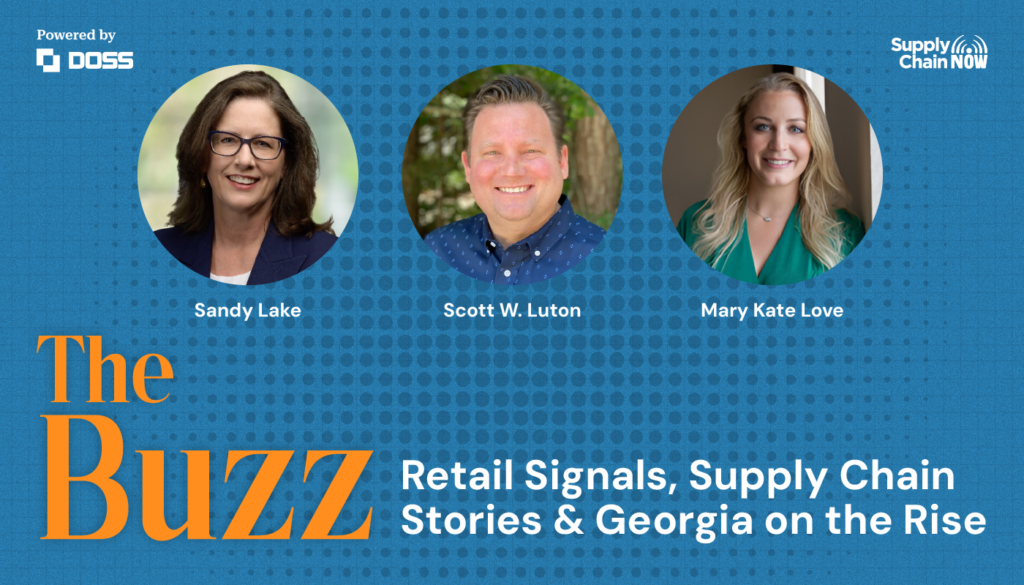
Hey, good morning, good afternoon, good evening, wherever you may be, Scott Luton and Mary Kate Love with you here on Supply Chain. Now, welcome to today’s live stream. Mary Kate, how you doing?
Mary Kate Love (00:24):
Hi there. Happy Monday.
Scott Luton (00:25):
Happy, happy Monday. Happy buzz day as Tricia and the gang like to say. I’m Mary Kate. I hope you had a great Easter weekend. I think you did, right?
Mary Kate Love (00:33):
Yes. Yep. Saw a lot of family. Saw my nieces and nephews, so it was great.
Scott Luton (00:38):
It was great. I also saw lots of family. I spent some time in the beautiful upstate of South Carolina. I saw lots of birds, which made my bird nerd heart very happy. And I also had some lots of delicious food. But Mary Kate, we got a big show here today. It’s the buzz where every Monday at 12 noon Eastern time. We discuss a variety of news developments across global supply chain and business. News that matters is what we like to call it. And folks, all month long here in April, the buzz is powered by our friends at DOS, the world’s first adaptive resource platform. If you’ll learn more about how DOS gives companies real-time visibility into their operational data and connects it seamlessly to the financial systems that run their business, visit doss.com, and that’s D-O-S-S.com in case your spelling stinks like mine. Mary Kate, are you a good speller?
Mary Kate Love (01:28):
Actually, I’m a terrible speller.
Scott Luton (01:30):
I don’t believe that.
Mary Kate Love (01:31):
I really am. It’s something in my brain.
Scott Luton (01:35):
Something isn’t
Mary Kate Love (01:36):
Hard. Something not in my brain maybe, I guess.
Scott Luton (01:38):
Well, folks, Trisha is going to be helping us all avoid spelling when we don’t have to, and should be dropping links to about 20 different links to resources here today. Big show teed up, Mary Kate. We’re going to be taking a look at early, early retail sales data for March. We’re going to be talking about the documentary, The Chain, if you hadn’t heard about that yet. We’ll be touching on a couple of big events coming up, including National Supply Chain Day and the Georgia Logistics Summit. And Mary Kate, speaking of Georgia, we’ll take a look at some of the big industry news going on right here in the peak state all that much, much more. And as if we needed any more good news, we’ve got a longtime friend of the show, Industry Dynamo. Sandy Lake with the Georgia Center of Innovation is joining us.
(02:19):
She is helping industry grow and succeed here in Georgia, has done for a long time. She’ll be joining us about 12:15 PM or so. Mary Kate, you’ve spent a good bit of time here in Georgia as well.
Mary Kate Love (02:29):
I used to be a Georgia resident and Sandy was one of the first people I met upon moving to Atlanta.
Scott Luton (02:35):
I didn’t know that. How about that? Okay. Well, folks, get ready. As Sandy will bring a lot of good news and insights with her as she joins us in about 15 minutes. But before we get there, we’ve got a lot of pre-work to do, I’ll call it, on this edition of The Buzz Powered by Doss on April 6th, the buzz for April 6th, 2026. How are we in April already? I have no idea.
Sandy Lake (02:56):
I know.
Scott Luton (02:57):
So Mary Kate, we got four things we want to hit on the front end of the buzz here today. So starting with our newsletter, with that said, took a break over the weekend. Even newsletters need to unplug a bit and relax and with family maybe. I want to start today with this popular venture that Amanda here at Supply Chain on the team a few months ago, I’ll call it, Between the Lines. Essentially, it’s the Supply Chain Now Book Club. And back in the first edition, which we’re going to share here, we had three big reviews, starting with Tricia brought Garden City, Work, Rest, and The Art of Being Human by John Mark Comer, I think it is. It’s what Tricia reviewed. Amanda reviewed Devotions by Mary Oliver, and then you reviewed The Anxious Generation: How the Great Rewiring of Childhood is causing an epidemic of mental illness by Jonathan Hite.
(03:45):
I’m going to call it Hate Height.
Mary Kate Love (03:47):
Yeah. Yeah.
Scott Luton (03:48):
So Mary Kate, tell us. That sounds like a big 800-page book. Give us takeaways.
Mary Kate Love (03:53):
I was just going to say, I guess it’s not the most fun book to read, but I think it’s necessary to read. And while it focuses on teens, adolescents, and even young children, as an adult, I found myself just diving into the data that really … I mean, the main takeaway is that when smartphones, so not cell phones, but smartphones. When smartphones were introduced, so around that 2010 timeframe, depression and anxiety rates and adolescence doubled. And everywhere, not just in the United States. And you can see in all the data, it’s actually doubling. It’s crazy. It’s always around 2010. And it was just a real eye-opener for me as an avid user of my phone. But I think it’s something that we all have to focus on being more intentional
Scott Luton (04:40):
Around. That’s an excellent perspective. Sounds like a great book, very timely read. Yeah. As you apply that to global business, there’s some really important decisions that leaders and companies and cultures have to decide. And one of them, Mary Kate, is one that we try to protect is that work-life balance. Mary Kay, as you may know, sit on my email and my Slacks too often on weekends too. But I think we’re pretty good as an organization kind of protecting that all three times.
Mary Kate Love (05:09):
We need to be efficient too. That’s right. And actually, I just thought of this. I wasn’t going to share this, but I have this … I don’t know if you’ve ever seen this. It’s called The Brick. And so I block all my social media apps until noon. Sounds insane that you just … I’m dealt why can’t I just not open up Instagram blocks everything unless I scan this to get in. So just little things. I think that book made me change of, I still want to use social media, but I want to use it when I want to use it. I don’t want to just be with my kids and opening up its Instagram for no apparent reason. And all these apps are now designed to get our attention in that way.
Intro/Outro (05:44):
That’s right.
Mary Kate Love (05:45):
Yes. And so while I love just like you being efficient in the communication, trying to find ways to make it stop is I think really important.
Scott Luton (05:54):
Agreed. Especially since work follows us home unlike perhaps never before. Right. That’s
Mary Kate Love (06:01):
So true.
Scott Luton (06:01):
Managers and teams and leaders and professionals, we always have to come up with the proper set of boundaries. And that’s on a variety of fronts, but of course to include electronics. So folks, check out Between the Lines. That was our first edition. We’ve published a couple since then. Trisha’s dropped a link so you can go check that out. And hey, we’d love to hear your review or your take on some of these topics, books, you name it.
Intro/Outro (06:26):
Yeah.
Scott Luton (06:26):
Okay. Let’s see here. That was number one. Number two, I mentioned some of the big events coming up. Folks, MODEX. MODEX 2026. Come join us here in Atlanta. April 13th through the 16th where the largest manufacturing and supply chain event this year will be right here at the Georgia World Congress Center. Some 40,000 people, Mary Kay, are projected to attend this year.
Mary Kate Love (06:47):
This show is always a flagship show, right? You can see anybody you want to see there.
Scott Luton (06:53):
You’re right. You’re right. We’re going to be interviewing some of the movers and shakers as we’re going to sit on podcast row in the Sea Hall. And we invite you to come join us and a lot of our innovative friends. In fact, one of our neighbors in the Sea Hall is the Four Flow Team. We’ll be in Booth. Write this down. Booth C as in Charlie, 14490, right? Right around the corner, I think from delicious food offerings. At Modex, the FourFlow team will be onsite to share insights and discuss how organizations can successfully transform their logistics operations, supporting everything from automation strategy to warehouse and distribution center design to network optimization and even material flow engineering. They’re a vendor agnostic consulting partner and FourFlow focuses on identifying the solutions that best fit your operational and strategic requirements. Again, you can visit the FourFlow team at booth C as in Charlie, 14490 at Modex.
(07:48):
And Mary Kate, we’re going to see you at some other events this year. You’re covering Modex from afar this year. Is that right? That’s
Mary Kate Love (07:53):
Right. That’s right. And we’ve got a few of our team members joining, so you’ll definitely see some supply chain now people. And if you track down Scott or Catherine from the supply chain now team, they may have a cool giveaway
Scott Luton (08:06):
For you. Oh, man. How about that?
Mary Kate Love (08:07):
So that’s a challenge. You got to go find them.
Scott Luton (08:09):
Would it be a new car?
Mary Kate Love (08:11):
Possibly. You’ll have to see.
Scott Luton (08:13):
Maybe not this year.
Mary Kate Love (08:14):
If you’re giving away new cars, I might amend.
Scott Luton (08:17):
You’ll be there. Yeah,
Mary Kate Love (08:18):
I’ll
Scott Luton (08:18):
Be here. Awesome. All right. But one big event that you’ll be front and center for, of course, is National Supply Chain Day, folks. It’s set time of year again, April 29th.
Mary Kate Love (08:29):
So soon. It’s unbelievable.
Scott Luton (08:31):
It’s already here. Plan to join is 12 noon for a virtual event, maybe in person of it next year, but a virtual event this year that will feature a wide range of supply chain leaders. Our keynote is the amazing Billy Ray Taylor, author of the bestselling book, Winning Link. And this is, I think it’s the first time we’ve shared this. We’re going to be recognizing three incredible people and/or organizations for your significant contributions towards our industry. Mary Kate, your thoughts on National Supply Chain Day. I love
Mary Kate Love (08:56):
National Supply Chain Day because it really is the day that we step back and think about the people that connect the supply chain and the supply chain really connects our world. So we always uncover really cool stories from companies, from people naturally. We’ve always talked about doing awards, and I’m so excited that we’ve got three this year. And so you’ll see kind of three highlights from the industry. And something else new this year is our website is a hub of gathering any other national supply chain day celebrations. So you can go right on our website and you can see all the other events and register for our livestream.
Scott Luton (09:31):
So folks, check it out. We have got, let’s see, you have an in- person gal in Atlanta. Our friend DC is hosting that. We’ve got a book launch. Someone reached out, Mary Kate, you’ll get a kick out of this. A dear friend reached out and I’m going to keep it under wraps for now. And he said, Hey, I know that y’all, meaning Supply Chain Now is all about April 29th. It’s kind of y’all’s day, but I want to release this book. I’m like, “Hey, I’m telling you, that’s not our day. It’s Global Industries Day. It’s the people’s day. So please not only launch your book on April 29th, but make a blurb about it on our site so we can help promote it. ” So Mary Kate, that’s pretty neat, huh?
Mary Kate Love (10:05):
Yeah, that is really cool. And that’s really the whole point, right, is to really highlight this industry. And it’s this idea of all of us together speaking about supply chain. We’ll attract new talent to supply chain. We’ll find new ways to make the supply chain better. So I love hearing stuff like that.
Scott Luton (10:21):
I do too. I do too. So get ready as the warehouse guy publishes a book soon on April 29th, just as easy as that. All right. So one more thing before joined by the wonderful Sandy Lake here on the Buzz powered by DOS. And I say DOS because they, Mary Kate, maybe even inarguably had the best month ever because last week, I think it was- Amazing. They announced their successful $55 million series B funding round, which of course is going to fuel their mission to build the operations cloud for the real world. And we’ve been delighted to partner with Wiley Jones and the DOS team for a couple years now, but including on our enterprise unleashed series, which folks got to check out. It goes live again tomorrow. We’ve got a recorded interview with Zubin Apu who leads WiseTech Global and it was Mary Kate.
(11:10):
This was a fascinating, fascinating interview. And at some point, Mary Kate, I’m not sure if you’ve ever, you’re a lot smarter than me, so it may not happen to you, but sometimes because we got Zubin and Wiley together, these folks are probably seven levels more intelligent than I am, especially when it comes to technology. So I had to sit back and just take notes with the Diet Coke and some popcorn. You ever sitting on conversations like that?
Mary Kate Love (11:33):
Oh yeah, all the time. All the time.
Scott Luton (11:36):
Oh, folks, Trisha’s dropping a link to the next edition of Enterprise Unleashed, which goes live tomorrow at 12 noon Eastern time. So check that out. Okay. So Mary Kate, we are delighted to have a terrific guest here with us on the buzz here today. We’ve already kind of let the cat out of the bag, folks. Sandy Lake is the director for the Center of Innovation Logistics Team at the Georgia Department of Economic Development, where she helps companies take advantage of the state’s world-class logistics industry so that they can improve supply chain efficiencies, support growth, and increase global competitiveness. That’s a big one. Sandy is a certified supply chain professional and currently leads the Center of Innovation Industry Advisory Board. She also serves on a variety of advisory boards, including Georgia Tech’s Supply Chain and Logistics Institute. Please join me in welcoming Sandy Lake, Director Logistics with the Georgia Center of Innovation.
(12:30):
Hey, hey, Sandy. How you doing today?
Sandy Lake (12:32):
Hey, thank you for having me. Yeah, this is great.
Scott Luton (12:35):
You bet. And you’ve been busy, huh? I tell you what. A
Sandy Lake (12:38):
Little bit.
Scott Luton (12:41):
Well, we’re looking forward to celebrate with you what’s a terrific annual event being the Georgia Logistics Summit, which we’ll touch on in a second, April 17th, folks, if you want to get a jump on that. We’ll touch on that in a minute. But Sandy, before we do, and Mary Kate, I know you’re up in Illinois at the wonderful city in Chicago, which is also pretty this time of year, but here in Georgia with the farms and the vegetables and just everything but the pollen basically is beautiful this time of year. So on that note though, Sandy and Mary Kay, today is the start of community garden week around the world. That’s cool. Today is also California poppy day, but in what should be a terrific global celebration, it is fresh tomato day. Look at these tomatoes we got a couple years ago. I think at our farmer’s market.
(13:25):
All right. So as I mentioned, we’re on the precipice of several months of delicious tomatoes. As the farmer’s market season is upon us, it’s almost here. A little bit too early for the best tomato season, which is going to be later this summer. But I want to ask you, Sandy, what is one of your favorite all- time favorite spring and summertime foods?
Sandy Lake (13:42):
Well, fruit in general, but the first thing that popped in my head was watermelon.
Scott Luton (13:46):
Oh, yes. Yes. Now, Sandy, do you put salt or no salt? Because this is very divisive.
Sandy Lake (13:52):
Yeah, I know. I’m a no salt. My dad put salt on his, but I’m a more salt person.
Scott Luton (13:57):
All right. Mary Kate, really quick. Watermelon before we get to your food, watermelon. Salt, no salt?
Mary Kate Love (14:02):
I think I’m no salt.
Scott Luton (14:03):
Okay. All right. So you’ve probably never put salt on there, huh? I was
Mary Kate Love (14:06):
Going to say, I don’t think I’ve actively put salt on it. I guess I’m a no salt. But I love salt, so now maybe I’m going to try it with salt.
Scott Luton (14:15):
You got to try it. A lot of my family members growing up would use salt, salt shakers everywhere to get all sticky, but folks swear by it. Mary Kate, when it comes to this beautiful time of year and moving into summer, what’s one of your favorite foods?
Mary Kate Love (14:28):
Well, it’s funny because can’t make this up. Mine was actually watermelon, but it was specifically watermelon feta salads. Have you guys ever had that?
Sandy Lake (14:36):
Oh, yes.
Mary Kate Love (14:37):
So watermelon with feta, maybe some mint. That is my favorite summer salad by far because I love feta too. And paired with the watermelon, that’s my favorite.
Scott Luton (14:47):
Well, I think Amanda has made that salad. And shout out to Amanda and Tricia. Amanda probably going to … I bet she’s about to drop a recipe there and comment. We’ll see. I’m not a big feta fan.
Mary Kate Love (14:58):
Ooh, I love feta.
Scott Luton (14:59):
And the mint you mentioned, that’s got to be like in tea. I don’t like mint in food. I don’t know. It’s kind of weird like that.
Mary Kate Love (15:06):
Yeah, I guess the mint has to be real light in it. Very, very
Scott Luton (15:10):
Light. I like that. I like how you think. All right. So really quick, I want to show these tomatoes once more, but more importantly, this is a snapshot of the farmer’s market we always spend time at. That is in Monroe, Georgia, where they’ve got, I don’t know, a couple dozen vendors and it’s still early, but man, come to summertime. It is a wonderful place to be. And Sandy and Mary Kate, they’ve even added live music. So there’s acoustic, usually every Saturday morning, it’s my comfort food on the weekends. So we’ll see. All right. So we got a lot to get to work here today. We’ve got a lot of work to do. Hopefully y’all had your weedies or your vitamins or you name it. And we want to start first here on the buzz, powered by our friends at Doss. We want to take a look at the US retail industry.
(15:51):
So while it’s going to be a week or two before the official data for March retail sales comes out, but in the meantime, we do have some preliminary data, which indicates that March retail sales were up 0.6% from February and 3.5% from last year, so year over year. And as reported by chain store age, the Fiserv Small Business Index from March 2026 shows that small business year over year sales grew about 1.3%. However, their data also showed that in the bigger picture, right, in the broader picture, retail sales in the bigger picture in March were driven by increases in building materials, which makes sense this time of year. Motor vehicle parts, furniture, and this last one’s not so fun, gasoline sales, which some folks are projecting some bad news in the weeks ahead. We’ll see. The data shows that grocery sales decreased both month over month and year over year as consumers are really being driven by discounts.
(16:44):
And I can feel that in my bones, maybe y’all can too. One last thing. I want to get both of y’all to weigh in here. Persona Door, hope I got that right. The chief data officer at Fiserv said, quote, March reflects a small business economy that remains durable, supported by continued growth and consumer spend, but with signs of cautious behavior. With energy prices rising, households began weighing trade offs carefully. Their selectivity was visible with consumers eating out less and making more deliberate purchases. So Sandy, as I think I shared with you pre-show, I’ve never been confused as an economist. I’d like to give the practical supply chain view maybe of economics. But your thoughts when you hear some of those that retail reporting?
Sandy Lake (17:23):
Yeah, of course, inflation conused to continue to be a sticking point for consumers, but I was glad to hear that it is remaining strong for small business, but I think that it’ll be interesting to see what happens next month because I think this month is really pivotal in sort of what we see coming into with what April produces after we’ve been a month under the current conditions.
Scott Luton (17:49):
And kind of to that point, we also had an early Easter this year, so that’s got to be a factor in, especially when you consider March retail sales. Mary Kate, your thoughts on kind of a mixed match of industry data points there.
Mary Kate Love (18:02):
Yeah, I agree with Sandy’s take and it might be kind of what you just said, Scott, is it’s a little bit artificially pulled forward a little bit on the demand with Easter and tax returns. But reflecting on my own house and trying to weigh the decisions of all these increased costs between inflation, and I just think the overall, everything seems very volatile right now. It always does, but especially now, I really do think that could have somewhat of a negative effect as we go into next month.
Scott Luton (18:32):
Yeah, unfortunately, I think you’re right. And I also believe just with so many different factors we see, and not to be the bearer of bad news, but we got to keep it real. You got a variety of experts and economists, analysts that really track the probability of a recession. And as we shared a week or two ago on the buzz, that probability has increased a little bit based on different factors. And there’s a lot of projections that the energy prices are tied to a number of factors, but including the military conflict in Persian Gulf, that there may not be a quick and easy fix. In fact, there most likely is not, no matter how that plays out. So we’re going to keep our finger on the pulse there because that energy and whether you’re looking at the price per … I think everybody, Sandy and Mary Kate, everybody’s probably tired of hearing about the hour by hour where the old bell pricing is, but it touches everything whether we like
Mary Kate Love (19:22):
It or not. It does. Yeah. It
Scott Luton (19:23):
Does.
Mary Kate Love (19:24):
It really does. Yeah. It is always center of the news. And like you said, it can be like, okay, come on. But it really does touch everything else.
Scott Luton (19:31):
All right. So let’s see here. Trisha dropped a link to that Chainstore age article. Good folks check that out. And Gino pleasure from North Alabama. Great to see you, my friend. We’d love to get your thoughts on economic or supply chain or any stories we’re going to be talking about as well as, hey, Audrey, let us know where you are tuned in from via LinkedIn. I know Gino, because he’s joined us numerous times. I could almost tell you his address, Sandy and Mary Kate. And also, of course, he’s a rock and roll drummer. So when we formed a supply chain band, maybe Gino will have to sit in on some of those jam sessions. All right, so where are we going next? Well, folks, if you’re looking for, and I would say in this era, in this disruptive VUCA landscape that we are living through and leading through and working through, we got to find good, trusted sources of information.
(20:19):
And I would argue, Sandy, one of those that I look forward to each month is the logistics market snapshot. The Georgia Center of Innovation team’s been publishing, I think, for years now. Now, Sandy and Mary Kate, and Sandy knows, but Mary Kate, as you saw too, this is probably 10 pages or more,
Intro/Outro (20:36):
Right?
Scott Luton (20:37):
A lot of information. So I’ve cherry picked a few and I look forward to getting y’all’s to see what y’all cherry picked too. The couple I looked at here, the Consumer Confidence Index, which is published by the conference board, went up in March. That’s going to surprise a lot of folks, including myself. The conference board said, “Consumer confidence ticked up again in March as modest improvement in consumer’s views of current conditions outweighed a slight downshift in expectations for the future.” Okay. The manufacturing PMI was also one of the data nuggets in there, and that showed expansion for the US manufacturer industry in February. And folks and data just released a few days ago, it shows that the manufacturing sector, according again to PMI data, and there’s lots of different takes out there, but that it expanded for the third consecutive month in a row in March.
(21:22):
And then one last thing. And Sandy, I’m so glad you and your team put this in here because this is another thing I felt in my bones. This was a little nugget from inbound logistics. And I get this, quote, “By 2030, automation will reshape how logistics companies plan and move freight, especially as major ports adopt fully automated crane and yard systems that speed up container unloading and improve schedule reliability. At the same time, the shift towards smaller and more efficient aircraft will reduce cargo uplift across many lanes. Logistics teams will need to plan earlier, secure space sooner, and optimize routing to keep major moves on schedule.” And here’s my favorite part, Sandy Mary Kate. “The days of running your business on static spreadsheets and dumb documents are numbered. “Now, I think we’re all shaking our heads at that because we can probably fill that every day.
(22:10):
Sandy, when we go back to the broader thing here, there’s so much data here in the March edition of the logistics market snapshot. What stood out to you?
Sandy Lake (22:17):
Of course, consumer, I’m always keeping an eye on that. But the other thing right now, especially that I’m keeping an eye on is the diesel prices and the truck, what is it called? The truck conditions index. We’ve been seeing for a while that capacity and trucking is tightening and they expect that as diesel is really shot up in the last month, it’s going to probably tighten even further, but that was a trend that we were already seeing. And so it’s really, they’re saying that what’s happening in trucking, we haven’t seen probably the likes of this type of restructuring since the 1980s. So this is pretty significant. And it’s not really top of news because there’s so many other newsworthy things that have kept our attention, but it’s interesting to sort of see what’s pun intended running in the background or not running in the background and how this is going to impact us prices and all of the inputs into trucking are driving out more and more truckers from the industry.
Scott Luton (23:16):
That’s right. That is right. And by the way, really quick, two quick things before I get your thoughts, Mary Kate. Trish has dropped a link to folks y’all can go check out, download, subscribe to the snapshot. And also Sandy mentioned diesel fuel prices. So I did a quick Google, should have done this pre-show, but the national average approximately right this minute is somewhere between $5.40 to $5.61 per gallon. How about that? Yeah. Mary Kate, your thoughts again on the wealth of information that was contained in snapshot.
Mary Kate Love (23:48):
Yeah, I think this is super interesting, agree with what you both said, but a lot of times it feels like companies are focused more on how they can be resilient within supply chain. So a place like Georgia that is very global, but also can be regional too, is poised to respond to uncertainty in supply chains, which I think is very important because like Sandy said, people are having to remap and rethink entire systems because of things like fuel prices or tariffs or God knows what else. So I think it is really important. And I know we say this all the time, but it just feels like it’s becoming even more important to be more resilient. And that means that you have to have obviously a global perspective, but also a regional plan makes you more, you’re closer to your end consumer, right? And that’s incredibly important when being resilient.
Scott Luton (24:40):
Well said. Well said. And in addition to what you shared there here in this golden age of supply chain tech, isn’t it great to be able to be proactive more and more almost by the day we gain more abilities to reliably and successfully and quickly and confidently not have to react to all the disruption that continues to play out, but be more prepared kind of to your point. Practical resilience, right? Not the cliche resilience that we’ve heard about. Really quick, San Francisco, Fox Businesses Reporting becomes a first US city where diesel prices topped $8 a gallon.
Sandy Lake (25:14):
Wow.
Scott Luton (25:14):
My goodness. Okay. Well, we won’t dwell on that bad news, but we’ve got Tricia dropping a link again. Go check it out as well as all the things we talk about here today. And one more thing. And Sandy, I think your colleague, Moosa, does great work. If folks, if you’re interested in the logistics market snapshot or other work that the Georgia Center of Innovation is doing, we are sharing Moose’s content information right there on the screen for folks that are viewing it. And if you’re listening it, folks, if you’re listening to the podcast replay or listening to a live here today, you can go to georgialogistics.com. Is all that right, Sandy?
Sandy Lake (25:50):
That’s correct. And thank you for the shout out. Yes, that is something that continues to be well received out there. So we’re proud to be able to produce it and glad that it’s being used by the industry.
Scott Luton (26:04):
One more quick little blurb on that. I think it was either January or February edition that I was reading. And Mary Kate, as you may know, we do a variety of reporting driven content around here with some longtime partners. And Sandy, I took that whichever edition that was and forwarded it to this one group that has its finger on the pulse of more data points than most people industry. I can very confidently say that. And it was the first time they saw it, Sandy, and better yet after they read all 12 pages or whatever it was, they found nuggets that they’ve been baked into there. They’re very heavy duty industry reporting. So great job to you and Moosa and the whole team there and folks go check it out.
Intro/Outro (26:42):
Thank you.
Scott Luton (26:42):
Up next, we’re going to kind of take a left-hand turn. We’re going to move from data metrics and the market to what I think is a wonderful, wonderful documentary that’s turning some heads. And folks, that is the chain, how the world works. So Mary Kate and Sandy, let me ask you this. I’ll ask you both this. All y’all out there. If you’ve ever struggled to explain what you do in supply chain, then this is a series to share with your friends, family, and those cocktail party folks that just can’t wrap their head around our industry. Now, Sandy and Mary Kate, y’all get those blank stares too, right? When you start to share what you do, right? We’ve all been there. Maybe not quite as much as we did before.
Mary Kate Love (27:16):
Right, five
Scott Luton (27:17):
Years
Mary Kate Love (27:17):
Ago. Yeah.
Scott Luton (27:18):
Right. And that’s good news. I wish we didn’t have to have a pandemic to do that, but there’s still one of the silver linings. But get this. The chain is a new documentary produced by ASEM, brings your work to life turning complex systems into real stories that your friends and family can finally understand. The chain does a great job at emphasizing the message that we already know. Supply chains matter. And even better yet, everything has a supply chain. You can go check this out. It’s streaming now on Amazon Prime. It’s a bold, engaging exploration of the work that the wonderful human element does every day to keep global supply chains running. It includes interviews from industry leaders and highlights real world stories, giving really a rare behind the scenes look at just how important every aspect of the supply chain really is. Now, this is a six-part series, right?
(28:02):
I’m going to share a couple of episodes of note, but the six-part series that dives deep into the challenges and innovations that continue to shape the current state, but also the future of our industry. And here is a couple of episodes that put on y’all’s radar out there. Let me read these off. I think they resonate. The sports industry isn’t all about the gain. It’s a high-stakes global supply chain. The global grocery run, how fresh fruit travels thousands of miles to your plate. Also should do one on that note on the floral industry. It’s amazing what gets done in the flowers on demand industry. And then finally, how can a t-shirt made on the other side of the world only cost $10? The folks, go check it out. Kudos to ASCM who created the documentary so that supply chain pros can help educate the masses while elevating our profession and highlighting the absolutely critical role that supply chains play across the globe.
(28:51):
You can check out the chain, how the world works on Amazon, or you can learn more at ascm.org. So Sandy, have you seen one of those episodes of the chain yet? First question. And your thoughts about it?
Sandy Lake (29:03):
Well, I was glad to learn about it through you because I did not know that existed. So I think it’s phenomenal what they’ve done and I’ve watched the first two episodes. I’ve not seen them all, but given that today is tomato day, one of the things that stood out to me on the first one was the supply chain for ketchup. I had no idea. I thought the tomatoes were probably grown here in the States somewhere, some local farm. They come from China. I just thought- What?
Mary Kate Love (29:29):
Yeah.
Sandy Lake (29:30):
Yes. And so
(29:32):
That amazed me. And there’s just nugget after nugget after nugget. No matter what supply chain you’re looking at, you just don’t realize how deep the tentacles go within suppliers and how critical and interconnected it is until you really see it laid out in sort of a chain fashion. It really is amazing that anything gets anywhere on time and in the right place and in the right quantity and all of those things. It truly is an orchestration … Behind the scenes that we really don’t have any idea that’s happening. And I work in this every day. So my husband, I’ve been working in this industry for over 15 years and my husband still has no idea what I do. That’s because it is such a hard to explain concept and every supply chain is unique. And so it’s very difficult to put a label on it like you can engineering or teaching or- Whatever
Scott Luton (30:26):
Ketchup.
Sandy Lake (30:28):
So who knew ketchup was so complicated? I really did not know that.
Scott Luton (30:32):
Well, so Mary Kate, before I get your take here, and I have not seen that episode that Sandy’s talking about when it comes to ketchup, but I hope they focused on the world’s best ketchup and that’s Hines. There’s no substitute for Hines ketchup. It’s got a mix of little vinegar test. Is that debatable, Mary Kate and Sandy?
Mary Kate Love (30:49):
You know what? One of my friends hosted a blind ketchup tasting party. This was probably five years ago.
Scott Luton (30:56):
And I
Mary Kate Love (30:56):
Think Hines did win.
Scott Luton (30:57):
It’s the best. I’m
Mary Kate Love (30:58):
Pretty sure it was Hines that one.
Scott Luton (30:59):
It’s the best. And better yet, it’s the McDonald’s version of Hines because I think they have a special recipe. But anyway, Mary Kay, back to … I enjoyed hearing Sandy’s thoughts here about the chain, the documentary series here. Several episodes are already out on Amazon and you can learn more at ascm.org. Mary Kate, what did you, your take here?
Mary Kate Love (31:16):
Yeah. So number one, I can’t wait to watch this for all the reasons that you guys have said, but also number two, I think it’s just back to this bigger theme that we talked about, about supply chain being … It used to be the story that was just behind the scenes that nobody honestly really cared too much about. And then obviously the pandemic, but also things like us being able to trace our packages on Amazon, us wanting to understand was this ethically sourced? Was this ethically made? I think that supply chain is now moving from the background to the forefront. And something like this, I can’t wait to dive in because I love having data points or actual examples to explain what I do and why it’s important or why I care about it. And you definitely don’t have to be in supply chain to care about it.
(32:02):
It affects all of us every day.
Scott Luton (32:04):
That’s right. And I think for folks that have never been in supply chain ever, I think from what I’ve seen, y’all may have seen it too. Once they start connecting the dots that the global supply chain really touches everything and all the products we hold dear and count on. And even more impressively, it impacts the conveniences, the amazing conveniences of the modern day consumer. It really is remarkable. Then it starts to click. It starts to click. So folks, and one more little thing here, Mary Kate, it also, I mean, there’s some similar inspiration I think that you’ve probably had as you created the National Supply Chain Day initiative and mission. I think there’s some parallels there, Mary Kate, huh?
Mary Kate Love (32:41):
For sure. Yeah. I mean, exact same mission, right? It’s to spread the word about supply chain and highlight the stories and the people.
Scott Luton (32:49):
That is right. Okay. Well, Sandy Lake, Mary Kate, love. We’re going to compare and contrast our key takeaways from those episodes. We’ll have to have Sandy back and we’ll go through all six of them. All right, really quick. We’re about to dive into the B-block with Sandy Lake and learn more about what the cool things going on here in Georgia. But before I do, we want to share an important mission that we are delighted, very really honored to support. We’re collaborating with the American Logistics Aid Network as they continue their noble mission to help families and communities in need. This powerful nonprofit has been creating incredible outcomes for years. Now, this week, their priority needs to support preparedness and recovery efforts include, there’s two things here, folks. There’s two things, the transportation of one pallet from Pennsylvania to Texas. One pallet, if you’ve got resources that can help make that happen or you make a donation, let’s make that happen.
(33:39):
And then secondly, they’re seeking longer term warehouse space for 40 pallets in the Los Angeles area. So if you can donate your resources or your dollars, please reach out to Allenaid rather.org/operations and we encourage you to do just that. Kathy Fulton serves as executive director there. Her and her team are doing incredible work. And Sandy, I think you have rubbed elbows and are well aware of Kathy and Alan. Is that right?
Sandy Lake (34:06):
Absolutely. It’s a wonderful, wonderful mission that they have. So I would agree with you. Anybody that can participate in that I think is-
Scott Luton (34:14):
I’m with you. I am with you. And Trisha’s dropping a link right there, Alanaid.org. And also, as I mentioned, Trisha dropped a link on a previous topic where you can find a lot more information about the chain. Okay. So as promised, we’re going to dive in a little bit deeper with Sandy Lake, the Georgia Center of Innovation here today on the Buzz powered by DOS. And what I want to do, Sandy, for starters, I tell you, Georgia, there’s no shortage of growth and expansion and success stories, but when you maybe think of those stories that are kind of tied to global supply chain and supply chain industry, what are some of your favorite stories that come to mind, Sandy?
Sandy Lake (34:51):
Well, I’ll just cherry pick a couple because there’s a lot. Yep. But Toto, for example, Toto USA that makes the luxury toilets, they just expanded their US headquarters and increased their manufacturing … Well, I’m sorry. They built a state-of-the-art increase their manufacturing capability here
Scott Luton (35:10):
In
Sandy Lake (35:11):
Morrow County, and they increased their production capacity by 150%, and now they can produce 300,000 toilets a day.
Intro/Outro (35:20):
Wow.
Sandy Lake (35:21):
Kind of amazing. And of course, in all of their operations just in the Americas, they produce a million toilets a day, but that’s in response to the demand for their product. So that’s been an exciting expansion here in Georgia. And I got to tour their facility, and who knew how much robotics could go into making a one-piece toilet, but it’s incredible. It’s amazing. They didn’t lose a worker in all of their workforce, so they increased production without losing a worker and were able to elevate their workforce to be able to manage the robotics that they introduced in this new facility. Very
Scott Luton (36:00):
Cool. That is cool. And it’s been years. It’s probably been … Let’s see here. Was it 2026? But it’s been eight years that I’ve toured that Morrow, Georgia facility, Sandy. And it was amazing at the time. And it sounds like they’ve continued to invest in all sorts of innovation and protect the opportunities for the workers. You don’t always get your cake and eat it too, but it sounds like they’ve been able to do just that, Sandy. Mary Kate, sounds like Toto USA has been growing left and right your take. And have you checked out? This might be interesting conversation for the buzz, but they’re innovative toilets, Mary Kate, and maybe unless y’all go out and check out your
Mary Kate Love (36:36):
Tool. I get
Scott Luton (36:38):
One. You have one.
Mary Kate Love (36:39):
What are the odds, right? Yes. We redid our master bath when we moved into this house two years ago.
Scott Luton (36:45):
Okay.
Mary Kate Love (36:45):
So my husband had heard about them and yeah, we have one. And then actually I had heard about them through you, Scott, because I think we talked about you touring the facility when you did years ago. And I remembered it was a standout facility to you.
Scott Luton (36:59):
Okay. It was. So I
Mary Kate Love (37:00):
Had looked into them because I was previously in manufacturing before supply chain, so that I love a good manufacturing, efficient use of technology place like that’s why I had looked into them, but that’s amazing. I didn’t realize how much of the up and up they were on.
Scott Luton (37:15):
Well, so we didn’t plan that at all. Unless Sandy and Mary Kate, did y’all talk pre-show about that?
Mary Kate Love (37:20):
I did not think I was in what kind of toilet I had.
Scott Luton (37:26):
But I’ll just say no truer words have been spoken when Mary Kate was talking about how much she loves efficiencies when it comes to production. So that’s very, very true. Nicely
Mary Kate Love (37:35):
Manufacturing plant like that. When someone mentions one, I always remember
Scott Luton (37:40):
It. And Sandy, I had a couple of nuggets, but if there was anything else you wanted to share in terms of growth expansion before I shared.
Sandy Lake (37:46):
Well, I was just going to say even that shifted some supply chain. Obviously it had some real supply chain impacts for Toto when they did that as well. Just another example is Kings Hawaiian. They’ve expanded their operations about six times since 2010. So that’s just another good growth in their supply chain story as well.
Scott Luton (38:09):
Well, and Mary Kate, our dear friend, Marty Parker, one of our esteemed co-host here at Supache Now, he’s been out there. In fact, he went out to, I think, a supplier celebration day, Sandy. And Marty spoke about the incredible culture on full display between the team members and the suppliers and the whole ecosystem. And of course, who doesn’t get enough of those tasty, slightly sweet funds and roles and whatnot, including the new jalapeno ones, the spicy ones. Mary Kate, have you had one of those lately?
Mary Kate Love (38:39):
I haven’t had the spicy ones, but we always use those roles to make … If we’re going to the beach or we’re going somewhere, we always use those to make a ton of sandwiches for the kids and us too, honestly, through the bus.
Scott Luton (38:51):
All right. So Todo, Kings Hawaiian, these are products that everyone can relate to. And Sandy, good things usually come in threes, but you may not have a third story, and that’s okay. Anything else stick out, Sandy? Well,
Sandy Lake (39:02):
My third one was stored. They’re amazing startup in Georgia and they’re currently valued at what, one and a half billion dollars and they’ve not even been around, but about 10 years maybe. And they are- They’re
Scott Luton (39:16):
On a roll. I know that.
Sandy Lake (39:18):
Well, they’re on a roll and they’re transforming how supply chains and particularly omnichannel, e-commerce are being fulfilled and making it possible for the smaller e-commerce players to compete against an Amazon style of fulfillment. And so that it’s pretty amazing. The software combined with the physical logistics that they’re trying to do is really transforming a lot of supply chains out there.
Scott Luton (39:43):
It is. Mary Kate, your comments there.
Mary Kate Love (39:45):
Yeah. I mean, that’s been a company that I followed closely even when I was in Atlanta and it has been great and actually not surprising to see their growth over the last few years. Yeah, that’s really exciting.
Scott Luton (39:57):
I’m a big fan of any company that helps the smalls compete with the bigs, right? That’s a fascinating modern day trend. It’s really caught lightning in a bottle and added tons of momentum in the last four or five years, it seems. Let’s see here. Hey, Frank, Frank Tucker on YouTube from Birmingham, Alabama. Frank, let us know what the Weather Report in the beautiful city of Birmingham is and great to have you here with us here today, Frank. So Sandy, those are three great stories. I know you’ve got probably thousands of more and folks you have to reach out to Sandy Lake and the team to learn more or learn how to build your own story here in the great state of Georgia. I want to share a couple quick nuggets. There’s not a short list here of factors that really fuel success, but a couple things that were really important, especially from a supply chain perspective.
(40:41):
The Port of Savannah, right? It continues to be one of the fastest growing ports in North America. Most of the world knows about the world’s busiest airport most of the time. Sometimes it goes back and forth. Most of the time, ATL is the world’s busiest airport, but some folks don’t know it handles over 600,000, sometimes as much as 650,000 metric tons of cargo annually, right? And then in a kind of a different realm, Georgia has become a major US data center hub driven in part by Transaction Alley. And that’s not new. Transaction Alley has been around quite some time. So did you know about 70% of all US payments are processed by companies based in Georgia? How about that? All right. So Mary Kate and Sandy, we’d be here all day talking about great business stories here in Georgia, but I want to shift gears, Sandy, because y’all have one of the big annual events, not to be missed.
(41:28):
The Georgia Logistics Summit’s coming up on April 17th. So Sandy, I’ve enjoyed this event going back years and years. What are a few elements of this year’s edition of the summit that you’re looking forward to the most?
Sandy Lake (41:38):
Well, obviously we’re excited for all the speakers, but a couple of things I think that are very relevant and hot right now is we’ve got a gentleman from Washington DC coming down to talk about what’s happening in trade policy and tariffs and trade and all of that and why give us some of the reasons why some of these decisions are being made. We’re just hearing the results, but there’s some little bit of-
Scott Luton (42:03):
Science, art, headaches, complexities.
Sandy Lake (42:06):
Headaches. Yes. Complexity. But even if you don’t agree with the logic, maybe kind of hearing the logic help in some form or fashion in understanding what’s happening and what they see coming because it was crazy time for a while, then it took a little bit of a breather, but it’s continuing to ramp back up again.
Scott Luton (42:26):
It is. And regardless of your take, and you said it well, Sandy, regardless if you approve, disapprove, somewhere in between, we all as businesses here in the States are impacted, especially if you import, export stuff. And it changes. That’s the thing that I hear probably the most about, the uncertainty that it’s created has really been a lot to digest. Mary Kate, really quick, I want to get your reaction to that. It sounds like Sandy, they’ve got someone with their finger on the pulse of the why behind. Mary Kate, your thoughts.
Mary Kate Love (42:56):
Yeah, that’s something personally I would love to hear, be a part of because I think the more connected our world is and the more volatile our world is in all of our jobs, we have to understand, we don’t have to agree with, but we do have to understand the different points of logic behind these things because it affects our business decisions and let alone our day-to-day life. But I think it’s important for all of us to understand deeper than we do now.
Scott Luton (43:22):
I’m with you. I’m with you. And folks, we want to put this back up here. The Georgia Logistics Summit for 2026, April 17th, and it’s being held this year at the Savannah Convention Center, which I think’s been expanded, Sandy, if I’m not mistaken. Is that right? It
Sandy Lake (43:35):
Has. They’ve added a whole new ballroom.
Scott Luton (43:37):
Outstanding. And we’re going to share some of the speakers here. Let’s see.
Sandy Lake (43:41):
Yeah. That’s another panel that we’re excited about. We’ve never had all the various modes of transportation together. You mentioned air cargo, so we’ll have air cargo as well as the ports, the roads, the rail, all together in one sort of round table. That’ll be another session that we’re excited about.
Scott Luton (43:56):
Outstanding, folks. And here’s a little flashback, Sandy and Mary Kate. I’m not sure if you remember this, Sandy, but this is the 2018 … Make sure I got this right. Is this 2018?
Mary Kate Love (44:07):
I love it.
Scott Luton (44:08):
Oh my gosh. That was the 2018 Georgia Logistics Summit where I was hosting a women in logistics panel session.That’s
Mary Kate Love (44:15):
Very cool.
Scott Luton (44:16):
And Sandy, I could barely keep up with that quartet of business leaders right there doing big things in industry. First off, Sandy, how can folks register for the summit this year?
Sandy Lake (44:26):
It’s real easy. Go to gagisticsummit.com.
Scott Luton (44:31):
That is easy. And Tricia’s dropped the link. It’s right there. And yes, Amanda, telling on me here, that might be the last time Scott was in a screen. I think you’re probably right. That’s
Sandy Lake (44:39):
Funny.
Scott Luton (44:40):
What we didn’t know was coming back in 2018, goodness. So I want to talk really quick, and we might go over a minute or two, but I want to talk about how cool the city and logistics hub that Savannah is. Now, Sandy, of course, has been down there. Me and Amanda have been down there. Mary Kate has not. We’re going to get Mary Kate down to Savannah, but get this. The Port of Savannah manages 14 to 16,000 truck moves every day from Monday to Friday.
Intro/Outro (45:03):
Wow.
Scott Luton (45:03):
And because of that and many, many other factors, Savannah is generally considered one of the best connected ports in the US, ocean, rail, trucking, you name it. Great workforce. And here, I said earlier something almost rhymed. How about this? Let’s give this for a try here. From ship to truck to rail, Savannah is built or flow at scale. Sandy, is that the-
Sandy Lake (45:22):
There you go. You need to patent that. Yeah. Yeah, that’s great. Okay.
Scott Luton (45:25):
Copyright
Sandy Lake (45:25):
That
Mary Kate Love (45:26):
One. I’m the T-shirts.
Scott Luton (45:28):
That’s right. These shirts coming. Yeah. But Sandy, really quick, I’m sure there’s a reason, obviously there’s a reason you’re in Savannah this year for the summit. It’s a key cog and really not just the Georgia economy, but the Southeast and really the country’s economy. Your quick thoughts about Savannah, Sandy.
Sandy Lake (45:43):
Well, you’re right. They sort of set the standard in shipping. And one of the things that they do there at the Port of Savannah is that they work really hard on being predictable and that that predictability of throughput sometimes is of more value to consumers and to customers, to their customers than knowing what their maximum throughput is at capacity. So I think that’s one of the key things that Georgia has to offer that other ports just can’t compete against in terms of their predictability of throughput.
Scott Luton (46:13):
And on a related note, Mary Kate, we’re talking about your passion for all things efficiency. The port, as I was reading earlier today, I may not have this exactly right, but they have really cut down. It used to take 28 hours to unload a vessel and have its containers on its way. I think they’ve gotten that down to 22 hours just from 2024 to 2025. How about that? I wish I could find six hours times millions each day, Mary Kay, huh?
Mary Kate Love (46:39):
Yeah, that’s significant. And I think this predictability thread has been in all the articles that we talked about today and just how important that is, efficiency is always going to be important, but predictability I think is equally, if not more important at this time.
Scott Luton (46:54):
All right. So Sandy Lake, there’s one more question before we start to wrap here. Given all the conversations you’re having with business leaders everywhere, especially those that have some part of their operations or new operations here in the state of Georgia, and especially in the logistics industry, point to, if you would, a couple of two or three major themes that are really common threads in those discussions you’re having with companies on the move, Sandik.
Sandy Lake (47:19):
Well, right now it’s, of course, trade and tariff policies. AI is a big one. And then of course right now it’s this conflict and what’s the length of this conflict? Where is this going to shake out? Where’s it going to lead? And that sort of thing. So just this uncertainty, again, is a word we’ve already used a lot. Even today’s conversation is a big worry or is just a constant risk that has to be managed is uncertainty.
Scott Luton (47:45):
It’s so true. If we know, it’s tough enough to solve problems. If we don’t know which problems are around the corner, it’s even tougher to solve problems. And then especially when you think of folks with global operations that have team members and suppliers and customers running through different parts of the world that have different traditions, customs, opportunities and challenges, a whole nine yards. This uncertainty that we’ve been talking about, I mean, there’s a reason that a lot of experts and analysts and folks that track these uncertainty levels, it’s really approaching historic levels in terms of business uncertainty. But Mary Kate, your final word here, you heard some of the key themes that are a regular part of the conversations with business leaders that Sandy’s having, of course, AI in all of its different … It’s like 7D chess when you’re talking AI. What’d you hear there, Mary Kate?
Mary Kate Love (48:33):
Yeah, I think the resilience is through everything we’ve talked about, resilience and predictability. Those are the two words that are coming up as my key takeaways. It’s make your supply chains resilient and predictable as possible, and that’ll get you through the ups and the downs.
Scott Luton (48:50):
That’s right. That’s right. And going back to that, who said that in the snapshot, Sandy and Mary Kate? I got to go back and find this little note. This was our friends at Inbound Logistics, right? Folks go check out Inbound Logistics. I loved how they said, I’m going to use a portion of this. “The days of running your business on static spreadsheets and dumb documents are numbered. “Because you know what, Mary Kate and Sandy, as both of you all know, in an uncertain environment where there’s disruption everywhere you look, including around the corner, if we’re relying on the way the business was done in 1982, you’re going to have bigger problems. And even worse, your team, your hardworking team is going to have worse problems. So we’ve got to find a better way here in the golden age of supply chain tech. All right, we’re going to wrap here in just a second.
(49:34):
We’re going to make sure folks are not to connect with both Sandy and Mary Kate for that matter. But before we do, we touched on earlier how important it is for folks to find good information they can count on. I want to share two quick resources from the new supplychainnow.com. And folks, go check out. You can find our upcoming live programming, which is constantly evolving, much like today’s live program. You can learn here where the Sandys of the world will be joining us in weeks and months ahead. And I love this resource hub. I know that’s not a real sexy name, right? It’s not Hollywoodesque, but I love the collection of blogs and ebooks and white papers and perspective you’re going to find at the Resource Hub. So check that out. So Sandy, how can folks connect with you and the Georgia Center of Innovation Team?
Sandy Lake (50:18):
Yes, simple. Go to georgia.org and their search on logistics and you’ll go straight to us.
Scott Luton (50:23):
Man, that might be, Mary Kate, the most simple and straightforward URL we’ve ever shared.
Mary Kate Love (50:28):
I think so. I think so.
Scott Luton (50:31):
Folks, they don’t even need Tricia to drop this link, I don’t think. Georgia.org. Check that out. And as we said earlier, Sandy, specifically for logistics topics and conversations, I think that was georgialogistics.org. Is that right, Sandy?
Sandy Lake (50:47):
Georgialogistics.com is another that’ll get you there. Yeah. Gotcha.
Scott Luton (50:51):
All right. It’s just that easy. And folks, we hope to see you April 17th at the Georgia Logistics Summit. And we also hope, Mary Kate, see folks on April 29th at National Supply Chain Day. How can folks connect with you, Mary Kate?
Mary Kate Love (51:03):
So connect with me also very easy. Just Mary Kate Love on LinkedIn. And then if you want to register for National Supply Chain Day, that’s supplychainnow.com/nscd.
Scott Luton (51:15):
Outstanding. We’re dropping those links right there in the chat. Check that out. Well, hey, Sandy Lake with the Georgia Center of Innovation Team. I’ve really enjoyed, as I know I would, your perspective here today. We go back quite a ways and I admire what you do out in the industry.
Sandy Lake (51:29):
Likewise. I admire what you do and I admire what you’ve done. Congratulations on your expansions here and all the influence that you continue to wield out there. That’s great.
Scott Luton (51:37):
Oh, you’re too kind. I just stand in a … This is going to sound weird. I stand on Mary Kate’s and Amanda’s shoulders and Catherine. I mean, we’ve got an outstanding team. Very smart people. Back to those conversations, I was telling my earlier seven or eight rungs above mine. I’m glad we’ve got a bunch of smart leaders here at supply chain now, but I appreciate that. Mary Kate, love. Let’s make sure it’s not. Sandy, we were talking in the pre-show, I think, before you joined us. And it was about 379 days since Mary Kate joined us for a live show. We got to take that. Congratulations. We’re going to take that down. Take this down. The 79 days maybe, Mary Kate. How’s that sound?
Mary Kate Love (52:12):
That sounds great. We did a marketing buzz, but it had to be a long time ago now. I think it was last year’s Super Bowl.
Scott Luton (52:19):
Long time ago. Well, I think we got one coming up. So we’ll see. I appreciate what you do and the fearlessness with which you do it here at supply chain now. Mary Kate Love. As I mentioned, big thanks to our friends at DOS. You can learn more about the innovative things they’re doing at DOS, D-O-S-S, doss.com. Of course, big thanks to Amanda and Trisha behind the scenes. Most importantly, big thanks to our global audience for being here with us, SCN Global FAM. But here’s the deal. Sandy and Mary Kate brought actionable perspective here today. You got to take one thing that they shared, just one thing. You get seven if you want, but one thing at least. Share it with your team, put it into practice, right? Do something with it. These not words. That’s how we’ll continue to transform global supply chain. With that said, on behalf of the whole team here at supply chain now, Scott Luton challenging you to do good.
(53:01):
Give forward. Be the chains that’s needed. We’ll see you next time right back here on supply chain now. Thanks for bye.
Intro/Outro (53:08):
Join the Supply Chain Now community for more supply chain perspectives, news and innovation. Check out supplychainnow.com. Subscribe to Supply Chain now on YouTube and follow and listen to Supply Chain Now wherever you get your podcasts.