Intro/Outro (00:02):
Welcome to Supply Chain. Now the number one voice of supply chain. Join us as we share critical news, key insights, and real supply chain leadership from across the globe. One conversation at a time.
Scott Luton (00:14):
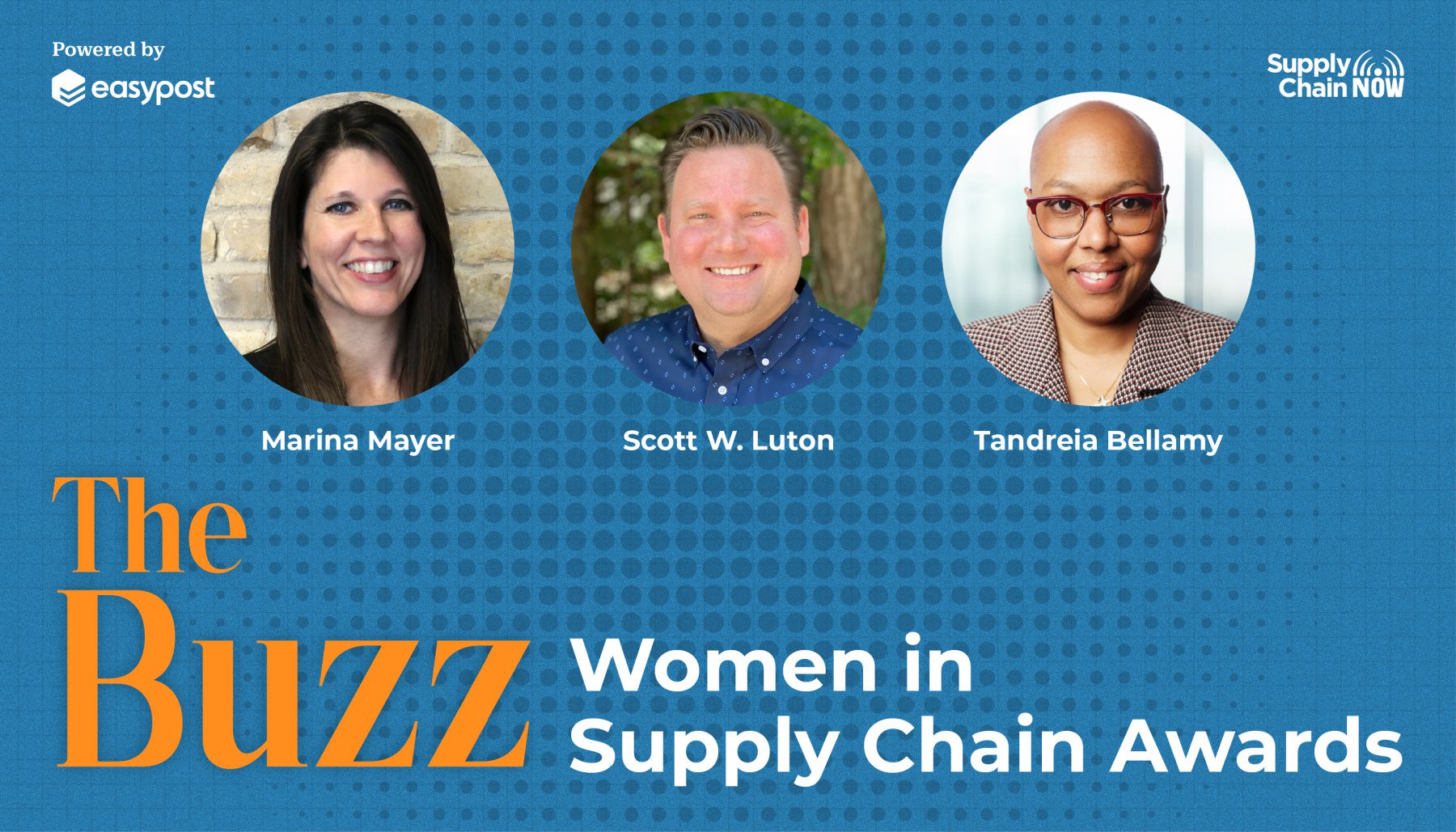
Hey, good morning, good afternoon, good evening, wherever you may be. Scott Luton and Ra Bellamy here with you on supply chain. Now welcome to today’s live stream Tantra. How you doing today?
Tandreia Bellamy (00:24):
I’m great and thank you for having me. It’s going to be a very intriguing show.
Scott Luton (00:29):
I’m with you. We got a jam packed show today. We got two incredible Dynamos, supply chain powerhouses and Tania and a special guest. And folks you know it’s the buzz where every Monday at 12 noon eastern time, we discuss a variety of news developments across global supply chain and business news that matters is what we like to call it. And hey, the buzz is powered by our friends EasyPost, who helps make shipping easy, flexible and scalable. Learn how you can simplify your shipping operations and delight your customers@easypost.com. So tantrum got a great show here teed up today. We’re going to get a supply chain leadership pulse checkin. Along those lines, we’re going to be exploring an interesting report on the state of the industry that’s going to offer a few intriguing takeaways. What do chief people officers see for the rest of the year? We’re going to be exploring that and we’re going to be taking a look at the rising demand for foreign trade zone access.
(01:19):
That probably doesn’t surprise anyone though, right? All that and much, much more. And as I mentioned tantra in about 10 minutes or so, we’re welcoming in a special guest Marina mayor with food logistics and supply and demand chain executive and a whole bunch more. We’re looking forward to hearing Marina’s insights here today. Tantra jam packed show. I’m not sure if we can fit anything else in you ready to go? Absolutely. You’re always ready, tantra, you’re always ready. So folks, stay tuned for a great show. Hey, two things before we get going. Number one, give us your taking the comments whether you’re tuned in via LinkedIn, YouTube X, Facebook, Twitch, no matter let us know what you think and if you enjoy the show today, we’d love for you to share it with a friend and or your network. They’ll be glad you did. Okay, so before we bring on a very special guest here on the Buzz Powered by Easy Post, I want to hit three items on the front end Tan. Okay, three items. First up I want to share our latest edition of, with that said, dropped over weekend as it normally does, it’s our almost weekly newsletter. Almost gives us a little bit of flexibility. Tania, for those tougher weekends full of kid logistics, if you know what I mean.
(02:23):
In this edition we started with a variety of news, so stay with me for a second here. Lots of moving pieces. We touched on how the ISM manufacturing PMI shows continued contraction in the US manufacturing sector for the six month in a row. In fact, some manufacturing executives are saying the economy is much worse than the great recession. Yikes, UPS announces 2025 holiday shipping surcharges recently released data on the US labor market. Well it’s not too kind. Only 22,000 non-farm jobs were added by employers in August. Analysts where they expected 80,000, all that and much, much more events in Vegas events, online events in Chicago and live shows and other resources. A checkout. With that said, so Tan Andrea, did you happen to take a look at what that said over the weekend?
Tandreia Bellamy (03:11):
I did. I did. Okay.
Scott Luton (03:13):
And
Tandreia Bellamy (03:13):
I stood
Scott Luton (03:14):
Out to, you
Tandreia Bellamy (03:14):
Saw, I saw the contraction, the recession, the increase costs, the lack of job creation. But you know what I went to? I went to the education because all of those things we can’t control individually, but stay in current understanding what’s available from a technology standpoint, celebrating others. I mean, I love that the supply chain, GAILs, first of all, I love that the supply chain GAILs, that they’re hosting a grad school workshop.
Scott Luton (03:43):
That’s right
Tandreia Bellamy (03:43):
Again, so that we can work on ensuring that there’s some resilience for our future leaders. I love that you highlighted the parcel forum, the number one package fulfillment event. I love that you highlighted supply chain tech and that that conference has a virtual component. So if you can’t make it there, it’s coming up pretty quickly. You can always log in to stay current in light of everything else that was discussed from an actual news standpoint, let’s focus on what we can do to make sure we’re prepared regardless of what happens.
Scott Luton (04:16):
Ra well said here. Round of applause. I love that. And plus that’s some really constructive advice for folks out there because it’s easy to get bogged down in all the news and the headlines and folks, you got to get to the rest of the story, number one and number two, as Tendra is saying, we got to focus in on what we can control so we can find success for our organizations and our teams. There’s a lot of anxiety out there. We got to stick to what we can control. Alright, excellent stuff folks. Go check out what that said. Trisha’s making it really easy. She drops the link right here, one click away from checking it out. And looks like we’ve got some other friends here. Alan’s back, Alan Jacque, the Rodney Dangerfield of Global Supply Chain. Alan, great to see you as always. Susan’s back with us tuned in from Orlando via LinkedIn.
(05:01):
Great to see you, Susan. Look forward to hearing your thoughts, you and Alan’s thoughts here today. And I think this is, Amanda says, I love that RA when news feels overwhelming, focus on the things you can control. That’s right, that is right. Okay, speaking of things we got to control, we got to move right along and Tania, we’re going back to the fountain again. You’ve spent decades in industry as a supply chain leader and I want to use that to conduct a supply chain leadership pulse check tantra. This is the little segment we’ve been doing now for a couple of months. So Tan Andrea, we met we think about 10 years ago, while you are still enjoying a hall of fame career with a big time shipper there, everybody knows big global brand, but since then you’re still advising, consulting and coaching some of the innovators in this space. So all that begs the question, what is a one of the top priorities right now for supply chain leaders looking to find calm amidst all the current chaos,
Tandreia Bellamy (05:51):
Having systemic ways of really doing analysis, whether it’s predictive analysis or whether it’s sensitivity analysis, playing out different, what if scenarios or post-decision analysis that we follow the correct course of action and if not, how do we self-correct? There’s so much going on. As you’ve already mentioned, the world is so incredibly dynamic that you really cannot live in an analog world in this digital society. You have to have ways to really truthfully analyze what is happening and to prepare for changes stand current with technologies, whether it’s automation, AI or what have you. But then having a real systemic clean data way of analyzing what’s happening is extremely important.
Scott Luton (06:44):
Well said Tania. Well said. And as we heard again for the main time last Friday as we had an incredible leader, Rosemary with Snowflake join us. She is a trailblazer when it comes to data and AI and machine learning, all that good stuff. She encouraged all of us. I know everyone is being attracted to AI for good reason, but starting as you suggested tantra with the data, it’s amazing what by focusing in on the wealth of data we have at our fingertips these days, what can be done with just better data alone and then layering on some outstanding artificial intelligence and other things. So good stuff.
Tandreia Bellamy (07:19):
You really do have to make sure you understand foundationally what’s going on outside of ai because there’s been many, many, many articles that if you feed it bad information, it is absolutely going to give you a bad outcome. So understanding your business so that you can make sure that your data makes sense before you start to lay on those layers of automation is extremely
Scott Luton (07:42):
Important. Well said Ri and folks, I know you heard me share this before, but if you’re not just playing around with a chat GPT, the free or even the inexpensive subscriber option and just getting a sense of what answers you pose or prompts you make it and see what you get back. I’m telling you, there’s no time like the present and I’ll be the first to tell you I’m not a AAA technologist, but I have learned so much just doing some experimentation on the evenings and weekends with what’s all in the art of the possible. It’s very approachable. Good stuff. And as I think this is Amanda, Tricia, big thanks to you both behind the scenes. You’re on fire today, Tania, they loved your quote. You can’t live in the analog world in this digital society. I love that too. First t-shirt of the day.
(08:22):
Alright, so Tania, I got one more thing I want to share before we bring on a wonderful guest here today that folks are going to enjoy learning from and that is, Hey folks, y’all know we love resources especially bring ’em to you right here on the Buzz Powered by Easy Post. I want to share this great resource from our friends at US Bank. Hey, they released their Q2 2025 Freight payment index August 5th, so just over about a month ago. And after 11 straight quarters of shipment and spend volume decreases, the Q2 numbers ticked up slightly. Hey, that’s a little bit of good news. Maybe we reviewed the index on August 6th with US Banks, Bobby Holland and Bob Costello who serves as Chief economist at the American Trucking Associations. It was a tremendous discussion with more than 1700 live viewers. And in summing up that rich conversation, I’d say that it’s probably too soon to tell if the volume increases are a sign of the market rebound or the result of tariff volatility. If you’re planning on attending parcel form this week in Chicago, the US Bank team will be in Booth 1 0 9, booth 1 0 9. So please stop in and say hello and you can learn more about they can help manage your supply chain very successfully. And folks, make sure you sign up for the free rate payment index. We’re dropping a link right there, Chandra, how did I know? How did I just was positive that Tricia was dropping out link so everyone could be just one click away.
Tandreia Bellamy (09:38):
She always been on the same team and you’re on one accord. That’s right. She’s got it.
Scott Luton (09:42):
She does always. Okay, so speaking of movers and shakers and industry, we’ve got a terrific guest joining Tan and I here today doing big things out in the industry. So Marina Mayer has been a thought leader in the global supply chain space for a long time. She serves as editor in chief of Food Logistics and Supply and Demand Chain. Executive Marina is also co-founder of the Women and Supply Chain Forum in their fourth year now. And she’s creator of the Women and Supply Chain Award and we’re going to touch on both of those in just a minute. She also serves as director of content at Iron Markets. Please join me in welcoming Marina Mayor. Hey. Hey Marina. How you doing?
Marina Mayer (10:19):
Hi, good. Thank you so much for having me today.
Scott Luton (10:22):
Great to see you, tantra. We’ve been looking forward to today’s conversation for a little while, right?
Marina Mayer (10:26):
Absolutely. Hello Marta, nice to see you again.
Scott Luton (10:30):
And before we get to the fun warmup question, can I just put this out there the first time I heard it in the green room here today in the pre-show. So you got Naperville in the Chicagoland area, but you all have a nickname for that Marina, what is that?
Marina Mayer (10:42):
Naper Thrill.
Scott Luton (10:43):
Nap Thrill. And that’s mainly a shout out to the incredible nightlife there. Is that right?
Marina Mayer (10:48):
That’s correct.
Scott Luton (10:49):
Love that little nugget. Okay, so let’s get to the fun of the official fun warmup question. It’s a variety of days here. September 8th, 2025. Let’s see here. It’s National Boss Employee Exchange Day. Need to lean into those conversations,
Tandreia Bellamy (11:01):
Right? You exchange the boss
Scott Luton (11:04):
Maybe. So that would be the day of the year, maybe in some cases Tan. I love that. Let’s see. Here it is. Star Trek Day. And that is because the first episode featuring the Interfer Enterprise Crew. It aired back on September 8th, 1966, but here’s where I’m going to finish it is International Literacy Day. So on that last one, international Literacy Day, I want to ask you both starting with you Marina, what’s been one of your favorite all-time reads or one of your favorite recent reads?
Marina Mayer (11:29):
So I don’t remember the exact title of it, but my favorite kind of a read is Murder Mysteries and my favorite author is Michael Connolly. So the reason I don’t remember it is because sometimes I go back and I reread his series and you have to read it in order. And so he’s my all time favorite.
Scott Luton (11:46):
I love that because sometimes the best things don’t come in sequential order, right Marina?
Marina Mayer (11:51):
And sometimes I go back to reread it because things happen in the other book that I’m like, wait a minute, I remember they talked about it. So it’s the only series I will go back and reread.
Scott Luton (12:01):
I love that and I love the universes that some authors create is fascinating. To make the connections between all the characters or stories or issues tan, that’s be a tough one to beat. What’s one of your favorite recent or all time reads?
Tandreia Bellamy (12:12):
I’m going to give you both. My favorite all time is Maya Angelou. I know why the Caged Bird sings and my favorite recent is Uncommon Favor by Don Staley because they’re both stories of overcoming and resilience and then they both became just incredible women leaders and examples. Those are my two that come to mind. I love that.
Scott Luton (12:34):
Those are incredible. All these are great selections, but Tantra, of course, Dawn Staley for some of our non-sports followers out there. She has been the incredible future hall of fame coach for the South Carolina Gamecocks who have been on an incredible run and basketball for years. Right, Tera?
Tandreia Bellamy (12:49):
Absolutely. And one of the things that I really love is all of her former players still talk about her and the role she played in their lives and what a great leader she was and how they still lean on her for advice. So it just showed not only is she an incredible coach, but just an incredible person and incredible leader.
Scott Luton (13:07):
I love it. Okay, we need a book club here at Supply Chain
Marina Mayer (13:11):
In
Scott Luton (13:12):
These might be the first couple of recommendations. Let’s see here. Susan is also a big fan of Michael Connelly and reads his books as well. Let’s see, I think this is Amanda, the Women by Kristen Hannah is my favorite recent read about women nurses in Vietnam. Wow. I should also say see him. Great to see you listening, walking, getting stuff done. GSD, great to see you. And Raja Shucker via India along LinkedIn. Let us know your favorite read recent or all time. I got to add this one before we get going. This is the Fearless Frontline and this is Ray Atia, a work for back in the Day. And it centers on this model, the Run, improve, grow, and it’s a very universal concept that I bet everyone can relate to because sometimes in certain chapters of our life we get stuck in a hundred percent run mode.
(13:56):
And when you do that just getting stuff done, you can’t pay attention to getting better and certainly strategically growing and finding those opportunities. And that’s at all levels, right? The ratios may change from the CEO to the frontline, all points in between, but it’s a great read pack with practical takeaways. Ray, if you’re tuned in, I’d love to get a comment of where folks can find it. Marina and Tania, we got so much to get to here today. And I’m going to start with put this book aside so I can get to the next great read from someone that y’all might be familiar with. I want to start with this read via Food Logistics from none other than Marina Mayer. How about that? So check this out. This focuses on the state of the industry report, which is produced by the I Flying Colliers team.
(14:38):
Y’all might recognize them from industrial real estate and in particular, marina focuses on five top trends as cited by the report. Marina, I’m going to talk about you as if you’re not here. That’s kind of weird. It’s weird. Bear with me. The five big trends, events, developments that marina points out, and you can learn more about it by clicking on the link is global trade tariffs go into effect. Tariff reclassifications may be an important cost avoidance strategy. So with any bad news come opportunities. Number three, industrial real estate vacancy rates in the us. What climbs to a 12 year high? How about that? As we mentioned earlier, that labor market, well, it continues to cool. And this fifth one is an intriguing one. Look forward to seeing this thing continue to evolve and it deals with the big proposed merger between Union Pacific and Norfolk Southern. Oh my. Where do we begin? So Marina, your thoughts on any of those top five takeaways?
Marina Mayer (15:30):
Well, I do like how you kind of paraphrased or reworded the tariff free classification part of it because with bad news does come good news, and it kind of goes back to kind of what we talked about offline. You can’t measure and move forward with what you don’t monitor. And if you monitor certain things such as the tariff and how it impacts certain parts of your company, how it impacts your customers, you’re never going to fully understand the impact. And so for a lot of these companies that don’t have those strategies in place, they’re already behind the ball because they need to figure out how to resource things. They need to figure out how to work better with their current vendors. And if their current vendors aren’t willing to change how they operate, then they need to find new vendors. So that’s an important one.
(16:13):
But also I wanted to touch on the job rate thing because I think it’s interesting because it depends on who you talk to because some people think that the job market is awful. Nobody is hiring, everybody’s on a freeze, nobody is giving any amount of positions available. AI is taking over the world. And then there’s other companies that really want to hire and they’re creating roles that never existed before just so that they can get a human body into their office and take care of some business that AI can’t do. So I think it’s an interesting topic because I think it does depend on who you talk to. The job market is good or bad. It’s both. It changes every day. But I think it’s something to kind of keep an eye on because there are jobs out there. You just have to know people. You have to be creative and you have to really want the job.
Scott Luton (17:02):
Yes. And Marina, in addition to all those great things you shared, we got to keep a positive mindset. If you’re in the market or if you’re looking to make a change or you’re graduating college and getting ready for that first job, if you subscribe to the belief that there’s no opportunity out there, you’re not going to find nearly what you could is if you put on that positive mindset and go out there and connect and lean into it. Good stuff there. Marina. Tania, what would you add from this article written by Marina Mayor that is focused on the state of the industry report?
Tandreia Bellamy (17:28):
I am really interested in the merger with the reliance that UPS had on trains and my 30 plus years of being there, seeing how that’s going to work. What are the synergies going to be? How are efficiencies going to improve? What are there going to be new lanes that are new routings that help to reduce transit times? What are additional flexibilities? I mean that one is going to be a very interesting one to monitor for the potential impact that it can have on the supply chain.
Scott Luton (18:01):
And they’re projecting. Last I read about it, the approval could take up to two years. So I think they first announced the merger probably a couple months ago. So we got a little ways maybe to wait to see how the regulators, which I always, whenever I say regulators, it takes us straight back to org G. It just does. I’m a Gen Xer, what can I say? But we’ll see the questions they have and if they allow it to come to fruition, marina, it should be an intriguing railroad topic whether you’re in the railroading or not. Huh?
Marina Mayer (18:26):
No, and I agree and I think Tan Andrea touched on some good points there because it does impact a lot of people in the industry, but I don’t look at it as necessarily a bad thing. Everybody thinks merger, they think the worst. They think, oh, they’re cutting jobs, they’re rerouting this, they’re closing this. I don’t always look at it like that. I think there are opportunities here when you take two very successful companies and you put them together to create kind of the power in numbers situation. So I don’t think it’s a bad thing. I think people just need to kind of maybe stop to understand what this means for themselves, their companies, and how they operate and move supplies through the supply chain.
Scott Luton (19:02):
That is right. I wonder when it happens, if it does, if they’re going to have a grand golden spike a moment like they had back in the day in Utah somewhere. We’ll see. We’re going to keep our finger on the pulse. Good stuff there. So folks, with all these articles that we’re shedding observations on, you can find a link right there in the chat, click on it, get the full story and give us your feedback on your thoughts as well. Let’s see. Susan’s also sharing. We’re going to have a book of the Monk Club folks. We are, Susan is sharing, think of this is her favorite Kristin Hanna book called The Great Alone. So maybe add Kristen Hanna on your to read list rather. Good stuff there, Susan. Okay, we’re going to go back to something we’ve just touching on a second ago. And that is talent one of the most important elements to global supply chain or any aspect of global business.
(19:47):
And we’re going to take a look at talent from the perspective of those charged with building talent strategies to optimize attraction development and retention. Although it’s probably not just a three legged stool these days, it’s probably like a 27 legged stool. I imagine The World Economic Forum published a recent piece that focuses on what chief people officers are observing and predicting through the rest of the year. Now there’s a lot here and we’re dropping a link to the full article. So go check it out. I’m going to share a couple of my key takeaways and I can’t wait to hear Marinas and Ries as well. So up first, CPOs seem to align on three top disruptive forces, reshaping business and talent strategies, AI adoption, talent scarcity, and evolving worker expectations. Now on the AI adoption issue specifically get this CPOs top three concerns when it comes to AI adoption, employees not adapting or learning quickly enough.
(20:37):
And then this is an interesting counterpoint, maybe career stagnation and skills loss due to over-reliance on ai. Those are interesting one and two. And then thirdly, ethical and data issues. Now when it comes to the skill sets that CPOs rank at the top of their list in terms of success factors, business acumen and strategic thinking. In fact, a hundred percent of all CPOs surveyed for this story had both of those two skill sets, attributes, traits, whatever in their top three success factors. One last note, the importance of the chief people officer’s role in global business certainly is being elevated and some would suggest I would be amongst them for sure. It should have always been that way. So Marina, there’s a lot more to this read, but your thoughts on this article from World Economic Forum?
Marina Mayer (21:21):
I think the most interesting thing of the entire article is the very first bullet point that talks about how chief people officers are pausing their hiring and the restructuring. And the reason it’s interesting is because they’re pausing it, but then they’re curious as to why people are not getting jobs and so therefore they have to lean on ai. It’s like the cart before the horse. It’s the whole cycle domino effect. And it’s funny to me because the supply chain industry, I mean this happened after COVID companies would find a resolution and they’d be all in, they don’t understand it, they don’t know the nuances of how it operates, but they know grocery stores, they know they have to now do last mile delivery. They know they now have to do drive up. They just have to figure it out and they have to do it fast. And I think that it’s just how supply chain operates. And so now with ai, everybody’s like, oh, I got to jump on that bandwagon. I got to do it without understanding what it does or how it works or why you don’t need to do AI for your entire operation, why you still need people, human bodies monitoring the AI, monitoring your other technologies. I certainly wouldn’t want AI doing my taxes. I mean, unless it was giving me a lot of money back. But
(22:31):
I mean it’s things like that that you have to think. You still need a human element to pretty much every aspect of your company. I understand automation and robotics to some degree, but you still need that final lifeline at the end that says, okay, I checked it, it’s good. And that first bullet point just throws me like, well, if you’re causing hiring, then why do you think that it’s necessary to be all in for AI and then not have people available? It’s kind of like, it just doesn’t make sense to me. But again, it goes back to what we said earlier, it depends on who you talk to. Some people are hiring, some people are not.
Scott Luton (23:03):
I’m with you. And there were kind of along those lines. There was a couple of conundrums in the research throughout the piece, which I think that’s great to see because if all the data comes back in perfect alignment, something tells me we’re just kind of pencil whipping the responses. Perhaps tantra, your thoughts on this read from the World Economic Forum and the CPO thoughts,
Tandreia Bellamy (23:23):
The one that, and I won’t say stood out, but I think the one that struck a chord the most was worker expectations because to me it’s a widening divide between the upper management teams and the people who are actually doing the work and worker expectations get out of alignment when there is a lack of communication. The decision makers and the people who are actually doing the work aren’t in alignment, don’t communicate honestly and regularly, then you do have that work expectation that it ends up with a dissatisfied workforce, which leads to additional turnover or in times of job erosion, you end up having disgruntled employees that stay, which is almost worse than turnover.
Scott Luton (24:11):
There’s so much, I think Marina said we could talk about this for three hours, but between y’all’s two comment, your comments perspective and the research itself, I think we could. But that also goes to the point of whether it’s a CPO’s view on talent or anyone’s view on talent. Talent is just such an intriguing big old topic to talk about in this golden age of supply chain tech, especially with how AI is evolving so fast. So I would just add one more conundrum, going back to the research, how CPOs identified their top concerns as it relates to AI adoption. And it kind of points to, you got to learn how to leverage AI in your job, but to really both y’all’s points, there’s a risk of over-relying on it. And I’ll tell y’all, if you don’t, to the folks out there and I’m preaching to the choir, if you’re not familiar with hallucination yet, AI hallucination, you got to be experimenting with it because AI will be convinced. What it is telling you is the gospel truth, that it has no context or no basis. So folks, check it out. Mina
Tandreia Bellamy (25:08):
Tan. One other thing, Scott, when the chief people officer said business acumen and strategic thinking, I think that also really points to the need for industry to be more involved in both high schools and
Scott Luton (25:21):
Colleges.
Tandreia Bellamy (25:22):
There is no classes on true business acumen and strategic thinking that’s industry specific. So those foundational concepts have to get built in from, I mean early on because with so much reliance on not just ai, but a kid can Google anything and so much focus on standardized testing, we’re almost educating kids out of strategic thinking. And so to get that back, to get that in alignment, we’re going to need industry leaders to get more involved in the educational process.
Scott Luton (25:56):
1000% Tania, and it’s so interesting, Maria, I’ll give you the last comment here. It’s so interesting because technology is amazing. It’s changed our lives, right? And it continues to do so almost by the hour. However, to Tania’s point, that doesn’t mean we can take off our thinking cap, especially our strategic thinking cap and just set it aside and press the easy button on all things ai. Marina, you’re the last thought here before we move on to the next topic.
Marina Mayer (26:19):
Well, I was looking at the comments and T squared 2001 commented about the HR function and how AI is never going to be a replacement. And it got me thinking to the part of the article that talks about company culture and no amount of technology can ever replace or try to replace company culture. Company culture is a human being aspect to your company and even the most introverted employee needs connection with another human being live or virtually, it doesn’t matter. You still need that connection and I will never give that and I think there’s something to be said for that. And so for the chief people officers out there, keep that in mind. We’re all in a remote age whether we like it or not, there are people who just really cannot work remote or virtually. They’re just not made up to be like that. So you need to kind of figure out how to better speak to them and cater to that. AI is not going to be the resolution. They can’t just sit there and talk to AI all day. So I think that’s an important takeaway from that article.
Scott Luton (27:17):
Completely agree. AI really doesn’t care about you yet. Now when it does, there’s a whole different conversation to be had,
Marina Mayer (27:23):
But
Scott Luton (27:24):
As I’ve said it a few weeks back until AI can go out and meet with your suppliers or your customers and brainstorm new opportunities or innovations or problem solve over a chicken sandwich that’s uniquely human and building that rapport and that trust, especially face-to-face but also virtually uniquely human, but good stuff. Yeah, T squared who holds down the for force on YouTube said AI isn’t and will never be a replacement for live and direct critical thinking. Well said. Okay, we got so much more to get to and we’re only halfway through the buzz here powered by our friends at Easy Post. Let’s hit this story real quick. This is an interesting one given all the tariff and trade turmoil and of course massive amounts of uncertainty along with the end of de minimus. It shouldn’t surprise too many folks that demand for access to US foreign trade zones have increased dramatically.
(28:11):
So now Marina and tantrum, we’ve got the smartest audience in all of global supply chain, but for the handful of folks that may be newer, let’s talk about what is A-F-T-Z-A foreign trade zone. So as reported here by the Wall Street Journal, the zones were created by Congress back in 1934. Imagine this right after duties on imports were raised. They allow for businesses to store goods within the FTZs and deferred duties until they sell the items. All of that allows for easier digestion of tariffs. Now, FTZs also allow for companies to import inputs and say that seven times fast import input in order to make stuff and then only pay a single levy on the final manufactured good. And that tariff rate is typically locked in on the day the goods officially enter the foreign trade zone. I never would’ve thought that locked in would be such a wonderful phrase to hear, but all of this offers up financial flexibility and logistical simplicity amongst other things.
(29:06):
One other thing to note as FTZs and bonded warehouses have some similarities, one key difference as pointed out in the article by ShipBob, COO, I think it’s DV glut and my apologies if I got that wrong. But anyway, you can store goods in an FTZ indefinitely, but in a bonded warehouse you have a five-year limitation on the deferred tariffs. One last point here. ShipBob is seeing a lot of FTZ interests across the board, but shippers in the apparel and beauty industries are where they’re seeing the most demand. So Marina FTZs, your thoughts. What we’re seeing here,
Marina Mayer (29:37):
My first thought, and this is kind of bad to think this, but my first thought, when will that become part of a discussion point for the government to start to tax and impose some tariff related costs to it knowing that that is that loophole that exists? The loophole is great. I’m glad that companies are taking advantage of it. It is designed to do exactly what it’s doing right now, but my first thought is, well how long will that last?
Scott Luton (30:04):
How long will that last? That is a great call out. Tania, your thoughts on foreign trade zones and the increase in interest.
Tandreia Bellamy (30:12):
I fully understand why there’s an increase in interest. Uncertainty is driving a lot of our economic downturn right now. That’s a small piece of certainty. They’re very difficult to establish. So while interest is rising, and I’m sure it will actually getting them set up, especially if you’re going to be a new FTZ, there restrictions geographically and there is a lot of regulation that surrounds it. Knowing how to size them is another exercise that’s tough, especially when goods can be held indefinitely. There’s a lot to unpack with them, whereas there are a lot of benefits. Just trying to get a new and established takes quite a bit time, energy, effort and knowledge because doing them improperly has some legal ramification
Scott Luton (31:01):
That has been there, done that perspective. I love that folks we’re dropping a link to the article, the great read. If you’re not reading the logistics report over on Wall Street Journal, you’re really missing out. So check that out. Thank you Tricia and T Squared is on fire also today says the Rudy’s, which is a reference to the Jetsons at Big Supercomputer. Rudy’s are only your friend when you train them to be such. That’s right. Good stuff there. T squared. Okay, there’s a big event this week. Parcel form is taking place. So folks from our friends here at Easy Post, if you’re heading to parcel form this week, be sure to also stop by Booth five 15 and meet Lori, Tom and the EasyPost team. They’re giving away prizes, sharing best practices, especially making AI easier and more approachable and a whole bunch more. In fact, EasyPost is the official AI sponsor at parcel form 2025.
(31:46):
You may also want to check out I look, I’ve seen Lori and Tom both in action. They’re outstanding storytellers and content that matters is what I put them in the category of. They’re speaking on the topic of no hype, just how making AI work for your logistics team. You can learn more on the link we’re dropping right there in the chat. So speaking of people out there doing great things, moving mountains and Marina, I want to dial it in on some of the cool things you’re up to. And I want to start with the Women in Supply Chain Awards, which has been in all the news this week and really for weeks for that matter. So tell us about the program first and then we’ll get to the winners.
Marina Mayer (32:20):
Sure. Well the program is something that I created back in 2020 because when you’re in COVID at home with two elementary school e learners, why not add more to your plate? And so that’s what I did and it was kind of an award that I’ve been trying to introduce from a media standpoint for quite some time. I just needed to get to the right outlet who believed in it and believed in me. We launched it, it’s nomination base. Siebel can nominate themselves. They can nominate their coworkers, their bosses. When we opened up nominations year one, we only had about, I would say 60 to 70 submissions. And now in its fifth year, we are close to over 400 submissions. So
Tandreia Bellamy (33:02):
Excellent.
Marina Mayer (33:03):
We’re very excited. It’s grown. It is a way to kind of celebrate the achievements that female logistics leaders do their accomplishments. It’s not meant to be anything more than just bridge that gap between the men and the women supporting each other in the supply chain space.
Scott Luton (33:18):
Well said. And congrats all the growth. Clearly it’s resonated with the market and tantra. I think I heard an amen coming on your perspective there. You hear there in this great program,
Tandreia Bellamy (33:29):
I love it from the standpoint of celebrating women, but I love it from the standpoint of attracting younger women to the industry to show the successes of women, to show that women are appreciated, to get exposure on women leaders and what women bring to the table I think is phenomenal. So thank you Marina.
Marina Mayer (33:48):
Thank you. I love that. And the winners just announced today this morning, so we’re very excited about that. So if you’re on LinkedIn, you probably see a lot of the posts congratulating each other, congratulating themselves. I’m just very excited for all of these women.
Scott Luton (34:02):
So perfect timing. Newsmakers right here on the Buzz Powered by Easy Post Sub Marina
Tandreia Bellamy (34:07):
And what a phenomenal networking opportunity.
Scott Luton (34:10):
That’s right,
Marina Mayer (34:10):
Absolutely. I mean I love it and I get a lot of women who come to me, they’re very nervous to nominate themselves. I think the first year that I opened it, nobody nominated themselves and I have to sit back and recalculate it. But we’re close to, I would say 50 women, 50 of those submissions are from women who have submitted it for themselves. And I think that’s such a testament to how we are in the supply chain space. Everybody talks about how they just don’t feel comfortable doing it. They feel like they’re bragging, they feel like they’re all these things and it’s the imposter syndrome and it’s like, no, you are the only person who knows what you do day in and day out, truly. So you are your only voice for that. So ideally that’s why I created it, hoping that that would resonate. But like you said, for networking purposes, I mean it’s great because you are representing your company and the initiatives that they are pushing. And so what better way to bring more people into the door than an initiative that supports women in supply chain?
Scott Luton (35:07):
Wow. Yes, yes, yes and yes. And going back to what you said in the beginning of your response, folks, you are your own. No matter what walk of life you’re in, one thing doesn’t change. You are your best advocate whether it comes to awards or jobs or other things. And we got to lean into that reality and wear that hat. Alright, so let’s do this. Winners were just announced today and yes, it had been flooding my social feed, lots of excitement. It’s kind of like thanking people. Once you start thanking people by name, you always leave somebody off. I don’t want to put you on the spot Marina, but I do want to call out one winner that I interacted with back before it was announced as a winner. And that’s Mary Castillo, I think is her last name. Yeah,
Marina Mayer (35:46):
She’s one of our overall winners.
Scott Luton (35:47):
How about that? And that’s with the Pallet Alliance. Now that’s a real special one for me because in our earliest chapter here at Supply Chain now we had the late Tyson Steffans who was a leader with the Pallet Alliance and we had a ton of fun informing and educating our audience members on some really, you think of pallets and you don’t think of lots of innovation, but there’s a ton of new things going on with pallets out there. So congrats to Mary and the whole Pallet Alliance team. Folks. You can learn more@tpaai.com, but Marina Beyond Mary, any other winners that you want to mention here on the Buzz?
Marina Mayer (36:19):
So like you said, once I start I have to keep going and we have so many wonderful winners, we don’t have enough time left,
(36:25):
So I just advise people to go to the website and look them up. We have a wonderful beautiful chart, but Mary is one of our four overall winners and everybody asks four overall winners. How do you come up with them? They’re really just, they’re in four different categories. Marry one for our DEI pioneer category, which is a very special category to me just because especially in today’s day and age, we all kind of need that focus on culture and sustainability. And I met her when she attended our women’s supply chain forum last year. So she’s just a wonderful person in general, but we base all of this on their nominations. If you are submitting something and you give me five paragraphs of all the things that you’ve done, you’re probably going to win. But if you submit a nomination that says I’m the best in supply chain, probably not going to win. So not everybody that submits something wins. It is a very thorough vetting process that takes us internally about up to three weeks because I want to make sure that we are honoring the right people for their achievement. It’s just about kindness. I tell people, just be kind in the industry, just do great things. But it has been a wonderful kind of way to kind of grow that audience and network and that’s kind of how we created the Women in Supply Chain forum, the in-person kind of stepping stone cousin of it.
Scott Luton (37:39):
Well, and we’re going to talk about that in just a second. I don’t want to tan. I love to get you to respond to something here. Imagine that an awards program that vets all the nominees, gosh, there should be a lot more of that. And on top of that, to have over 400 submissions if I heard you right, and to vet them all to make sure we arrive at folks that really are doing big things out in the industry. Love that. Your thoughts.
Tandreia Bellamy (38:01):
I think, like I said, it’s great. It’s great on so many levels and also just idea generation because when you sit in one of those award shows and you hear what people have done, you either say to yourself, I can do that or I’ve done that. Maybe I should nominate myself. So yes, it’s
Scott Luton (38:22):
Love it. That’s perspective from a Hall of Famer right there,
Tandreia Bellamy (38:25):
Marina. I love
Marina Mayer (38:26):
That.
Scott Luton (38:26):
I do too. Folks, we’re dropping the link right here in the chat. I want to cover up Marina. Oh, okay, good. You can find the whole list of winners right here and we’re going to drop next the great event that’s coming up. That’s been a terrific, it’s kind of gave birth to lots of origin stories of the winners and relationships and the whole nine yards. Tell us about this big event coming up in November and that is the women in supply chain forum. Marina, tell us more.
Marina Mayer (38:52):
Yes, I’m super excited. We’re in our fourth year. We used to be in Atlanta, but we have outgrown pretty much every facility venue in Atlanta, so it’s a good problem to have. So now it’s in Clearwater Beach. We are about 53% ahead of registration than we were this time last year. And it’s a lot of repeat attendees who have come and they’re now bringing one to two people from their companies. Last year we did have some college students who attended their professor kind of paid their way to come Nice. They were so nervous and so shy and I said, this is the best interview room you could be in. And within six months of graduating, they got jobs with people who were at that forum. What I love about it, and the reason why I created it is because, and it’s not just for women.
(39:40):
We do have men. We do have a male panel this year that was, it’s an all male panel coming on to talk about how we can partner together, how we can become allies together in promoting women in supply chain. And we get a lot of these questions from men. I want to be there, my boss is there, but I don’t know how to help her. So this is your opportunity to come to learn. But the purpose of it was so that I could put a bunch of female competitors in a room and not talk about business at all. And that is exactly what happens. And so we created, it’s called a Coffee and conversations networking session. It was speed dating. We did that last year. Everybody was like, I wish I had more time, this and that. So we added a second session to it, cocktails and conversations.
(40:18):
So cocktails one day Coffee the next, you can’t beat it. We have Supply Chain Jeopardy, which is just, it was a thing that we randomly created at a dinner, staff dinner and it ended up being such a hit. And then when people walk in to register and pick up their badge, we partnered with Move for Hunger and you can create and put together a meal kits. And so at the end, we’re all going to take those meal kits and ship them off to families in need and to Tampa Bay area. So there’s just a lot of things going on. We have wonderful sponsors. I’m very excited to be partnering again with Let’s Talk Supply Chain and Manifest. They are media sponsors as well of our exclusive sponsors for the events. We’re very excited about all of that. But the agenda is on there. We do some fantastic speakers. I could go on and talk about it. Barbara, keynote speakers. Fantastic. I’m so excited. Just a lot of wonderful people in the room sharing their journeys, their ideas, and just kind of leaving their jobs at the door and coming together to really network and partner and learn.
Scott Luton (41:14):
I love that. And folks, there’s time to register. It’s two months away. Got link right there in beautiful Clearwater, Florida where you said it’s perfect in November, right? Perfect weather in
Marina Mayer (41:24):
November. I mean we’ve always had it in Atlanta.
Scott Luton (41:27):
Oh, that’s right. First year in Clearwater.
Marina Mayer (41:29):
Yeah, first year in Florida. And we do a survey at the very end and we do a lot of surveys being in the media. This is the only survey that literally every attendee fills out. But I love it because it helps me really build for the next year. And so everybody’s feedback was, we got to get out of Atlanta, like no offense to Atlanta, but at night it’s not safe for women. We don’t have much to do. And so we tried to build it to a place where there was nightlife built in so they could keep their conversations going after the close of the show,
Scott Luton (42:00):
Taking a page out of a Napier thrill down there.
Marina Mayer (42:03):
Yeah, Florida,
Scott Luton (42:04):
Love it.
Marina Mayer (42:05):
You can’t beat Florida and instead of wonderful resort, so you can’t beat all of it.
Scott Luton (42:09):
Outstanding folks. November 18th through the 20th, right around the corner, down in Clearwater, Florida. And it is not an event to be missed. So check it out. We’ll drop the link right there in the chat and let us know. We’re going to try to make it, but let us know. I hope
Marina Mayer (42:24):
So.
Scott Luton (42:24):
I hope so too. Hey, as I said, I’m trying not to miss the event I’m talking about you can’t miss it. So we’re trying to practice what we
Marina Mayer (42:31):
Preach. I love it. I would love to have you there.
Scott Luton (42:33):
Chris White. Fantastic. It is fantastic, right? It’s a lot of good stuff going on today on the Buzz Powered by Easy Post. And by the way, drop your beer game link. Chris in the comments. I’d love to share that with folks. And Brandy from Dallas, Texas, Dallas Fort Worth, Brandy, great to see you earlier or last week rather getting them on days confused, marina and Tania Brandy is doing big things with the Reverse Logistics Association, which is an incredible ecosystem. It’s the best ecosystem for all things. Reverse returns management and get this. Tania and Marina, I was at a private leadership event last week in Dallas with Brandy and the Gang and we heard from retailers talking all things returns. And two key themes or one key theme was fraud. It’s amazing what bad actors are doing when it comes to fraud and returns. And secondly, folks, not just Ford supply chain logistics being impacted by tariffs.
(43:25):
Tariffs are being applied to all those returns. And gosh, I need an abacus to handle the complexity when it comes to all the tariffs changing and changing and changing, going and coming. Oh my gosh. Okay, let’s do this. I got a question for you both Marina and Ria as we start to wrap today’s edition of the Buzz Powered by our friends at Easy Post Tan. I’m going to start with you here. What would be one piece of advice that you would suggest to all of our audience members out there so they can be better allies for female leaders out in industry?
Tandreia Bellamy (43:54):
Communicate, actually talk to people, especially women that are in the industry. If you have interns in any of your businesses, talk to them about career aspirations. Talk to them about how they feel they’ve been welcome. One of the studies showed that male students were given much more substantial and engaging work than female students. Female students. Often were the ones tracking the progress of a project rather than actually driving the progress of a project. Talk to the women in your areas about the environment. Is the environment welcoming? Are there things that are being done said unintentionally that make women feel excluded? Are they invited to play golf on Saturdays? Are they invited to go to the lake? Are the assumptions just made that they don’t want to do that? There are times again, and our industries, and again, I’m from transportation, so there are a lot of areas that I was in that there were very few women and they often were not invited in and engaged to the level that made them feel like they were a valued member of the
Scott Luton (45:05):
Team. Tan Andreas, billion dollar advice, the power of inclusivity. And before folks y’all write off, do this headline or that headline, really investigate what it means to your colleagues and teammates. Really, really important. Good stuff there. Tan, Andrea, marina, what will be one of your big piece of advice?
Marina Mayer (45:21):
So I also was going to say communicate to Andrea said it wonderfully. So I think the only thing I can say to piggyback on that is find the people that really don’t know how to speak up for themselves and have a one-on-one with them and find out what they want. Because when they don’t speak up, it’s not because they don’t have ideas, it’s because they’re just genetically made to not speak up. Maybe they’re just very introverted, maybe they’re quiet, maybe they’re uncomfortable. So find a way to really get to them on a different personal level to figure out where they want to go and what they want to do and how they can be more included in the conversation so that they do feel comfortable. Because especially with the younger generation, a lot of them come in, especially these younger females, I was one of them. You come in, you just don’t know where your place is and you don’t want to step over somebody’s place. And so I think it’s important to have those communication lines open that virtual door always open.
Scott Luton (46:12):
Well said Marina and Tanger. And I would just add to Marina’s perspective, if you want to find someone of the smartest savviest team members that really understand going and coming upstream, downstream, what’s going on, and find some eureka moments, find those quiet folks. Don’t dominate meetings. That would be one of your best sources for ideas, I promise you.
Marina Mayer (46:31):
Well, it’s quiet ones.
Scott Luton (46:33):
It really is. And Brandy says a great point. Women can be overlooked for the outings that strengthen partnerships. That’s right, Brandy. That is right. I’ve heard of that. Often, often, often. And hey Chris White delivered folks, y’all go check out beer Game on steroids. If you want an engaging way, talk about supply chain concepts. And Chris is terrific. So y’all check that out. Okay, speaking of pointing people, tantra, really quick, we’re going to have a fast and furious wrap. What was one of your favorite things from today’s conversation with the one and only Marina Mayor?
Tandreia Bellamy (47:03):
The information shared about both the Women at Supply Chain Awards and the Women’s Supply Chain Forum is a place to get uplifted, educated, and connected. And I think that’s phenomenal.
Scott Luton (47:14):
That man, that’s like a perfect voiceover right there.
Marina Mayer (47:17):
Yeah. I mean, hey, my job is done.
Scott Luton (47:19):
Yeah, seriously.
Marina Mayer (47:20):
Great
Scott Luton (47:21):
Stuff is hired. Oh man, tan, Andrea and Marina. What a terrific, terrific edition of the buzz here today. So Marina, let me ask you how folks would drop the links to the awards, would drop links to the form, but how can folks come connect with you? Marina,
Marina Mayer (47:36):
They can find me on LinkedIn. I’m not sure if you have that link or not. I’m happy to share it. They can find me on LinkedIn. That’s probably the best way to come and find me and help me down and I’ll direct you into the right place that you need to be.
Scott Luton (47:47):
Outstanding, outstanding. Drop it right there, marina on LinkedIn. Good stuff there. And as T Square says what we’re talking about a second ago, a closed mouth won’t get fed, ask and state. That is good advice there, man. Everybody’s on fire here today. Folks, you should also connect with and follow Tan Bellamy on LinkedIn. I enjoy your leadership perspective all the time, ria. So let’s thank everybody. Marina Mayor with Food Logistics, supply and Demand Chain executive, women in Supply Chain Forum, women in supply chain awards and iron markets. Thanks so much for being here, marina.
Marina Mayer (48:20):
Thank you for having me.
Scott Luton (48:21):
You bet, RIA. We’ll have you back soon, I hope. Tania Bellamy, always a pleasure. I always get smarter when I sit beside you for these critical conversations with leaders on the move. Thanks so much for being here today.
Tandreia Bellamy (48:33):
Thanks so much for having me. It keeps me engaged and active and not only is it always fun, as always educational. So thank you.
Scott Luton (48:41):
I’m with you. I got my 17 pages of note today for sure. Big thanks to Amanda and Tricia behind the scenes. Really appreciate all that y’all do to facilitate and engage in these conversations here today. Thanks to everyone that showed up. I know we couldn’t hit everybody’s comment, but let’s get y’all connected. We want to hear from you. We want to hear your take on all these topics. And I should say also big thanks to the team over at EasyPost for sponsoring the buzz throughout the month of September. You can connect with them@easypost.com. Most importantly, big thanks to our global audience, the smartest audience in all global supply chain. Really appreciate you being here and sharing your thoughts. So folks, hope you enjoyed our show today. Got homework. You know, always do take one thing from the brilliance we heard here from Marina and Tania. Share it with your team, put it into practice, do something with it. It’s all about deeds, not words. And with that said, on behalf of the entire supply chain now, team Scott Luton challenge. You do good, give forward, be the change that’s needed. We’ll see you next time, right back here on Supply Chain now. Thanks. Bye.
Intro/Outro (49:36):
Join the supply chain now community. For more supply chain perspectives, news and innovation, check out supply chain now.com. Subscribe to supply chain now on YouTube and follow and listen to supply chain. Now, wherever you get your podcasts.