Share:

Ensuring Forced Labor Compliance in Automotive Supply Chains

Turn data into insight – map, monitor, and mitigate fortced labor risks across your value chain.

Since the Uyghur Forced Labor Prevention Act (UFLPA) went into effect in 2022, sub-tier supply chain visibility has become an increasingly critical and ubiquitous prerequisite for import compliance. Automotive companies, due in no small part to their highly complex supply chains, are among the hardest hit by this requirement of anti-forced labor and ESG regulations. A recent study by Sayari analysts found that 95% of leading OEMs’ exposure to forced labor risk comes from sub-tier suppliers. The ability to identify and mitigate risks throughout their value chains is critical for OEMs aiming to minimize operational disruptions, avoid detentions, and maintain competitive advantage.

Download the report to learn how Sayari is overcoming barriers to supply chain visibility, enabling OEMs to map their sub-tier supply chains, identify indirect exposure to forced labor risk, and foster greater supply chain resilience in an increasingly dynamic trade landscape.

DOWNLOAD NOW 

More Guides

supply chain sustainability
Guides
July 2, 2024

Guide to Sustainability in Logistics: Implementing Eco-Friendly Practices

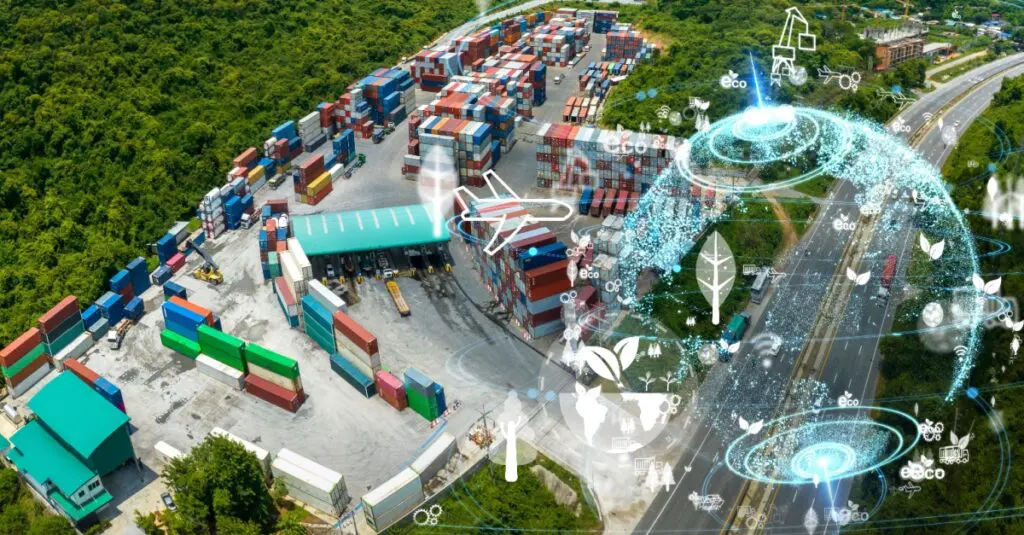
The logistics and transport sector contributes about 24% of global CO2 emissions. Considering the push for supply chain sustainability across different sectors, the need for lower emissions has been heating up in recent years. With roughly a quarter of the world’s emissions tied to logistics, this industry will possibly be the final frontier to tackle regarding sustainability. While different strategies can be leveraged to reduce the impact of logistics operations on the environment, integrating eco-friendly practices and reducing Scope 3 emissions are some of the most pressing initiatives at hand. This article serves as a guide that will provide actionable steps for companies to embrace innovative solutions and navigate the transition toward a greener future. Scope 3: Understanding Supply Chain Emissions Modern supply chain management outsources different parts of the operation to leverage the expertise of different suppliers and stakeholders. Logistics operations are usually outsourced to third-party providers, and exercising control over their operations and monitoring their sustainability practices and emissions can be challenging. Here’s the harsh reality: no matter how well an organization manages to reduce Scope 1 and 2 emissions, the unaddressed Scope 3 emissions can bring the entire process to a screeching halt. This is especially true…
Guides
May 7, 2025

Understanding the Foundation of Visibility

Most organizations talk about visibility—but few truly achieve it. Are you one of them? In today’s fast-paced, disruption-prone environment, having real-time visibility across your supply chain isn’t a luxury—it’s a necessity. Yet, fewer than 10% of companies surveyed can say they have end-to-end insight into their supply chain operations. So what’s standing in the way? And more importantly—how do you overcome it? “Understanding the Foundation of Visibility” is the first whitepaper in a powerful new series by NCS Partners, designed to help supply chain leaders break down silos, align teams, and turn fragmented data into actionable insight. Download this white paper to learn how to: Identify the five most impactful focus areas for building end-to-end visibility Align leadership and secure cross-functional buy-in to drive transformation Build a clear vision and roadmap to avoid common visibility pitfalls Integrate distributed data sources to enable real-time, actionable insight Promote continuous improvement and communication across teams   Whether you’re just beginning your visbility journey or ready to refine your approach, this foundational guide offers expert-backed strategies used by top-performing organizations.   Download the “Understanding the Foundation of Visbility” white paper here to learn more