
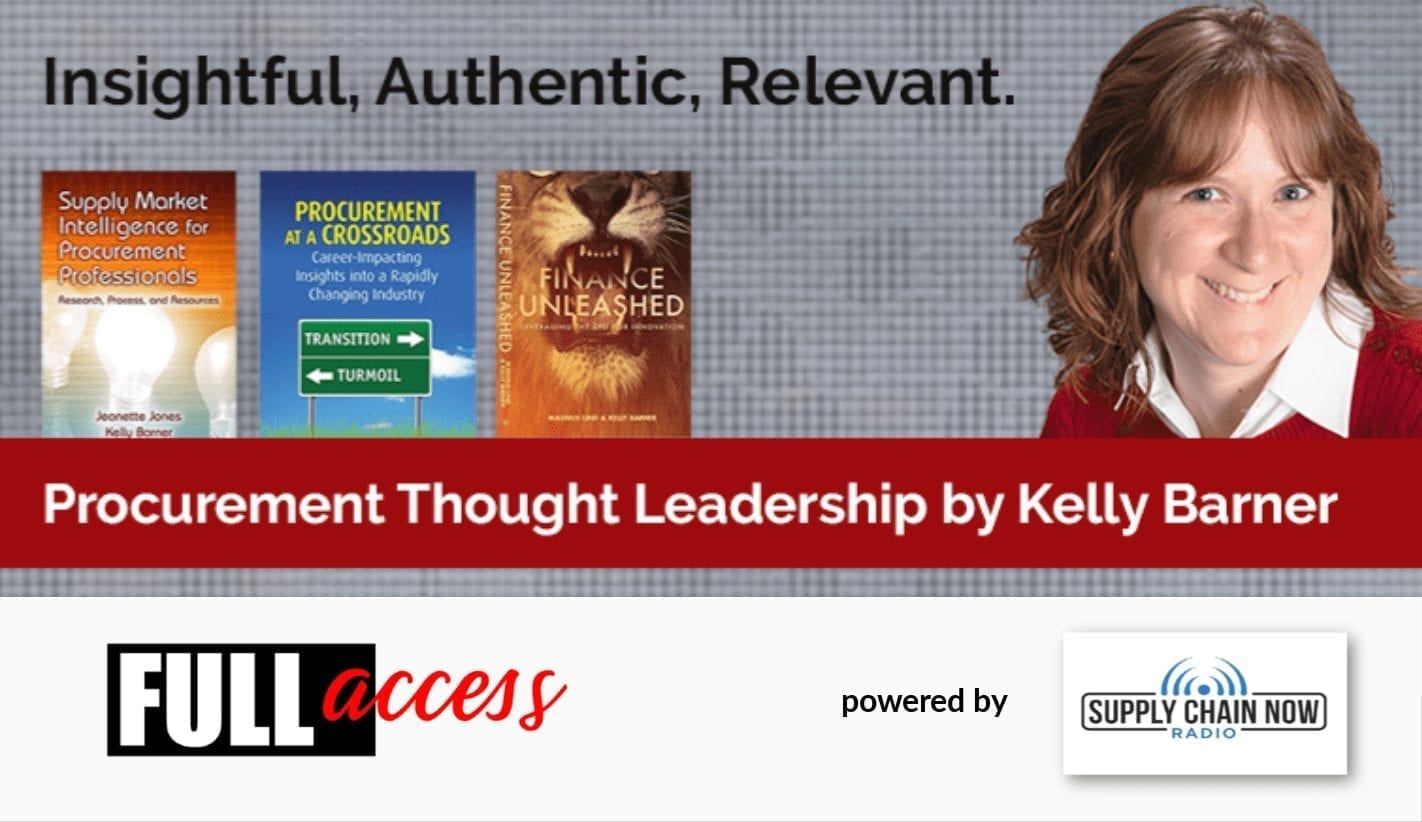

Full Access: Kelly Barner with Buyers Meeting Point
More Podcast Episodes
robotics

Podcast
January 24, 2024
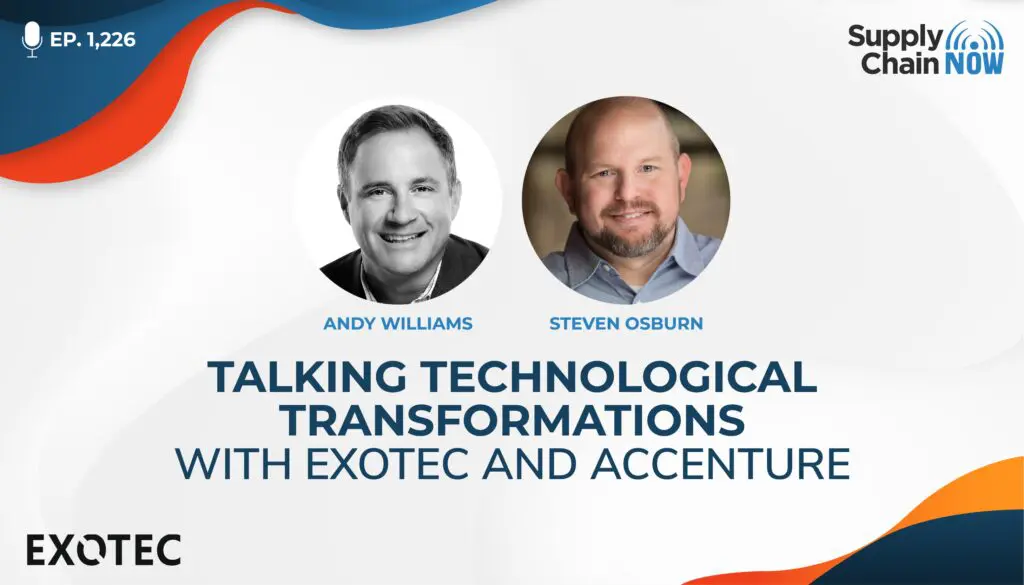
Talking Technological Transformations with Exotec and Accenture
Rewind the clock to the turn of the century and the technological landscape within warehousing and logistics was a lot less crowded. Today, companies are often faced with an overwhelming choice of solutions, making it more difficult than ever to determine the right tech stack to invest in. It is against this backdrop that Andy Williams and Steve Osburn join the Supply Chain Now podcast, the pair holding vast experience in the field of logistics. As Executive Vice President of Sales for warehouse robotics firm Exotec, Williams draws on two decades of knowledge gained from working in international supply chains and logistics technology. Osburn, meanwhile, brings 25 years of all-round supply chain experience to his role as Managing Director of Accenture’s system automation division. Both experts discuss how their current positions are all about providing answers to complex problems. For Williams, this involves sitting down with organizations and seeing how Exotec can integrate various robotics and technological solutions, including those from third parties, into their warehousing setups. Osburn also enjoys the challenge of negotiating unique logistics scenarios, helping clients take ideas from concept through to implementation. Discussions also center around the impact of the pandemic on retail and warehousing, how…
cybersecurity
Podcast
January 7, 2026
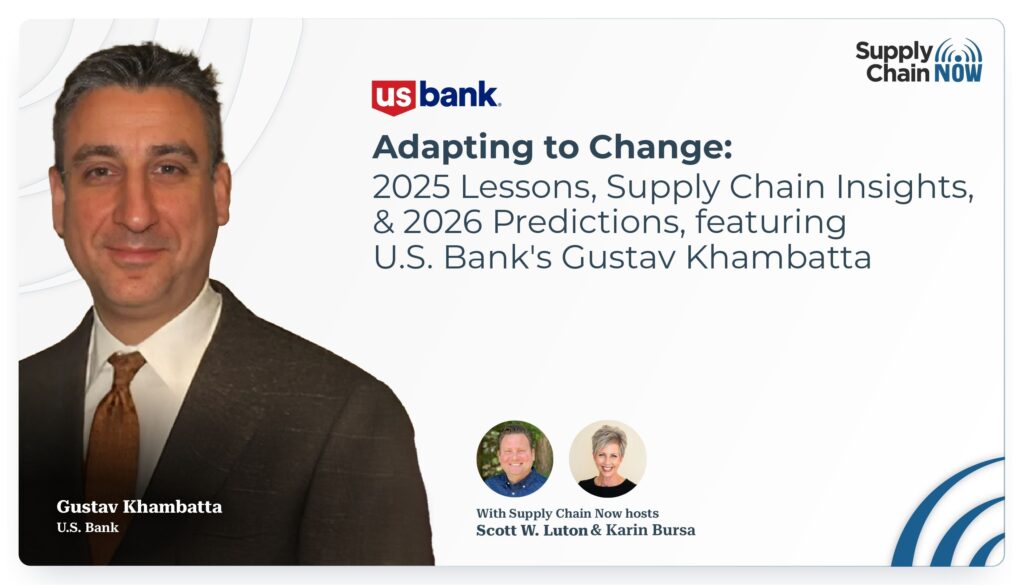
Adapting to Change: 2025 Lessons, Supply Chain Insights, & 2026 Predictions, featuring U.S. Bank’s Gustav Khambatta
As global supply chains navigate through cybersecurity threats and rapid technological integration, companies must rethink their strategies to stay competitive. Cybercriminals are increasingly targeting corporate systems through sophisticated tactics, such as email infiltration, to gain access to sensitive data, including bills of lading. This underscores the need for organizations to strengthen their cybersecurity and ensure their supply chains remain secure. In this episode of Supply Chain Now, Scott Luton and Karin Bursa sit down with Gustav Khambatta, SVP, Head of Freight Payment Sales at U.S. Bank, to explore key themes in supply chain management. They discuss the evolving role of cybersecurity, AI’s impact on the industry, and the challenges posed by cargo theft and security breaches. They talk about the intersection of AI and cybersecurity, highlighting how technology is transforming business operations. AI is being integrated into supply chain processes, with use cases ranging from fraud prevention to streamlining document verification. However, as AI adoption accelerates, so does the potential for security vulnerabilities. The conversation underscores the importance of continuous adaptation in a rapidly changing supply chain landscape, where technology and security will play a central role in shaping the future. This episode is hosted by Scott Luton and…