Share:

“Have there been shortages? Absolutely. Do we expect to see hungry masses and rotting food? I don’t think so. We are better than that.”

– Fred Tolbert, Principal at Southeast Demand Solutions


As we wrap up 2020 and look towards the new year, many supply chain professionals have finally gotten enough distance from the peak pandemic impact in the spring and summer to examine what worked and what didn’t. From empty paper aisle shelves in supermarkets to the worry about retail shipping capacity going into the holiday season, we’ve uncovered some key weaknesses in the supply chain.

The next big question is whether those weaknesses will be handled as a crisis or an opportunity. Fred Tolbert, Principal at Southeast Demand Solutions in Marietta Georgia, joined the Supply Chain Now team for a recent livestream to discuss the pandemic, the latest supply chain industry news, and what new developments we can expect to see going forward.

In this conversation, Fred discussed the following with Co-hosts Greg White and Scott Luton:

· The need to re-examine how companies respond to demand signals to make the appropriate adjustments to safety stock

· The skill profiles that will be most valuable to supply chain leaders going forward

· What we can expect to see in the next 5 years as companies figure out how to apply and embed emerging technologies such as machine learning and artificial intelligence

More Podcast Episodes
play-button-podcast
podcast-blue-microphone
Podcast
September 17, 2025

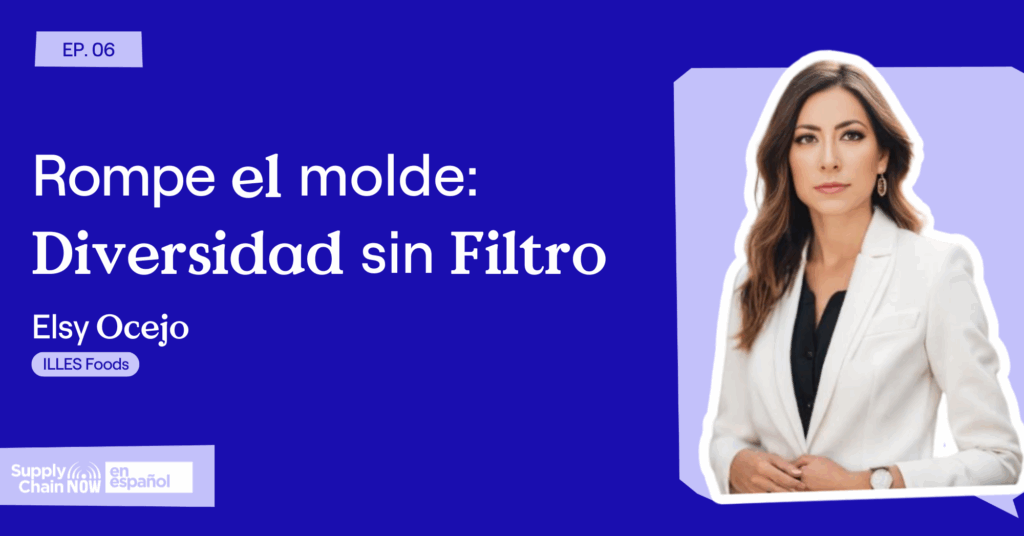
Rompe el Molde: Diversidad sin Filtro
¿Qué pasa cuando eres mujer, latina, y diriges proyectos globales en India, China o Tennessee? En este episodio, Elsy Ocejo nos regala una masterclass sin filtros sobre cómo se vive de verdad la diversidad en la cadena de suministro. Spoiler: no tiene nada que ver con checklists o discursos políticamente correctos. Elsy nos cuenta cómo la autoconciencia, la empatía y estar rodeado de las personas correctas pueden cambiarlo todo. También hablamos de lo que nadie dice sobre adaptarte tanto que pierdes tu esencia, y cómo recuperar ese balance para ser auténtica y crecer profesionalmente sin perderte en el camino. Este episodio está lleno de historias detrás de dirigir equipos globales en cadena de suministro; historias que te harán reír, reflexionar y, sobre todo, replantearte la definición de diversidad. 💥Si alguna vez has sido “la única mujer” en una sala de juntas, este episodio es para ti. 🎧 Dale play y descubre cómo romper estereotipos y construir equipos más humanos desde la autenticidad y honestidad. Subscríbete a nuestro canal de YouTube: https://bit.ly/SCNE_YouTube Únete a nuestro newsletter: ⁠https://bit.ly/SCNE_Newsletter Síguenos en LinkedIn: ⁠https://bit.ly/SCNE_LinkedIn Síguenos en Instagram: @supplychainnow_enespanol
supply chain disruption
play-button-podcast
podcast-blue-microphone
Podcast
August 12, 2026

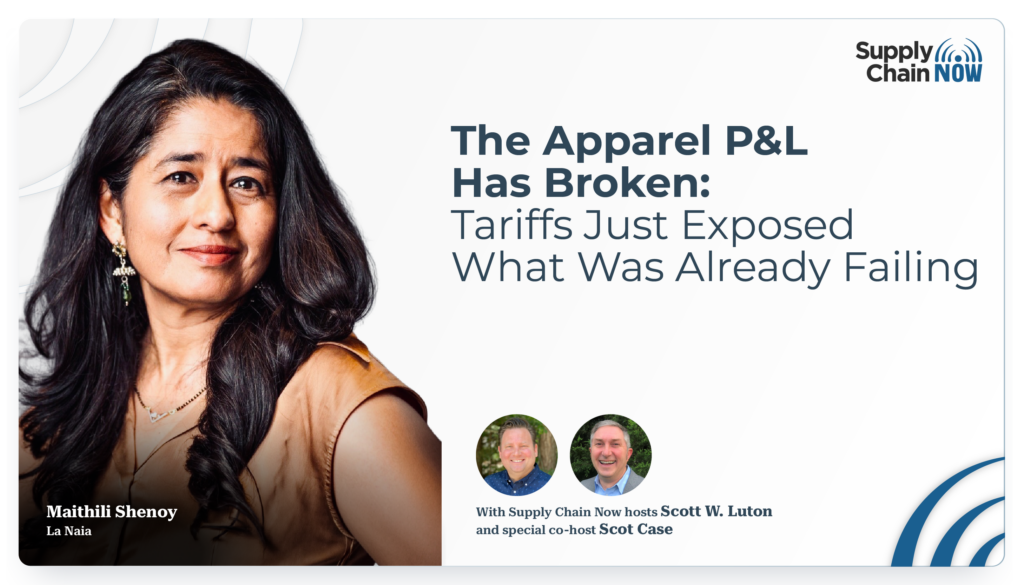
The Apparel P&L Has Broken: Tariffs Just Exposed What Was Already Failing

Most apparel companies don’t have a demand problem. They have a lead time problem. In this episode of Supply Chain Now, hosts Scott W. Luton and Scot Case welcome Maithili Shenoy, Founder and CEO of La Naia Collective, to the show for a frank, frameworks-forward look at why the global apparel operating model is cracking under its own weight and what it would actually take to rebuild it. From the Multifiber Agreement’s unraveling in 2005 to the speed at which TikTok now dictates what sells, Maithili draws a clear line between the world the industry was built for and the one it’s operating in today. She breaks down why long lead times convert forecast error into stranded inventory, how the markdown machine erodes billions in gross margin dollars annually, and why the financial damage runs deeper than most balance sheets reveal. Scot adds a sustainability lens that sharpens the conversation, connecting the landfills of Ghana’s Kantamanto Market to the same structural misalignments driving poor financial returns. The conversation builds into Maithili’s 4S architecture: Strategize, Segment, Structure, Sustain, and the regenerative loop that ties them together. Real-world examples ground every layer: Inditex running 57.8% gross margins with inventory costs half the…

Supply Chain Now – Episode-521

Share:

coming soon