Share:

“Just because an investor turns you down, doesn’t mean that you’re not worth it, that you don’t have a good idea, that you don’t have a good product. The only proof is in actually providing value to customers.”

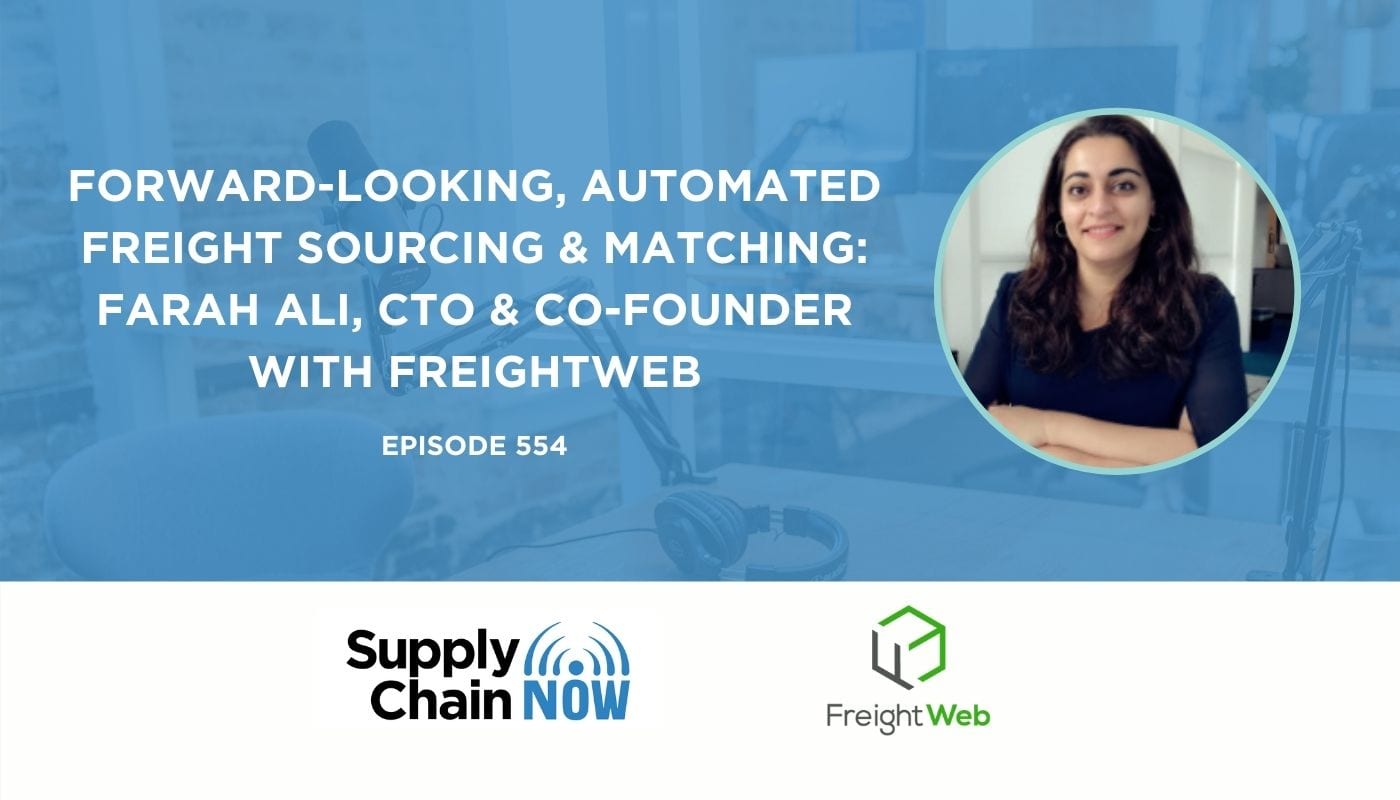
– Farah Ali, CTO & Co-Founder of FreightWeb


The most important idea is not always the most revolutionary one. In many cases, the most important idea is the right solution for a specific company or industry applied at the moment of readiness. This approach to problem solving makes it possible to pull ideas from very mature industries into ones that are a few years (or decades) behind: not reinventing the wheel, just strategically reapplying it.

In some ways, this is exactly how Farah Ali, CTO & Co-Founder of FreightWeb, has made her mark. From gaming to technology to transportation and logistics, she has experience in a number of different companies and verticals, and this allows her to recognize similar needs and transfer solutions to address them.

In this conversation, Farah tells Supply Chain Now Co-hosts Greg White and Scott Luton about:

· The opportunity created by the highly fragmented nature of the U.S. trucking industry

· How FreightWeb started with a visibility challenge, moved to an optimization challenge, and the work they are now doing to help carriers become more data driven

· Why failing fast and being “customer obsessed” are critical to building a successful startup

More Podcast Episodes
supply chain planning
play-button-podcast
podcast-blue-microphone
Podcast
January 5, 2026

Reflections on 2025 & 3 Supply Chain Lessons Learned for 2026

Disruptions in global supply chains, from trade uncertainties to the rapid integration of AI, are challenging companies to rethink their strategies. At the same time, businesses must address talent shortages, enhance workforce capabilities, and navigate an ever-evolving technological landscape. The result is a supply chain ecosystem at a pivotal moment, requiring leaders to blend policy, talent, and technology to stay competitive. In this episode of Supply Chain Now, Scott Luton is joined by Mike Griswold, Vice President Analyst at Gartner, to reflect on the state of supply chain in 2025 and beyond. Together, they explore the significant challenges and opportunities in supply chain planning, including AI adoption, talent strategy, and the impact of tariffs. Scott and Mike discuss how AI is moving from pilot to scale, helping businesses unlock significant value across sourcing and logistics. They highlight the importance of integrating AI with talent strategies to empower workers rather than replace them. The conversation also delves into the evolving role of trade policy and how companies must build it into their long-term strategy. The episode concludes with insights into navigating the complexities of modern supply chains and the imperative for businesses to embrace innovation while managing uncertainty.   This episode…
play-button-podcast
podcast-blue-microphone
Podcast
November 12, 2024

Perritos a bordo: logística de mascotas

Cuando pensamos en mover carga de un punto a otro, normalmente nos imaginamos el movimiento de productos en grandes contenedores o tarimas por medio de aviones, camiones y barcos, pero muy pocas veces consideramos que también existe el movimiento de carga muy valiosa como lo son los animales. En este episodio hablamos de la logística de mascotas y todo lo que toma en cuenta en su planeación y ejecución. Para las personas que buscan salir de vacaciones o incluso reubicarse a otro país, viajar con sus fieles compañeros puede ser algo muy complicado, pero gracias VIPet esto ahora es mucho más sencillo. Jeannine Rivas decidió juntar sus dos grandes pasiones; cadena de suministro y estudios veterinarios, y fue así como creó su empresa de VIPet International para importar y exportar mascotas por el mundo. Descubre más sobre este sector que involucra el manejo de carga especial, delicada y viva; nuestras mascotas.  

Supply Chain is Boring – Episode-554

Share: