The Future of Supply Chains Starts With Better Questions
Special Guest Blog Post written by Stela Jaqueta
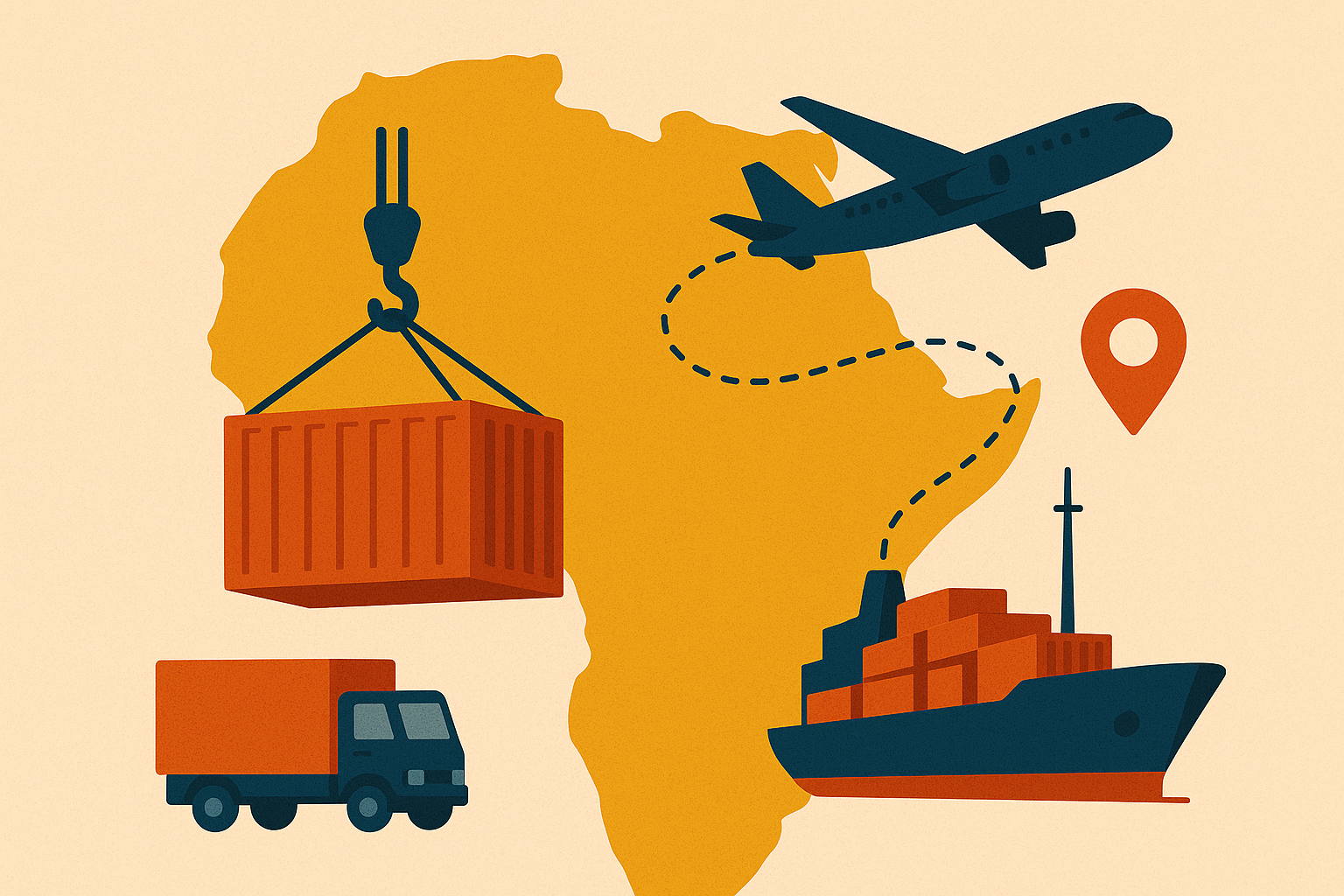
In today’s fast-changing world, Africa’s role in global supply chains is at a tipping point. For too long, the continent has been viewed primarily as a source of raw materials rather than as a strategic partner in value creation. But what if we reimagined everything, from policies and technologies to mindsets and sustainability practices, through an Africa-centered lens?
In this blog post, I explore five questions that challenge conventional supply chain thinking. From redefining Africa’s place at the global negotiation table, to elevating cultural intelligence from “soft skill” to strategic necessity, to designing climate-restorative logistics and embracing the digital revolution in a way that includes youth-led and informal businesses, each question is a call to rethink, redesign, and re-center.
1. What would a truly Africa-centered global supply chain look like?
A truly Africa-centered global supply chain would shift from a model of extraction to one of empowerment and value creation. It would prioritize investment in local manufacturing, infrastructure, and knowledge transfer, ensuring that raw materials sourced from Africa are processed, packaged, and innovated on the continent. African-led businesses are seen as power players, with a voice and authority at the negotiation table rather than spectators in their own house.
2. Why are we still treating cultural intelligence as a “soft skill” instead of a critical supply chain competency?
Cultural intelligence is a must have in our days as you deal with global teams. With the fast adoption of AI within the supply chain, some teams now are limited to a couple of global representatives. Cultural intelligence should be considered a core supply chain skill, not a side note in leadership development. In global operations, misunderstanding cultural dynamics can delay projects, damage supplier relationships, and increase compliance risks, especially when power dynamics are in place. The human component in the chain is critical and understanding where they are coming from, their point of view putting yourself in their “shoes”, can be a deal breaker.
3. Are supply chain policies and trade agreements evolving fast enough to support the rise of digital, informal, and youth-led businesses in emerging markets?
Not even close. Its tough to be discussing these topics, when these markets are still dealing with basic infrastructural problems, where internet, computer and smartphone is a novelty for the majority of the population. Access to funding for start-ups come with high interest rates or with “strings attached”, that can stifle growth. Most current supply chain policies and trade agreements are built around traditional, formal business models, often excluding the dynamic and rapidly growing ecosystem of informal, digital-first, and youth-led enterprises that define today’s African economies. We need frameworks that are adaptive, inclusive, and tech-friendly, reflective of our market realities! That means rethinking what a “registered supplier” looks like, simplifying compliance for small businesses, and leveraging digital tools to bring visibility without bureaucracy.
4. How can we design supply chains that are not only climate-resilient but climate-restorative?
I think by now certain region of the world know they are prone to natural disasters like floods, cyclones, earthquakes and the likes. In my beautiful country of Mozambique, cyclones are a yearly thing. So, adaption is a non-negotiable for these prone climate sensitive environments. We must design supply chains that are restorative, ones that actively heal the environment and uplift the communities affected. Imagine if the procurement processes give preference to regenerative farms that improve soil health and biodiversity, not just avoid harm. Investing in local, biodegradable packaging solutions to reduce long-term pollution and waste, investing in materials that are climate resistant. In Africa, where so much supply chain infrastructure is still being built, we have a unique opportunity: we can leapfrog the waste-heavy systems of the past and design for sustainability from the ground up.
5. Why do we keep digitizing broken supply chains instead of redesigning them from the ground up?
Digital tools are not magic wands, its like shoving the dust under the carpet, you can’t fix what’s structurally flawed. Yet too often, organizations rush to layer AI, automation, or blockchain over outdated processes and siloed thinking. The result? Expensive tech built on weak foundations. No wonder why it´s not working. Real transformation doesn’t start with tools, it starts with rethinking the purpose and architecture of the supply chain. Are we designing systems that promotes effectiveness? That enable transparency across tiers? If not, we’re just automating inefficiency. The real opportunity is this: use disruption as a license to rebuild, not just digitize.
More Blogs

Giving Time Back: How Smarter Procurement Can Support Education’s Mission