

More
December 3, 2021
This Week In Supply Chain Now: November 29th – December 3rd
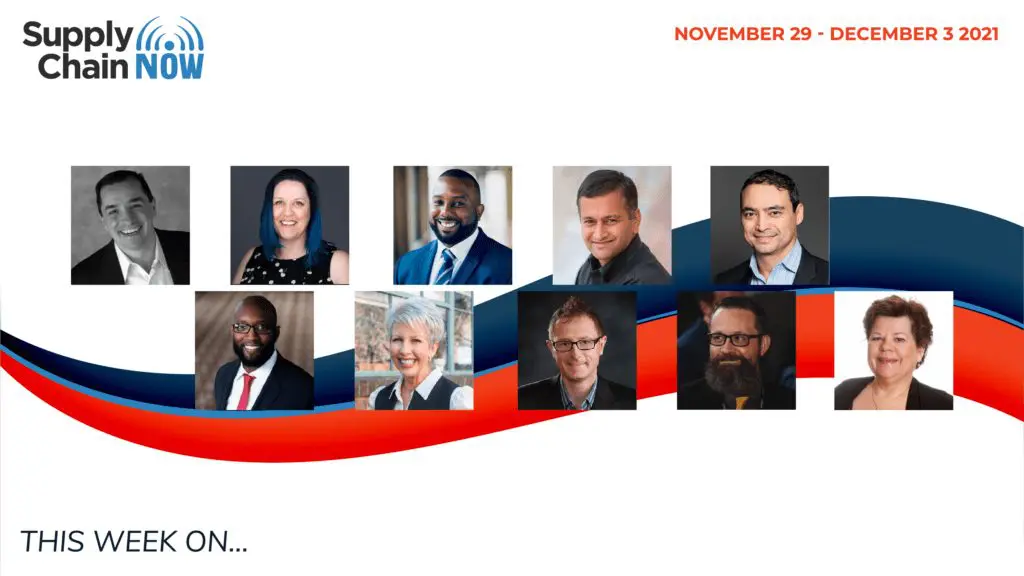
Stay up to date on all the latest conversations, interviews, and episodes we released this week here at Supply Chain Now! We started this week off with an episode of Supply Chain Now as Scott Luton chats with Lora Cecere and Dr. Madhav Durbha, Vice President of Supply Chain Strategy for Coupa Software. In Monday’s episode of This Week In Business History, Scott Luton talks about the history and development of video games- from the origins of Atari to the companies that are currently dominating the market. On Tuesday, we republished a classic TEKTOK episode with host Karin Bursa. In this episode, Karin shares six strategies for greater supply chain resilience. On Wednesday’s Supply Chain Now episode, Scott had a great conversation with culture expert, author, and speaker Ray Attiyah with Run Improve Grow. Scott and Ray talk about the key points in his new book, Fearless Front Line: The Key to Liberating Leaders to Improve & Grow Their Business. On Thursday, we released another episode of Supply Chain Now with host Scott Luton and special co-host Allison Giddens. Scott and Allison welcome Chad Molen with NIMBL, and Dan Reeve with Esker to the show. On Friday, we released the…
planning
April 22, 2026
From Planning to Decision Making
Supply chains are more volatile and interconnected than ever, but many planning processes still rely on disconnected systems, manual analysis, and spreadsheet-based interventions. This white paper explores how network optimization, supported by advances in optimization technology, workflow design, cloud computing, and AI, can help planning teams evaluate cross-functional trade-offs, respond faster to change, and move from static plans to continuous, decision-driven supply chain planning. Inside the White Paper: – Why traditional planning systems and network optimization evolved separately, and why that separation limits decision quality in today’s supply chains. – How network optimization helps evaluate cross-functional trade-offs across sourcing, production, inventory, transportation, fulfillment, service, cost, and capacity. – Why continuous network optimization is different from one-time strategic modeling, and how it can support recurring tactical and operational planning decisions. – How AI and configurable workflows can make optimization more usable for planners without requiring them to become modeling experts. – How planning systems and network optimization can work together in a feedback loop that improves decisions over time. Click here to download