

More
Gartner Supply Chain Symposium
May 21, 2026
From AI Anxiety to Workflow Reinvention: Key Takeaways from Gartner Supply Chain Symposium 2026
At Gartner Supply Chain Symposium/Xpo 2026 in Orlando, some of the sharpest minds in supply chain gathered to tackle one central question: what does the next operating model for supply chain actually look like? In a special livestream conversation, Scott Luton sat down with Mike Griswold, VP Analyst at Gartner, alongside fellow Supply Chain Now hosts Karin Bursa and Jake Barr, to unpack the biggest themes emerging from this year’s symposium. The consensus? Supply chain leaders are moving beyond AI fascination and toward something much bigger: redesigning how decisions, workflows, and organizations operate. AI Is No Longer the Story. Outcomes Are One of the strongest themes from the event was a more mature, pragmatic approach to AI adoption. According to Mike Griswold, many organizations are finally moving past the “shock and awe” phase that dominated conversations a year ago. “People need to figure out exactly what problem or problems AI is going to solve for them,” Griswold explains. That may sound simple, but it represents a significant shift. Instead of experimenting with AI for AI’s sake, companies are becoming more disciplined about identifying operational value and measurable business outcomes. Griswold also warns against a familiar trap: creating “highly efficient…
fulfillment automation
February 20, 2026
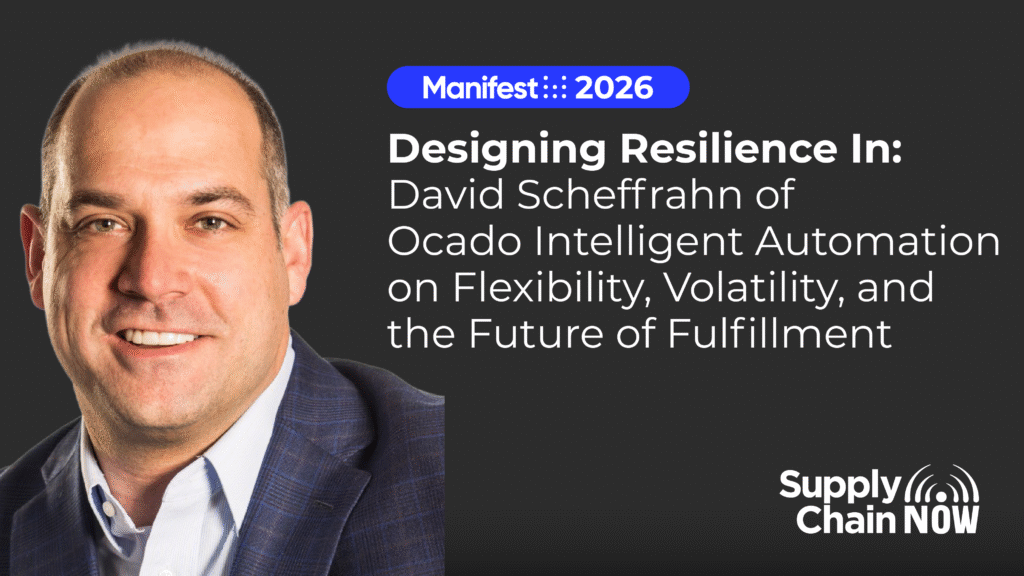
Designing Resilience In: David Scheffrahn of Ocado Intelligent Automation on Flexibility, Volatility, and the Future of Fulfillment
From Grocery Innovator to Global Tech Enabler At Manifest 2026, Scott Luton spent time with David Scheffrahn, Vice President of Sales with Ocado Intelligent Automation, to explore how fulfillment technology is evolving in an era defined by volatility. While Ocado is widely known in the UK and Europe for its e-commerce grocery leadership, Scheffrahn explained that the company’s North American focus is different. Over 25 years of building its own advanced grocery e-commerce and fulfillment operations, Ocado developed a powerful technology stack to drive efficiency. “What we’ve done in the last five years,” he shared, “has taken the tech stack that we built for our own use, and now we’re offering it to other companies to buy and use for their operations.” Today, Ocado supports 3PLs and global brands with end-to-end automation solutions that enable companies to maintain greater control over their omnichannel fulfillment, especially those looking for alternatives to marketplace giants. Volatility Hasn’t Gone Away When asked about dominant supply chain themes heading into 2026, Scheffrahn was direct: “Volatility has not gone away.” He described 2025 as “a massive shock in the system,” with tariffs and shifting trade policies forcing customers to pause projects and reassess strategy. “Almost…