

More
supply chain thought leadership
February 23, 2026
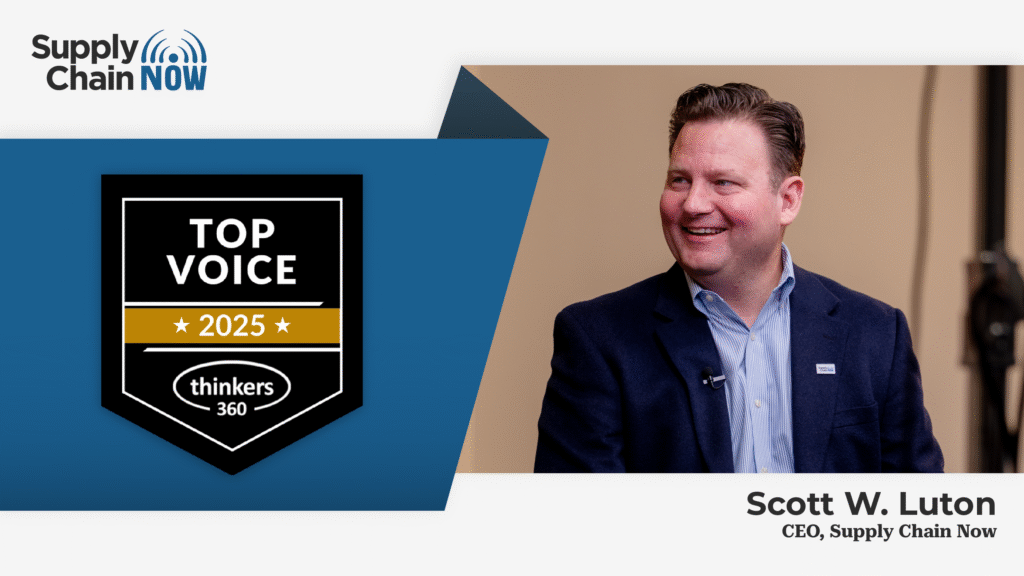
Scott Luton Recognized as a 2025 Thinkers360 Top Voice
For another year, Supply Chain Now Founder, CEO, and Host Scott Luton has been named to the Thinkers360 Top Voices of 2025, a prestigious global recognition honoring influential experts shaping conversations across business and technology. Described as the “definitive list of leading experts,” the Thinkers360 Top Voices Awards celebrate thought leaders who consistently share valuable insights and help advance professional knowledge across industries. Honorees are selected based on demonstrated expertise, impact, and meaningful contributions to the broader thought leadership community. Luton’s inclusion once again highlights his ongoing impact on the global supply chain community – from hosting thousands of interviews with industry leaders to spotlighting innovation, leadership, and the real-world challenges facing operations today. Through Supply Chain Now’s podcasts, livestreams, event coverage, and collaborative content, his work continues to connect practitioners with practical ideas they can immediately apply. As supply chains grow more complex and interconnected, recognition like this reflects not just individual influence, but the strength of a community committed to learning and improvement. Scott’s voice, and the voices he amplifies, continue to help leaders navigate change, build resilience, and move the industry forward. Learn more about Thinkers360 and the Thinkers360 Top Voices award here.
August 14, 2021
This Week In Supply Chain Now: August 9th – 13th
Stay up to date on all the latest conversations, interviews, and episodes we released this week here at Supply Chain Now. On Monday’s episode of Supply Chain Now, Scott Luton leads the conversation on reverse logistics and welcomes Tony Sciarrotta with RLA and Rich Bulger with Cisco to the show. On This Week in Business History, Scott tells the rags to riches story of Airbnb and more. On Tuesday we released a classic episode of TEKTOK in which Karin Bursa shares the 3 Things C-Level Execs Need to Know About Sales & Operations Planning and Inventory Optimization. On Tuesday we also released a new episode of TECHquila Sunrise. Greg White welcomed Kubera Venture Capital’s Balaji Gopinath and special guest Robin Gregg, CEO of RoadSync. On Wednesday, Scott had the opportunity to talk with some of the University of Georgia’s up-and-coming Supply Chain Rising stars, Jessie Bailey and Elena Griggs. We also released another episode of the Supply Chain Buzz featuring Mike Griswold, and presented by OMNIA Partners. Scott, Greg, and Mike discussed everything from rising COVID-19 infections impact of the supply chain to the United Nations response to climate change. On Friday, host Page Siplon sat down with Griff Lynch…