

More
human factor in supply chain
March 4, 2026
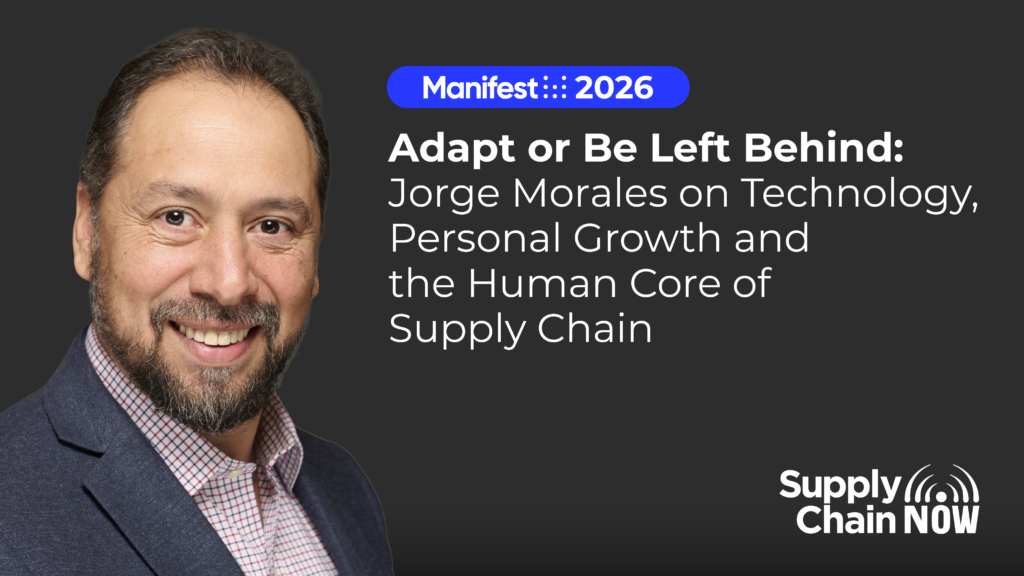
Adapt or Be Left Behind: Jorge Morales on Technology, Personal Growth and the Human Core of Supply Chain
At Manifest 2026, Scott Luton spent time with his friend, Jorge Morales, Global Chief Operating Officer of the International Supply Chain Education Alliance (ISCEA), for a conversation that centered not on hype, but on growth. ISCEA is a global certification body serving supply chain professionals around the world. But as Morales put it, “We’re in the knowledge business; but most of all, we’re in the personal growth business.” Through certifications, membership programs, advisory boards, and global events, ISCEA empowers professionals to stay current, expand their networks, and advance their careers. In a volatile era, that mission has never been more relevant. Beyond the AI Hype Cycle When asked about dominant themes from 2025 to 2026, Morales pointed to a shift in how the industry views technology. “Last year we were still in the bubble of the hype of AI,” he said. Many professionals feared being replaced or assumed AI would solve everything overnight. That perspective has matured. “Technology by itself is not what determines your level of success,” Morales explained. “Understanding the basics, knowing how things work; THAT is key.” AI and data tools remain critical across procurement, logistics, manufacturing, planning and more. But success depends on how organizations…
multi-echelon inventory optimization
July 7, 2026
Why Data Sharing Is the Missing Link in AI-Powered Supply Chains
Artificial intelligence (AI) is rapidly reshaping supply chain operations. From improving demand forecasting and inventory management to increasing operational efficiency, organizations across industries are investing heavily in AI to gain a competitive edge. Yet many companies overlook a critical requirement for AI success: access to trusted, high-quality data shared across the supply chain ecosystem. Supply chains have always relied on collaboration among suppliers, manufacturers, distributors, and retailers. In the AI era, that collaboration must become more intelligent. Organizations need timely, secure data exchange, both upstream and downstream, to provide AI systems with the information required to generate accurate insights and recommendations. When suppliers share real-time information about inventory levels, delivery schedules, and raw material quality, manufacturers can improve planning, reduce risk, and respond more quickly to disruptions. Likewise, when retailers share data about customer demand, inventory positions, and satisfaction levels, manufacturers can better align production and distribution with actual market needs. The result is a leaner, more agile, and more profitable supply chain. Despite these benefits, many organizations are still hesitant to share data. Concerns about security, intellectual property protection, competitive exposure, and integration complexity continue to create barriers. However, these challenges can be addressed through strong data governance, clear…