

More
Red Sea
April 14, 2025
Supply Chain Now’s Guide to the Red Sea Crisis
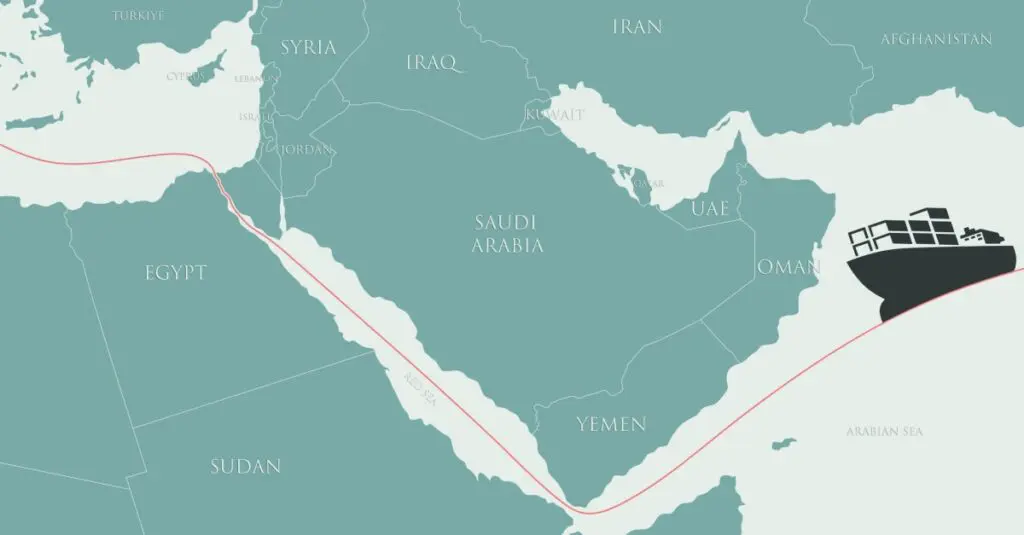
An estimated 12% of global trade worth more than $1 trillion traverses the Red Sea each year. When Houthi rebels started attacking commercial vessels in November 2023, ocean carriers began rerouting container ships around Africa’s Cape of Good Horn rather than through the Suez Canal on voyages from Asia to Europe. That greatly increased travel time and costs. As of March of this year, shipping through the Red Sea was still down 70% from before the attacks began, according to The Economist, with many ocean carriers still avoiding the Bab el-Mandeb Strait, which separates the Red Sea from the Gulf of Aden and the Arabian Peninsula. Maritime Industry Caught in the Crosshairs Houthi rebels launched attacks on ships in the Red Sea in response to Israel’s military operations in Gaza. The Houthis attacked more than 100 cargo ships between November 2023 and January 2025. The attacks, with missiles and drones, sunk two vessels and killed four sailors. In late October 2024, a headline in gCaptain read, “Red Sea Is Now So Dangerous Even NATO Warships Are Avoiding It.” “The United States Navy continues to send warships through the Red Sea, but its mission to protect merchant ships – Operation Prosperity…
digital supply chain
February 27, 2026
Five Key Supply Chain Trends for 2026: Navigating the Road to Transformation
This post is written by our friends at e2open. E2open is the connected supply chain software platform that enables the world’s largest companies to transform the way they make, move, and sell goods and services. Moving as one.™ Learn More: www.e2open.com. Supply chains are entering a pivotal stretch of highway into the future. It’s a route marked by regulatory detours, geopolitical potholes, and rising expectations for speed, intelligence, and resilience. The journey ahead demands connected data, embedded AI, and agile decision-making. Below are the five major “mile markers” defining the road to supply chain transformation, and how e2open helps organizations navigate the way forward with confidence. 1. Tariff and non‑tariff compliance risks: avoiding costly road hazards Tariff volatility and non‑tariff barriers create regulatory road conditions that can change quickly. For cost-focused leaders, this unpredictability can feel like driving through dense fog. One wrong move can result in delays, penalties, or unplanned expenses. Forward‑thinking organizations are installing automated guardrails: integrated trade compliance systems, dynamic landed‑cost modeling, and synchronized import/export workflows. These tools help reduce blind spots and ensure companies don’t veer into costly territory. The e2open Global Trade suite puts the world’s most comprehensive, continuously updated regulatory content directly…