
More
logistics
July 10, 2025
Five Questions I Wished People Asked Me About Public Sector Supply Chains
Special Guest Blog Post written by Gary Smith, CPIM-F, CSCP-F, CLTD-F, Author of “The Bridge,” Supply Chain Engineer, and Educator 1. Do Supply Chains exist in the public sector? The short answer is “YES!” I spent the first 25 years of my career in the private sector where I worked in warehouse operations, industrial engineering, and consulting, all in the logistics andsupply chain area. I cut my teeth on retail, automotive, chemical, food and beverage, publishing, and manufacturing. During that time, I also completed projects for the public sector in education and for the Department of Defense. In 2005 I was named Director of Supply Chain Operations for the New York City Housing Authority (NYCHA). We operated a 200,000 sq. ft. warehouse that shipped repair material to 335 developments in New York’s five boroughs. In 2013, I was named Vice President of Supply Logistics for New York City Transit, the largest public transportation organization in North America. We operated over 1.5 million sq. ft. of warehouse space covering all of New York City. Several years ago, I was on a national committee for the Association for Supply Chain Management (ASCM). We created this elevator speech to describe Supply Chain…
December 7, 2020
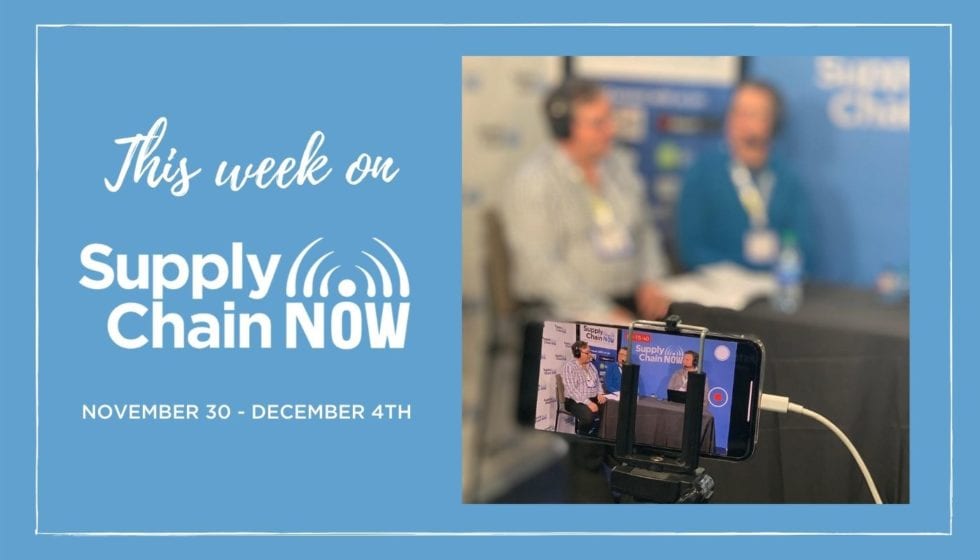
This Week on Supply Chain Now: November 30th – December 4th
Another great week here at Supply Chain Now! Have you listened to all the episodes? If not, you can check them all out here: On Monday, Scott and Greg welcomed Mark Messina & Simon Houghton of Geek+ to the podcast! Scott and Greg also welcomed Mike Griswold from Gartner to SCN Live to talk about all the latest supply chain news. On Tuesday, Scott and Greg welcome Allison Krache Giddens of Win-Tech, Inc. to the podcast in collaboration with AIAG’s Supply Chain Summit. Michael Neme joined host Jamin Alvidrez on Logistics & Beyond on Tuesday as well to share his mindset and some of the keys to his passion: Supply Chain Consultative Sales. On Wednesday, Scott and Greg welcomed Karin Bursa and Jamin Alvidrez for the Supply Chain Buzz, to discuss the top news in supply chain for the week. Also, Scott and Greg discussed the top news in supply chain with special guest, Guy Courtin of 6 River Systems On TECHquila Sunrise this Thursday, Greg White welcomed Kinaxis CEO John Sicard to the podcast. And on Friday, we ended the week with Scott & Greg…