

More
April 24, 2020
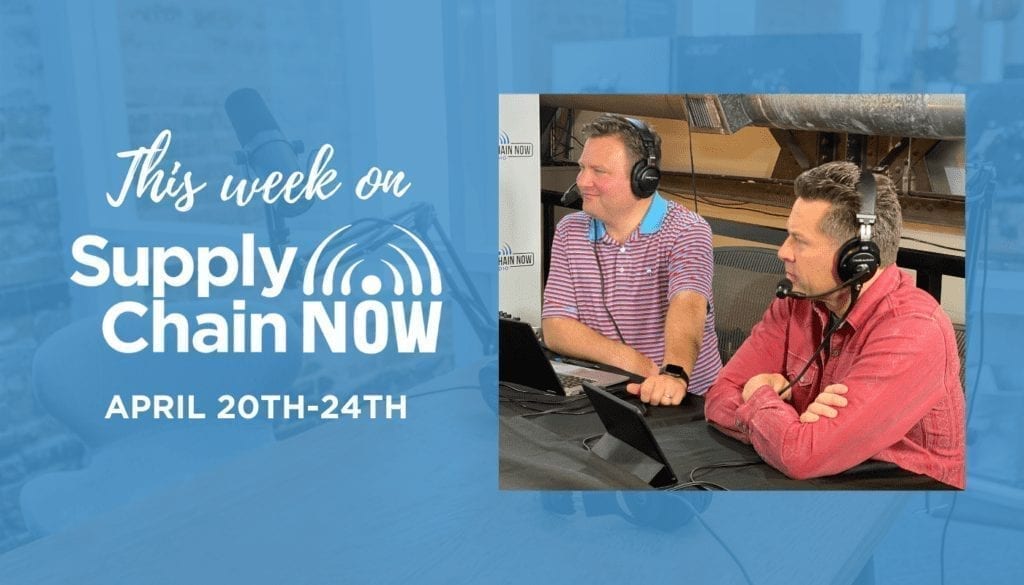
This Week on Supply Chain Now: April 20-24
It has been another busy week for Supply Chain Now! Did you catch all the episodes? If not, no worries! Check them all out here: We started out the week with a new episode in our Logistics with a Purpose series sponsored by our good friends at Vector Global Logistics. Listen as Scott, Greg, and Enrique have a great conversation with Mickey Horner with Rise Against Hunger. On Tuesday, Scott and Greg were joined by AIAG’s CR Summit speaker Joerg Walden, CEO of iPoint. Then we published the new and improved Supply Chain Buzz, with Scott and Greg sharing and discussing the latest news and events in Supply Chain and beyond. Scott and Greg were joined by Randy Strang with MedShare on Thursday for another episode in the Logistics with a Purpose series, sponsored by Vector Global Logistics. And to wrap up the week, Scott and fellow host Fred Tolbert with Demand Solutions were proud to host three exceptional Supply Chain students from the University of Georgia’s Terry College of Business.
September 3, 2021
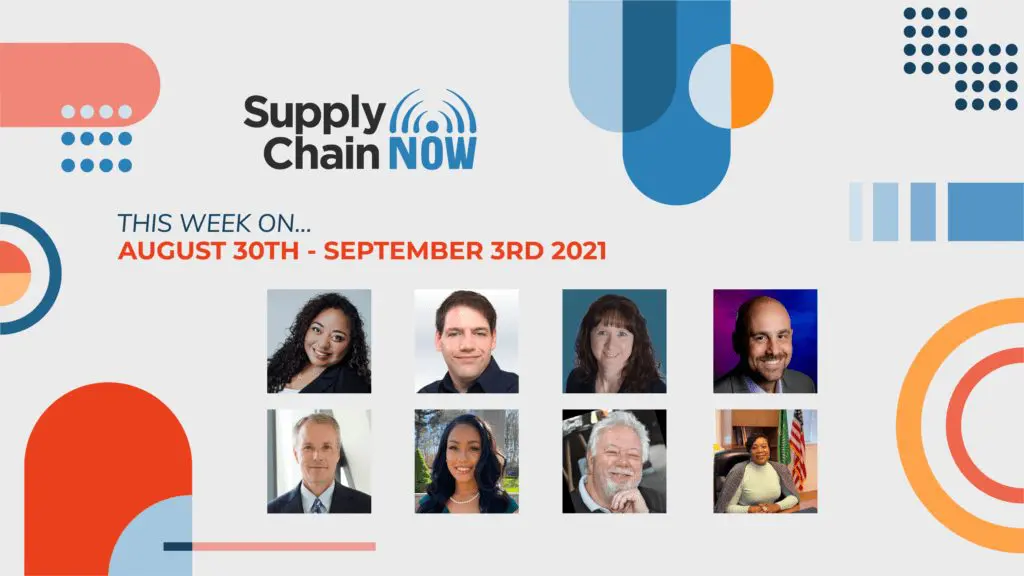
This Week In Supply Chain Now: August 30th – September 3rd
Stay up to date on all the latest conversations, interviews, and episodes we released this week here at Supply Chain Now. We started our week off with a Dial P for Procurement episode hosted by Kelly and Scott. They welcomed Member Services Manager at Una, Crystal Villareal and Philip Ideson, Founder and Managing Director, Art of Procurement. During the show, they discussed how to convert your vision for customer experiences into a set of tasks and priorities that guide your daily work and more. On This Week in Business History, Kelly has a very exciting lineup of stories! The topics in this episode ranged from the founder of the first African-American magazine to the introduction of the ATM. On Tuesday, Scott had the great opportunity of interviewing Dan Gingiss, Chief Experience Officer at The Experience Maker, LLC. In this episode, Scott talks with Dan about the secrets behind crafting remarkable customer interactions. On Wednesday, we published another episode of Logistics With Purpose with hosts Enrique Alverez, Matilda Ahrin, and Books for Africa’s Pat Plonski. The special guest for this episode was Madame Ambassador Hilda Suka Mafudze with the African Union. As you listen to this episode, look forward to learning…